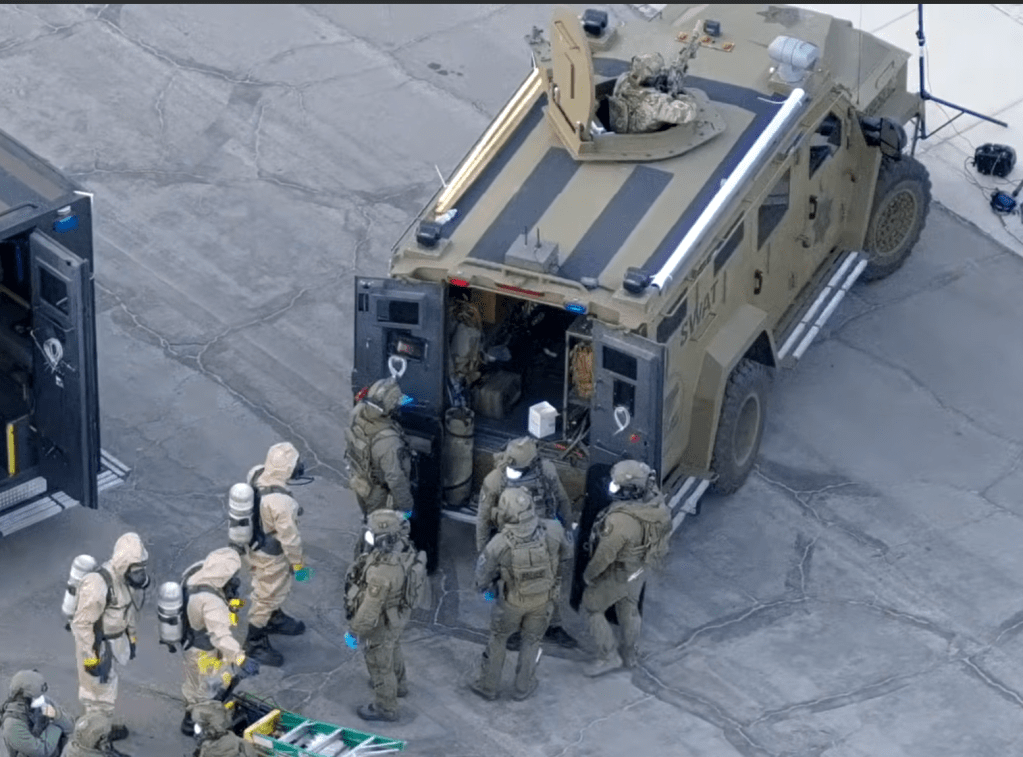
Las Vegas authorities spent the past week unraveling a hazardous-materials investigation that began with a quiet tip and ended with a full multi-agency operation involving police, federal agents, fire officials, and specialized scientific teams.
Sheriff Kevin McMahill said the investigation started when LVMPD received limited information suggesting that laboratory equipment and possibly dangerous materials were being stored inside a home in northeast Las Vegas. The early details were sparse, but the lead raised concern because the property was linked to the same individual tied to the 2023 illegal biolab discovery in Reedley, California.
That earlier case involved materials suspected of being connected to infectious diseases, and although it remained unclear whether anything similar was present in Las Vegas, the possibility forced investigators to move with extreme caution. LVMPD’s counterterrorism division, the ARMOR task force, and the FBI developed an operational plan designed to minimize risk and protect the surrounding neighborhood.
The person authorities focused on locally was identified as 55-year-old Ori Solomon, a property manager for two homes under investigation. Solomon was taken into custody on charges of disposing of and discharging hazardous waste. Three unrelated tenants renting rooms inside the Sugar Springs Drive residence were safely removed and were not considered suspects.
The locked garage was believed to be the primary area of concern. A search warrant was served just before sunrise, with drones deployed immediately to provide real-time aerial awareness and reduce officer exposure. Commanders monitored the feeds remotely as SWAT secured the home.
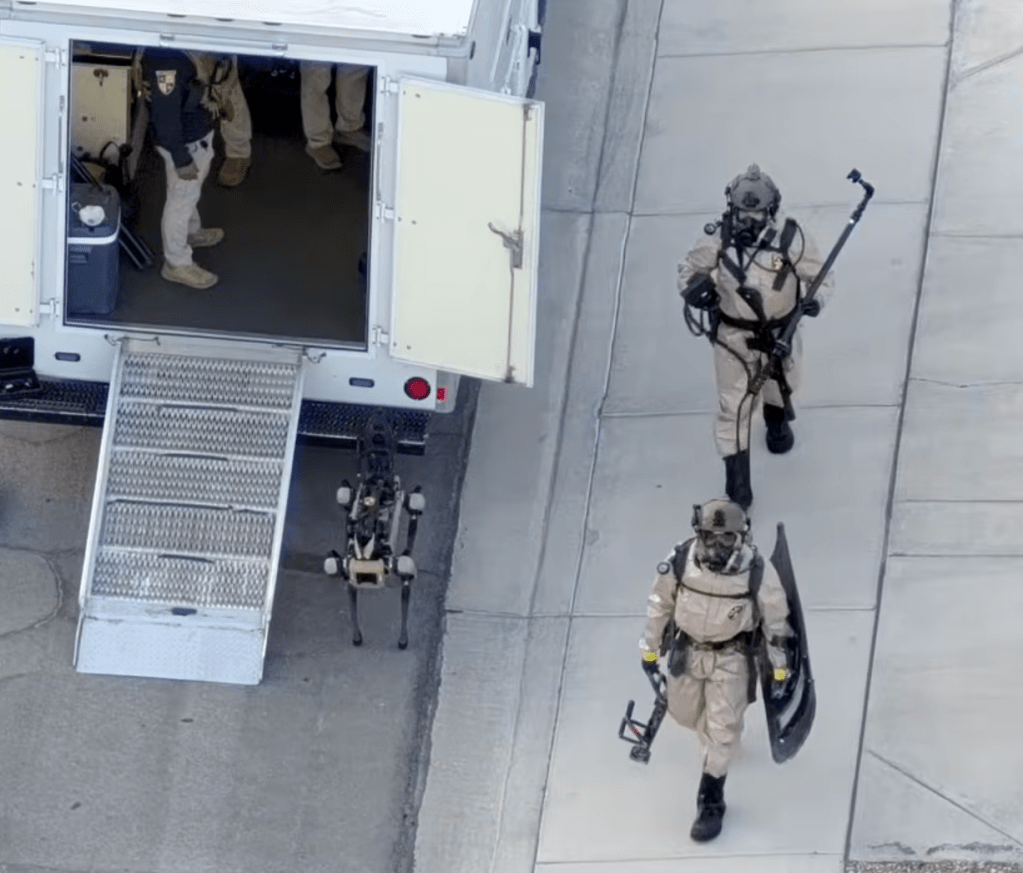
Before entering the garage, officers used a robot dog to check air quality and capture video from inside the structure. The robot navigated through the home, climbed stairs, and transmitted footage that helped guide the next steps without placing personnel at risk.


Once the residence was cleared, the ARMOR team drilled a small access point into the garage door and inserted a probe to test the air. A pinhole camera revealed refrigerators, a freezer, and multiple containers filled with unknown liquids—items that visually resembled materials found in the California biolab.
After the initial assessment, FBI scientists and specialized evidence teams entered the garage. They found a refrigerator wrapped in plastic, a running freezer, vials, gallons of unknown substances, and various pieces of laboratory equipment. More items were scattered throughout the space, adding to the complexity and requiring slow, controlled entries.
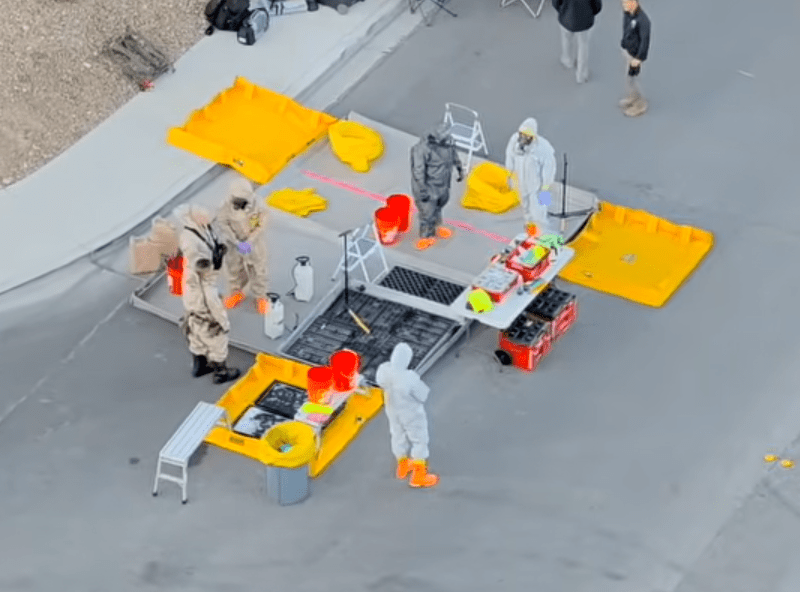
The handling of each piece of evidence required decontamination of personnel and equipment. Large-scale collection took place primarily during daylight hours on Sunday. Evidence removal concluded that evening, and items were transported to the Southern Nevada Health District for temporary storage before being flown by FBI aircraft to a federal lab in Maryland for testing.
FBI officials emphasized that the timeline for identifying the substances would be careful and methodical. More than a thousand samples were collected, and each must go through standardized analytical steps that cannot be rushed.
Clark County Fire Chief Billy Samuels detailed the extensive coordination between agencies, from local fire departments to the Nevada National Guard and federal partners. He said the operation relied heavily on years of joint training and the trust built across departments that routinely work together during emergencies.
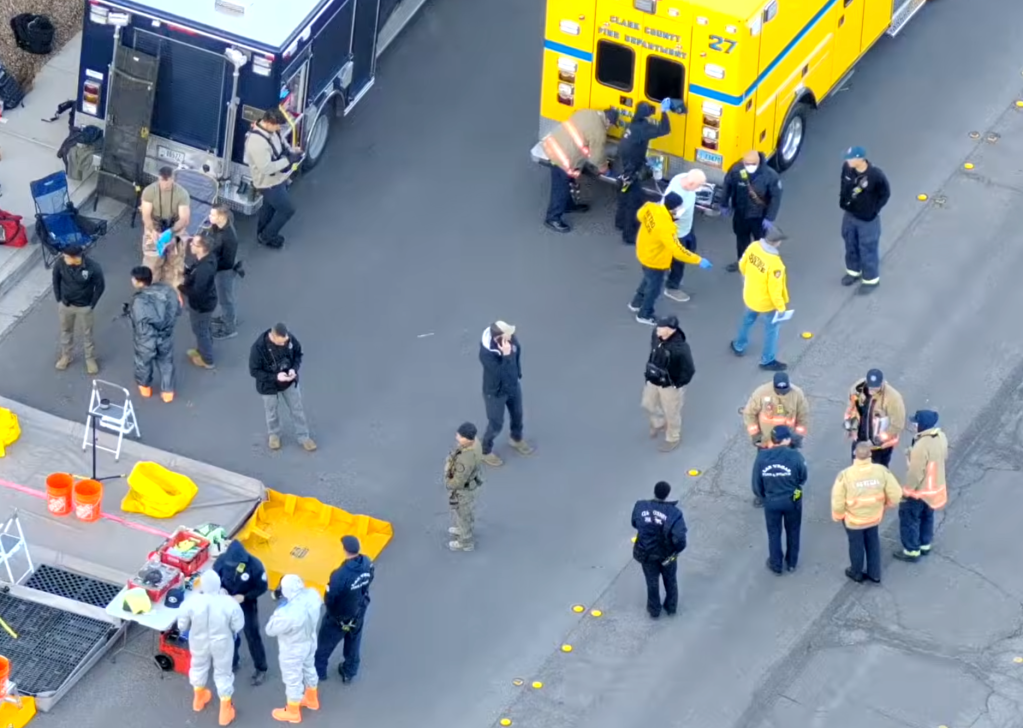
Samuels also highlighted the role of federal homeland security grant funding, which helped equip the very units used in this response—from hazmat teams to laboratory analysts. Those investments, he said, were on full display throughout the weekend.
Sheriff McMahill underscored that the fast, safe conclusion of the initial operation was only possible because of that coordination and the technology LVMPD has developed. He pointed to advances in drones, robotics, and real-time intelligence systems as essential tools in managing risk without exposing officers unnecessarily.

McMahill thanked residents in the neighborhood for their patience as the investigation unfolded outside their homes. He assured the public the site had been fully remediated and posed no ongoing danger. Still, he acknowledged that authorities do not yet know the full purpose of the materials or what the individuals involved intended to do with them.
Discover more from
Subscribe to get the latest posts sent to your email.


 kviginfo.com