
The Mountain Meadows massacre was a shocking and tragic event that took place in southern Utah in 1857. It was a mass murder of around 120 emigrants traveling through the Mountain Meadows, who were mostly families from Arkansas. The attack was carried out by a group of Mormon militia, it is believed that its motivating factors were a desire to seize the emigrants’ possessions and a desire to punish the emigrants for perceived wrongdoings.
The massacre had significant consequences for the Mormon Church, which was already facing significant persecution and hostility from the federal government and other groups. It fueled anti-Mormon sentiment and contributed to the decision by the LDS Church to colonize further west, eventually establishing a presence in Nevada.

In the early 20th century, Mormon pioneers began settling in the Las Vegas area, establishing communities and building churches. They brought with them their values and traditions, and many became actively involved in the local school system. The LDS Church played a significant role in the development of the education system in Nevada, and many of the state’s schools were founded and supported by the Mormon community.
It is important to also acknowledge that the colonization efforts of the Mormon Church and its members were not always peaceful or respectful of the indigenous peoples and their communities. The LDS Church actively sought to convert indigenous people to its faith, and its missionaries often displaced indigenous peoples from their traditional lands as they established Mormon settlements.

In some cases, Mormon settlers engaged in violent conflict with indigenous groups, leading to the deaths of indigenous people and the forced removal of entire communities. These actions contributed to the ongoing harm and trauma experienced by indigenous peoples in the United States, and they have left a lasting impact on indigenous communities.
The impact of the Mormon Church in Las Vegas has been the subject of extensive research, including the publication of “A Gamble in the Desert: The Mormon Mission in Las Vegas (1855-1857)” in 2005 and the forthcoming book “Bright Lights in the Desert: The Latter-day Saints of Las Vegas.” These works have highlighted the significant influence that Mormon Church members have had on various aspects of life in Las Vegas, including education. Despite making up just 6% of the population, Mormon Church members in the Las Vegas metropolitan area number more than 105,000 and are among the most influential citizens in the community.
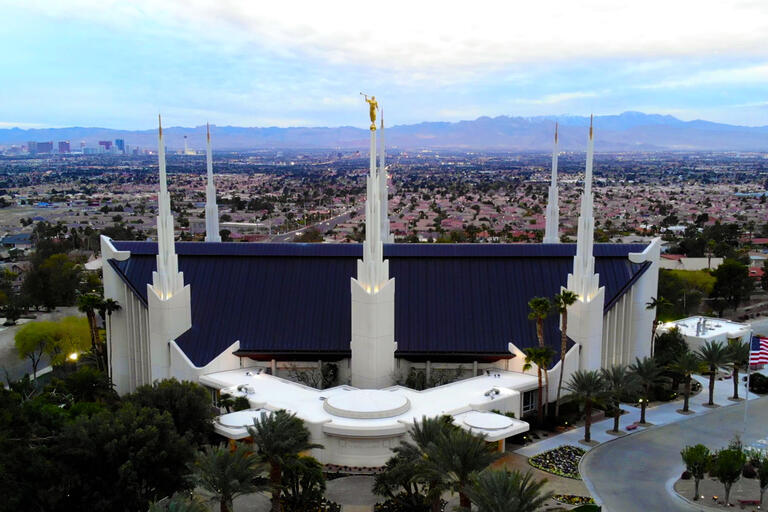
The LDS temple in Las Vegas, which was dedicated in 1989, has become a beacon in the desert and a source of spiritual nourishment for Mormon Church members in the region. It has also been visited by around 300,000 local citizens of various faiths. Mormon Church members in Las Vegas have been praised for their strong family values, hard work, and discipline, and have been credited with bringing stability and civic responsibility to the community. They have made significant contributions to the city in various areas, including education and cultural refinement, and have been described as “good people who helped to make Las Vegas a good city for all of us to live in.”
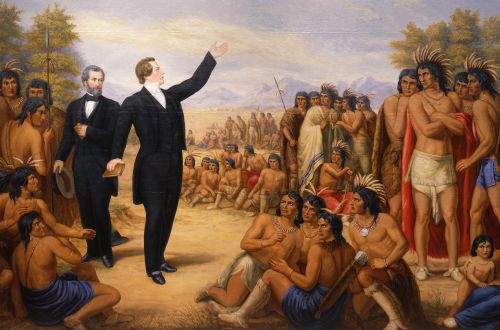
It is important to remember and recognize the complex and sometimes difficult history of the Mormon Church and its colonization efforts in the American West. While the LDS Church and its members have made significant contributions to the development of cities like Las Vegas and have brought with them strong values and traditions, it is also important to acknowledge the harm and trauma that was inflicted upon indigenous peoples as a result of these colonization efforts.
It is crucial to continue to educate ourselves about this history and to work towards understanding and reconciliation with indigenous communities. This includes acknowledging the harm that was done and working towards restitution and reparations, as well as engaging in respectful and meaningful dialogue with indigenous peoples and listening to their perspectives and experiences. Only by acknowledging and addressing this difficult history can we truly move forward and build a more just and equitable society for all.
Discover more from KVIG Informative
Subscribe to get the latest posts sent to your email.


 KVIG Informative