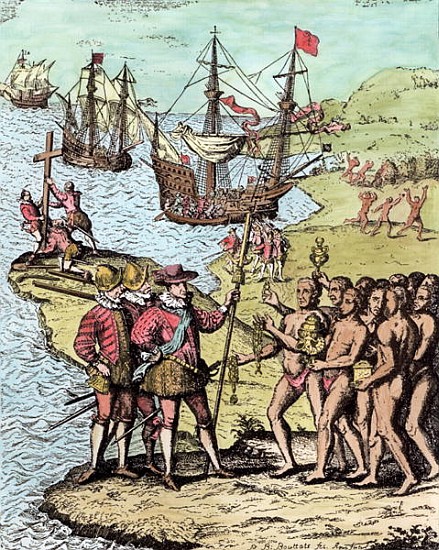
The Doctrine of Christian Discovery, was a legal principle used by European powers during the 15th and 16th centuries to justify the colonization of land inhabited by indigenous peoples. This doctrine was based on the belief that Christian European nations had the right to claim any lands that were not inhabited by Christians, and that the indigenous peoples living on those lands were considered heathens and savages who had no rights to the land. The Doctrine of Discovery was used to justify the colonization of the Americas by European powers, including the United States, as well as the forced removal of indigenous peoples from their lands, the exploitation of natural resources, and the enslavement of indigenous peoples.

Christan ideoly such as this has brought a long and devastating impact on other indigenous peoples around the world. Columbus’ voyages in 1492 set a precedent for the colonization of the Americas and the exploitation of indigenous peoples and their resources. The Treaty of Tordesillas, signed in 1494 between Spain and Portugal, further contributed to the colonization and exploitation of indigenous peoples and their lands. The Doctrine of Terra Nullius, used by Captain James Cook in 1770 to claim Australia for Britain, was based on the belief that the land was uninhabited and open for colonization. The Doctrine of Discovery has also been used to justify the colonization of New Zealand and the exploitation of indigenous peoples and their resources.

One example of this impact can be seen in the treatment of the Lakota people by the United States government, where President Abraham Lincoln ordered the hanging of 38 Lakota warriors in 1862 in the largest mass execution in United States history. This execution was a result of the Lakota’s resistance to the colonization of their lands and their refusal to sign a treaty ceding their land to the United States government. The execution was a clear example of the harm and violence inflicted on indigenous peoples as a result of the Doctrine of Discovery and the belief in white supremacy.

The Doctrine of Discovery and the belief in white supremacy that it supported were also used to justify the forced removal of indigenous children from their families and communities and their placement in boarding schools. The boarding schools were often located far from the children’s homes and were designed to forcibly assimilate them into European-American culture. The children were often subjected to physical, emotional, and sexual abuse in these schools, and they were forbidden from speaking their native languages or practicing their cultural traditions. The goal of these schools was to “civilize” and “Christianize” the indigenous children, and they were often referred to as “savages” who needed to be “tamed” and “civilized”. The Doctrine of Discovery, a legal principle that originated in Europe in the 15th century, has been used by various governments and officials throughout history to justify colonization and the acquisition of lands belonging to indigenous peoples. In the United States, this doctrine was first invoked in the Supreme Court case Johnson v. M’Intosh in 1823

In this case, the Court upheld the principle that the discovery of land by European explorers gave them the right to take possession of it, even if it was already inhabited by indigenous peoples. The Court argued that this right of discovery was recognized by “the civilized nations of Europe” and that it had been “from time immemorial” the foundation of their right to acquire soil from the native inhabitants. Since the Johnson v. M’Intosh decision, the Doctrine of Discovery has been cited in numerous other court cases, including United States v. Santa Fe Pacific Railroad Company (1941) and Oneida Indian Nation of New York v. County of Oneida (1974). In both of these cases, the Court reaffirmed the principle that the discovery of land by Europeans gave them the right to take possession of it, even if it was already inhabited by indigenous peoples.However, the Doctrine of Discovery has also been widely criticized for its role in the dispossession and oppression of indigenous peoples. Many indigenous groups and human rights organizations argue that the doctrine is fundamentally flawed and that it has no place in modern international law.

The community must recognize and acknowledge the harm and trauma caused by the Doctrine of Discovery, and to work towards a more just and equitable society that respects the rights and sovereignty of indigenous peoples. By acknowledging and understanding this dark history, we can begin to bring true change to all indigenous communities. This includes acknowledging the devastating impact of the boarding school system and the ongoing intergenerational trauma that it has caused. It also means acknowledging and addressing the ongoing issues of land rights and sovereignty that many indigenous communities face today, and working towards reconciliation and justice for the harm and injustice inflicted on indigenous peoples throughout history.
Discover more from KVIG Informative
Subscribe to get the latest posts sent to your email.


 KVIG Informative