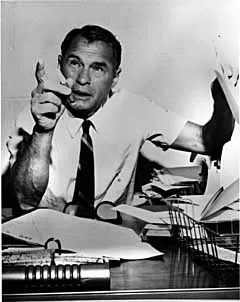
In the turbulent post-World War II era, amidst the backdrop of geopolitical shifts and the struggle for statehood in Palestine, Hank Greenspun emerged as a figure of intrigue and controversy. His life, marked by a blend of journalism, clandestine operations, and entanglements with organized crime, reveals a complex tapestry of ambition and moral ambiguity.
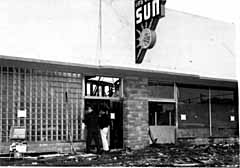
Greenspun’s journey begins with his rise to prominence in the world of journalism. Acquiring the Las Vegas Free Press in 1949, he renamed it the Las Vegas Sun in 1950, wielding his editorial pen as a formidable weapon against powerful figures like Senator Joseph McCarthy and FBI Director J. Edgar Hoover. His column, “Where I Stand,” became a battleground for ideological clashes and public debates, solidifying his reputation as an uncompromising editor.
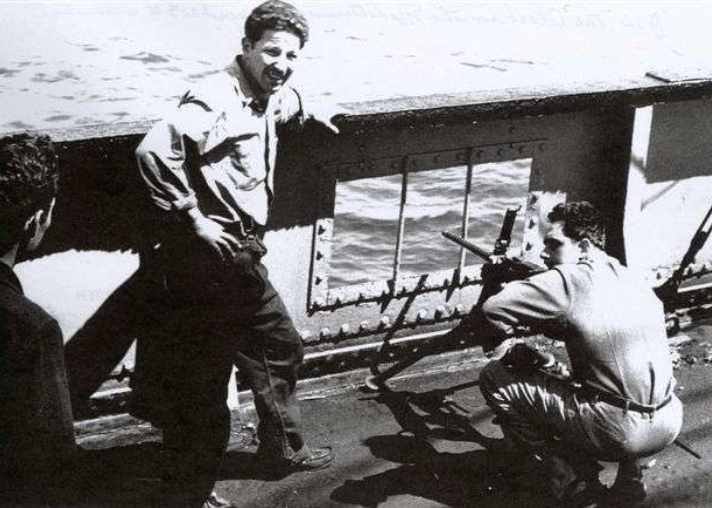
However, beneath the veneer of journalistic integrity lay a shadowy world of illicit ventures. Documents reveal Greenspun’s pivotal role in orchestrating the smuggling of stolen machine guns from the U.S. Navy in Honolulu to Jewish fighters in Palestine during the late 1940s. With millions involved in illegal arms deals, Greenspun allegedly received a 10% “kickback” from the proceeds.
This clandestine operation facilitated through Mexico, unfolded amidst the tumult of the Nakba, or “Catastrophe,” as Palestinians refer to the events surrounding the establishment of the state of Israel in 1948. As Arab-Israeli tensions escalated, Greenspun’s role in arming Jewish fighters assumed greater significance, contributing to the military capabilities of Israeli forces during a pivotal moment in history.
Despite his involvement in illegal arms smuggling, Greenspun’s journalistic exploits continued unabated. His editorial crusades against figures like McCarthy and Hoover garnered public attention, while his financial ascent and associations with organized crime figures remained shrouded in secrecy. FBI reports detail his burgeoning net worth and the agency’s monitoring of his activities within its “Top Hoodlum Program.”
Greenspun’s legal troubles, including multiple indictments under the Neutrality Act, culminated in a felony conviction and a substantial fine. Yet, his ability to manipulate legal proceedings and evade prison time underscored the complexities of his persona.
In 1961, a surprising twist in Greenspun’s saga emerged with a pardon from President John F. Kennedy, signaling a complex denouement to his tumultuous life. Despite his controversial activities, Greenspun’s legacy remains a subject of intrigue and debate, embodying a paradoxical blend of journalistic integrity, illicit ventures, and entanglements with the underworld.


3×3 Vinyl Sticker
$5.00

3×3 Vinyl Sticker
$5.00
Discover more from KVIG Informative
Subscribe to get the latest posts sent to your email.


 KVIG Informative