
On October 7, 2024, as the sun began to set over Sunset Regional Park in Henderson, Nevada, the community gathered for a solemn vigil. They were organized by the Democratic Socialist Association of Las Vegas, Code Pink, Red Desert Collective, Party for Socialism and Liberation, and Student Justice for Palestinians (SJP) at UNLV. The event brought together people of different backgrounds to honor the victims of the ongoing violence in Gaza. Lanterns were lit and a minute of silence was observed, creating a quiet yet powerful moment of solidarity and mourning for the lives lost in a year marked by bloodshed and devastation.
This vigil was a memorial and a call to action, a space where personal grief met collective outrage. In the words of one speaker, an Arab student and president of SJP at UNLV, the event was a reminder that “each life lost fuels our fight every single day,” a testament to the Palestinian martyrs who had died within the past year. These words were delivered with both passion and pain, reflecting the heavy toll the conflict has taken, not just on those living in Gaza but also on those who carry the weight of witnessing the ongoing occupation and violence.
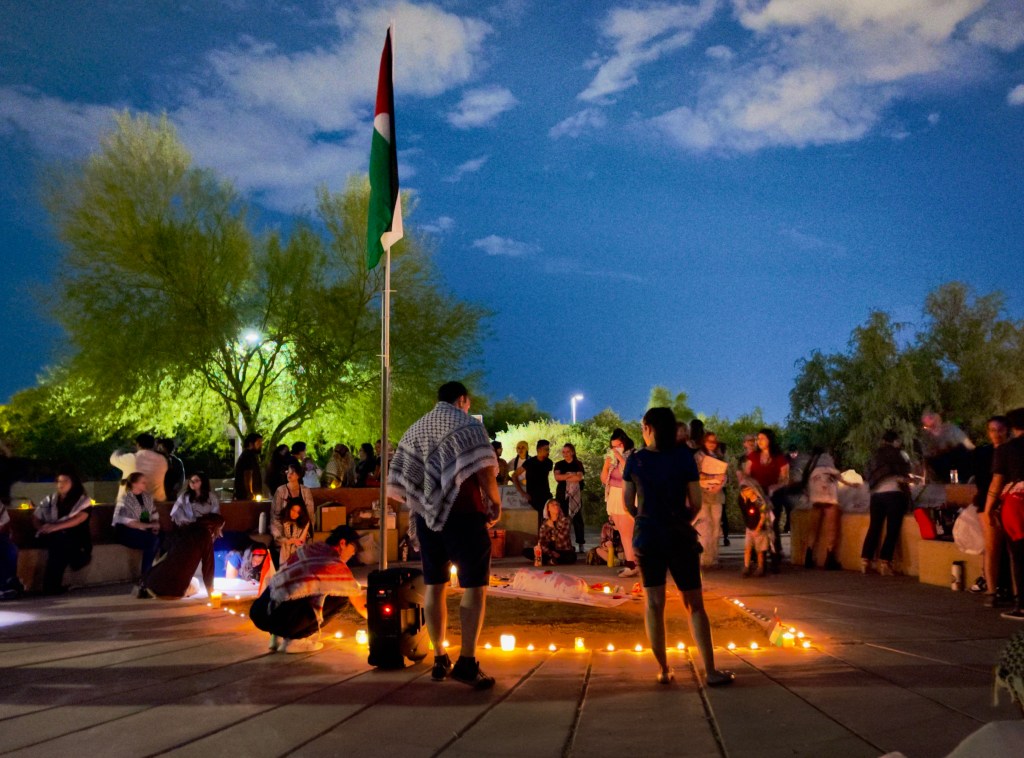
SJP student spoke about the efforts made on their campus to hold institutions accountable for their complicity in this violence. Over the past year, SJP fought to push the university toward ethical responsibility by calling for divestment from companies profiting from the occupation of Palestine. They demanded transparency and challenged the administration to stop investing in weapons manufacturers and corporations linked to the oppression of Palestinians. Their efforts reflected the broader movement calling for the end of colonial practices and a demand for justice in Palestine and local communities. “Our protests this past year… brought together hundreds of voices demanding an end to the occupation in violence,” the speaker said, reminding the crowd that their struggles for liberation are deeply connected to other movements for justice.
The vigil occurred in the shadow of a historical and ongoing conflict that has seen Gaza repeatedly devastated by violence. The event highlighted the staggering toll of the conflict, a story mirrored in the lives of Palestinians displaced, imprisoned, and killed. According to the last reports from the Palestinian Central Bureau of Statistics on May 14th, 2024: over 35,034 Palestinians in Gaza, including nearly 15,000 children, have died since October 7, 2023, due to escalating Israeli military operations. The humanitarian crisis continues to worsen as Gaza is left with broken infrastructure, demolished homes, and an overwhelming sense of loss. Over 89,000 buildings in Gaza have been destroyed or severely damaged, plunging the region deeper into despair.
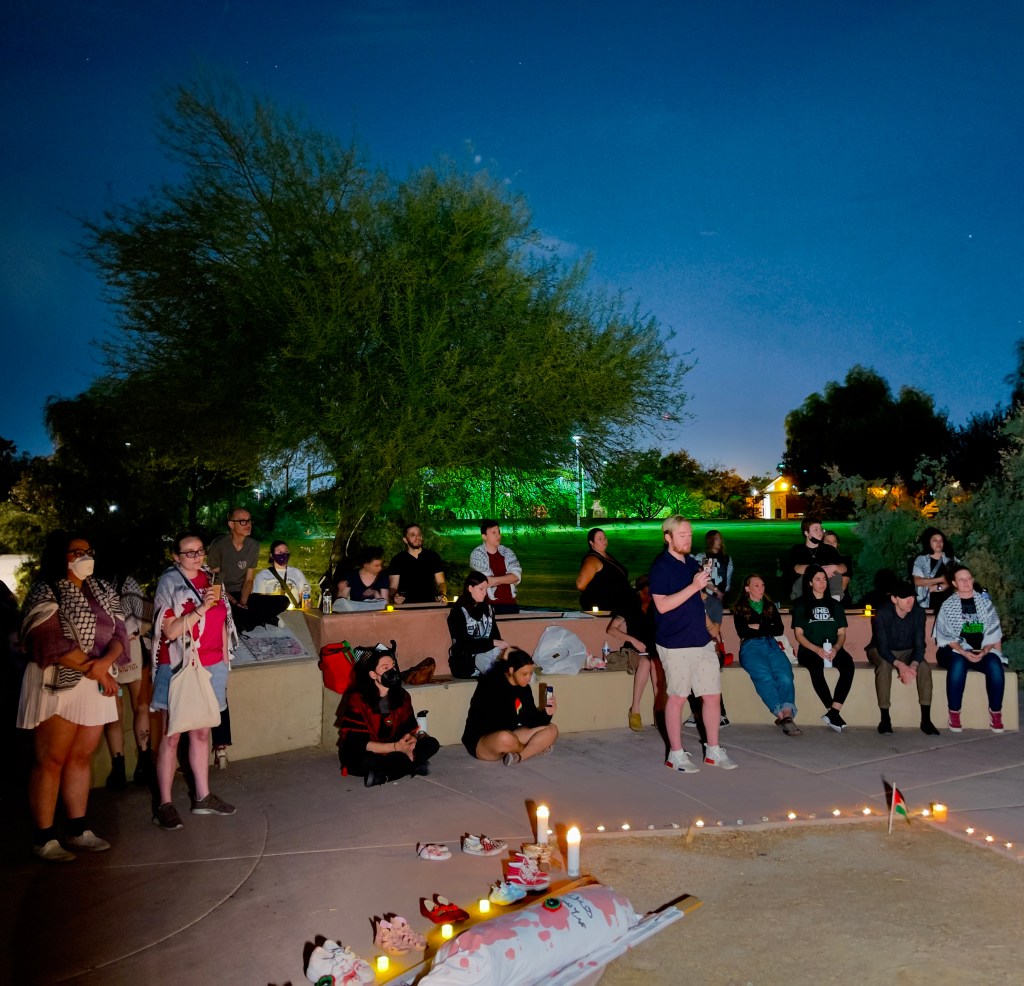
Both citizens and speakers expressed frustration with the U.S. government’s ongoing military aid to Israel, pointing out the hypocrisy of a country that talks about peace while financing war. One impassioned speaker criticized the Biden-Harris administration’s role in the conflict: “They claim to want a ceasefire, yet continue sending billions of dollars in weapons to the very entity perpetuating this genocide.” The crowd responded with murmurs of shame, a shared feeling of disillusionment with a system that seems to enable the destruction of Palestinian lives while espousing the rhetoric of peace.

In understanding the depth of the Palestinian struggle, we must also turn to the roots of the conflict. Hamas, the militant group at the heart of the Gaza conflict, was indirectly supported by Israel in its early days, a product of the state’s divide-and-conquer tactics to weaken the secular-nationalist Palestinian Liberation Organization (PLO). This strategy has since backfired. Over time, Hamas has become a central figure in Palestinian resistance, especially after its victory in the 2006 elections in Gaza. Its armed resistance and its defiance against Israeli occupation have made it a significant force in the region, though its actions have also drawn international condemnation. This division has weakened prospects for peace, leaving the Palestinian people caught between an oppressive occupation and fragmented international leadership.

3×3 Vinyl Sticker
$5.00

3×3 Vinyl Sticker
$5.00
As we reflect on the grim reality of the Nakba—the mass displacement of Palestinians in 1948—the war in Gaza feels like a tragic continuation of this original sin. The Palestinian death toll since 1948 is a harrowing reminder that, for Palestinians, the Nakba has never ended. Land confiscation continues in the West Bank, settlements expand, and the people of Gaza face siege and bombardment. The cycle of violence and loss endures, with each day bringing new casualties, destroyed homes, and the fracturing of families.

The vigil at Sunset Regional Park, though held thousands of miles from Gaza, carried the same weight of grief and resistance. It was a moment of collective remembrance and a demand for accountability, not only from Israel but from every entity complicit in the occupation—governments, corporations, and institutions that continue to profit from Palestinian suffering. As the event came to a close, the president of SJP left the crowd with a final call to action: “We will not stop. We will not rest until Palestine is free again.” This sentiment captured the spirit of the vigil, a spirit of resilience, solidarity, and an unrelenting fight for justice. The struggle for Palestine, like so many other struggles for liberation, is a long and painful one, but as the lanterns glowed in the dark Nevada sky, it was clear that the memory of those lost and the fire of resistance will continue to burn.
Discover more from KVIG Informative
Subscribe to get the latest posts sent to your email.


 KVIG Informative