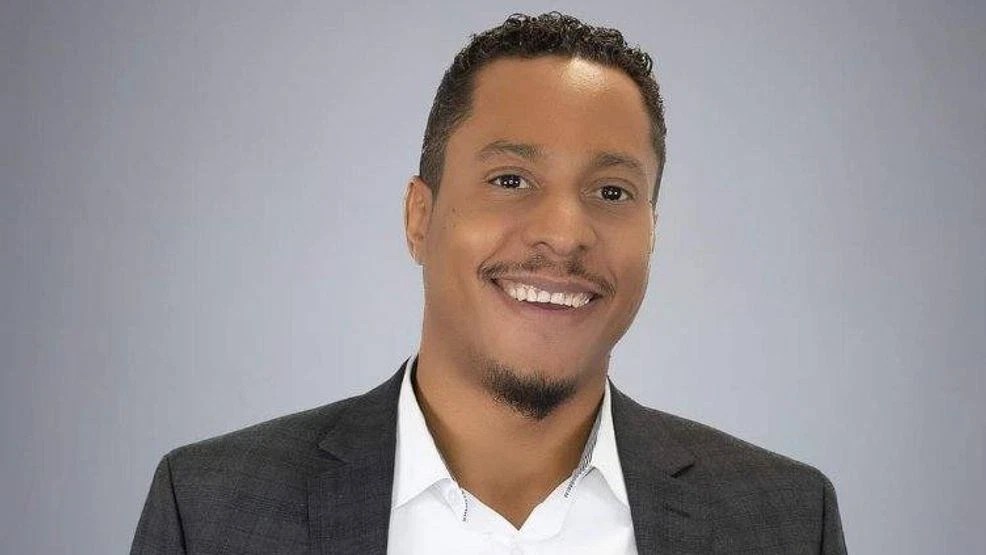
The tragic death of Brandon Durham in Las Vegas has cast a harsh spotlight on law enforcement practices and the accountability mechanisms designed to govern their use of force. The incident, which unfolded in the early hours of November 12, 2024, represents not only the 13th officer-involved shooting this year but also the eighth fatal one, marking a stark escalation in such events compared to the previous year. At the heart of this case lies a profound societal question: how do we reconcile public safety with the rights of individuals, especially in moments of crisis?
The Las Vegas Metropolitan Police Department (LVMPD) reported receiving a call at 12:40 a.m. regarding an alleged assault with a gun at a residence on Wine River Drive. Brandon Durham, the 43-year-old homeowner, called 911 stating that two individuals had forcibly entered his home, endangering both him and his 15-year-old daughter. According to the police, officers arrived to find visible property damage and the sounds of distress emanating from within the house. Officer Alexander Bookman, who has been with LVMPD since 2021, led the entry. What followed was a brief but catastrophic series of events: Durham and another individual, identified as Alejandra Boudreaux, were reportedly engaged in a physical altercation involving a knife. Officer Bookman fired six shots, striking Durham, who was later pronounced dead at the scene.



Conflicting Narratives and the Pursuit of Truth
Body camera footage, while offering some clarity, has fueled further controversy. The footage shows Durham in his own hallway, engaged in a struggle. The knife, central to the altercation, was reportedly in Boudreaux’s possession, Officer Bookman’s decision to use deadly force occurred within mere seconds, raising questions about whether non-lethal alternatives were available or appropriate under the circumstances.
Critics have pointed to the rapid escalation of force as emblematic of systemic issues in law enforcement. Durham’s family and advocates argue that the officer misinterpreted the situation, targeting the victim rather than the aggressor. They highlight that Durham was reportedly shouting for help when he was shot, a detail that casts doubt on the justification for lethal force. Conversely, LVMPD has defended Bookman’s actions as consistent with the “objectively reasonable standard” outlined in Graham v. Connor. This legal precedent evaluates officers’ decisions based on their perception of the threat at the moment, without the benefit of hindsight.

Purple=Boudreaux
Green=Durham
Yellow=Knife

Purple=Boudreaux
Green=Durham
Yellow=Knife
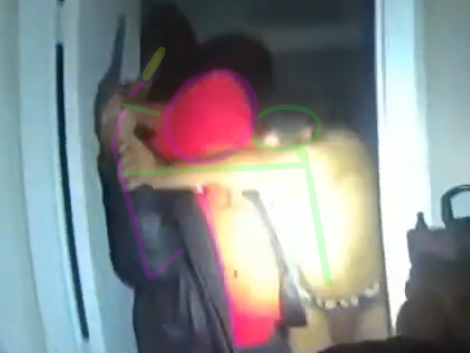
Purple=Boudreaux
Green=Durham
Yellow=Knife
This incident does not exist in isolation. The LVMPD has faced criticism for an uptick in officer-involved shootings, with 2024 already doubling the figures from 2023. The disparity underscores broader issues of training, situational awareness, and community trust. The dynamic nature of incidents like these—where officers must make split-second decisions—highlights the complexity of policing. However, it also demands a critical evaluation of whether existing protocols adequately prioritize de-escalation and the preservation of life.
Accountability and the Path Forward
In the wake of Durham’s death, calls for accountability have intensified. Civil rights groups and community leaders have demanded that Officer Bookman face charges, with many pointing to a perceived reluctance in holding law enforcement to account. The Clark County District Attorney’s Office has announced that the case will proceed to a grand jury to determine whether charges are warranted. This process, while crucial, is often fraught with delays and perceived biases, leading to skepticism among those seeking justice for Durham’s family.
Moreover, this case has reignited debates about the broader culture of policing in America. Critics argue that systemic issues—ranging from racial bias to an over-reliance on force—continue to undermine public trust. Durham, a Black man, is among a disproportionate number of people of color who face fatal encounters with police. This racial dimension adds a layer of urgency to calls for reform, with activists advocating for greater transparency, improved training in de-escalation tactics, and the implementation of independent oversight mechanisms.

3×3 Vinyl Sticker
$5.00

3×3 Vinyl Sticker
$5.00
The events of November 12 are a sobering reminder of the high stakes involved in law enforcement. Officers are tasked with making life-or-death decisions in moments of extreme pressure, yet their actions must be guided by a commitment to justice and the protection of life. For Durham’s family and the Las Vegas community, this tragedy represents a call to action: to demand accountability, to advocate for systemic change, and to ensure that such incidents are not reduced to statistics.
As investigations continue, the legal and societal implications of this case will likely reverberate far beyond Las Vegas. At its core, the question remains: how do we create a system where officers are equipped to respond to crises without compounding the harm? Achieving this balance will require not only policy reforms but also a cultural shift—one that prioritizes humanity and justice over fear and force.
Discover more from KVIG Informative
Subscribe to get the latest posts sent to your email.


 KVIG Informative