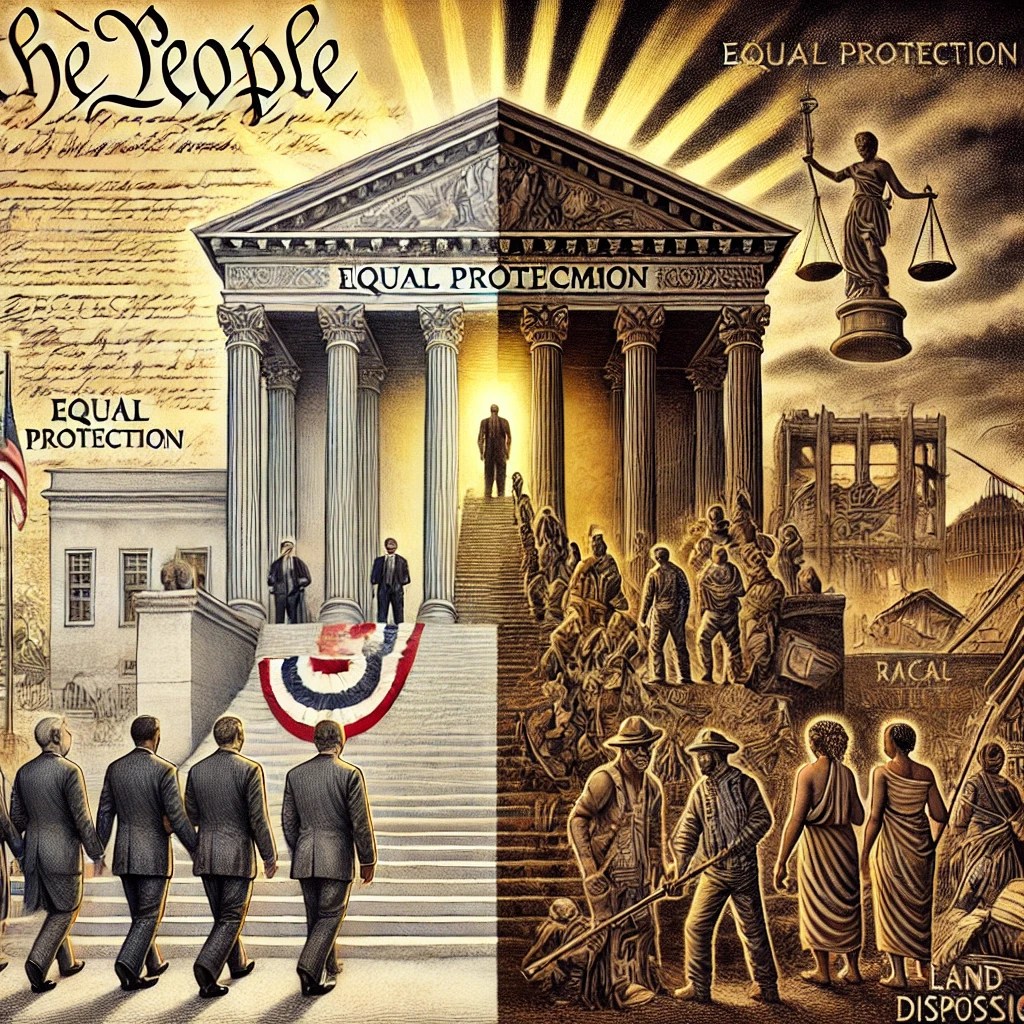
The 14th Amendment, ratified in 1868, was framed as a monumental step toward equality in the aftermath of the Civil War. Sold to the public as a safeguard for the rights of formerly enslaved people, it promised citizenship, due process, and equal protection under the law. However, the reality of its application tells a different story—one in which the amendment’s protections were selectively enforced, often benefiting European immigrants, corporations, and religious groups like Mormons while failing to shield Black Americans, Indigenous peoples, and other marginalized communities from systemic disenfranchisement.
Its ratification was not without resistance. Southern states, still reeling from the loss of the Civil War, were forced to adopt the amendment as a condition for re-entry into the Union. White elites feared the loss of their dominance, and while the amendment legally granted citizenship to Black Americans, states quickly implemented Black Codes and later Jim Crow laws to circumvent its intent. Meanwhile, the federal government, driven by economic expansion and the desire to solidify control over western territories, found ways to weaponize the amendment’s provisions in favor of corporate and settler interests.
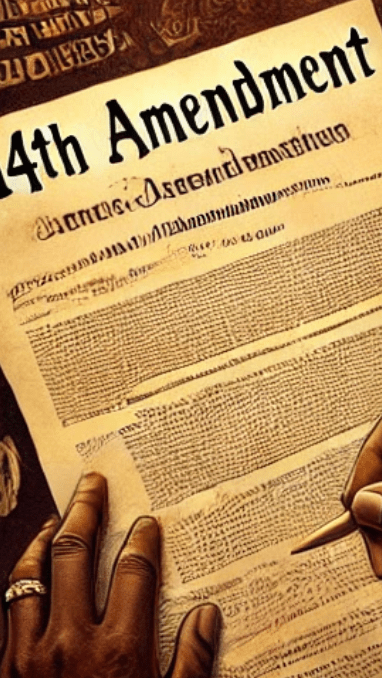
The amendment’s most immediate impact was birthright citizenship, a principle that, in theory, applied to all people born on U.S. soil. But in practice, its benefits were not distributed evenly. While it provided a clear path for European immigrants to integrate into American society, Indigenous peoples were initially excluded, as they were considered members of sovereign nations rather than U.S. citizens. It was not until the Indian Citizenship Act of 1924 that Indigenous people were formally recognized under U.S. law, and even then, many were denied the full rights of citizenship through continued disenfranchisement and land dispossession.
This legal manipulation did not occur in isolation. As corporations gained rights under the 14th Amendment, Black Americans were systematically stripped of theirs through voter suppression, racial violence, and legal loopholes like grandfather clauses and literacy tests. The federal government, despite its professed commitment to equality, did little to intervene. Instead, it prioritized economic growth, westward expansion, and political stability over the enforcement of civil rights. The very amendment that was supposed to be a safeguard against discrimination was twisted into a tool that upheld structural inequalities, shielding the powerful while leaving the vulnerable exposed.

3×3 Vinyl Sticker
$5.00

3×3 Vinyl Sticker
$5.00
Today, the 14th Amendment continues to serve as both a promise and a paradox. It remains a cornerstone of civil rights litigation, invoked in landmark cases from Brown v. Board of Education to Roe v. Wade. Yet its history reveals a pattern of selective enforcement, where protections are granted to those who align with the interests of power while being denied to those who challenge them. By examining this history, we can better understand how laws, even those framed as instruments of justice, can be manipulated to maintain existing hierarchies. The challenge remains not just to interpret the 14th Amendment in its broadest, most inclusive sense, but to ensure that its protections are truly applied to all, not just those whom the government deems worthy.
Discover more from KVIG Informative
Subscribe to get the latest posts sent to your email.


 KVIG Informative