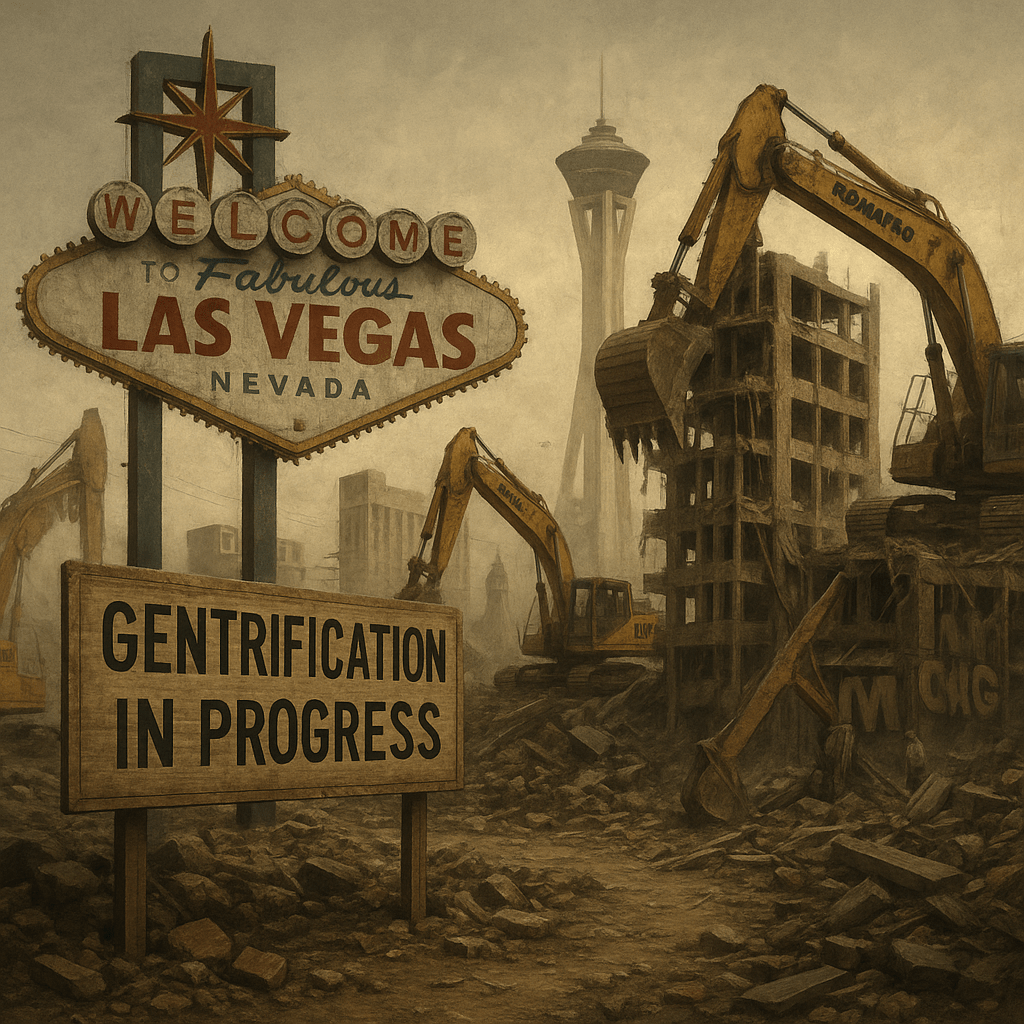
Gentrification—the transformation of neighborhoods through the influx of higher-income residents and new investment—has long been a feature of urban development. But in Las Vegas, a city historically known for its rapid growth and economic volatility, this process is colliding with a deepening housing affordability crisis. While some hail gentrification as a force of revitalization, for many communities in Las Vegas, it threatens displacement, cultural erasure, and the widening of inequality.
At its core, gentrification is driven by economic opportunity. Developers and investors are increasingly targeting neighborhoods with “rent gaps”—areas where current rents are significantly below what could be charged after redevelopment. In Las Vegas, this market logic is exacerbated by record-high home prices. According to recent reports, Las Vegas now ranks as the 11th least affordable housing market in the country. Home values have increased by nearly 50% in the past five years, and residents must now earn over $111,000 annually to comfortably afford a mortgage. For many Nevadans earning the median income of $70,723, homeownership is slipping out of reach.

The demographic and cultural shifts behind this transformation are also unmistakable. Areas like the Las Vegas Arts District have become magnets for young professionals and entrepreneurs, drawn by a mix of affordability (relative to coastal cities), vibrant culture, and proximity to the Strip. But with new cocktail bars, galleries, and high-end lofts come higher rents—and fewer options for the working-class families who have long called these neighborhoods home. The influx often rebrands neighborhoods as “up-and-coming,” but this branding masks the reality of displacement.
In West Las Vegas, a historically Black neighborhood, these dynamics are deeply felt. Longtime residents have voiced concerns over the loss of community spaces, rising rents, and the replacement of cultural institutions with generic development. Some worry that redevelopment efforts—even when couched in the language of opportunity—do more to attract outsiders than uplift those already living there. Meanwhile, initiatives to revitalize downtown North Las Vegas have raised similar questions about who benefits and who gets priced out.

Yet, solutions exist—if there’s the political will to pursue them. Community land trusts (CLTs), for example, have shown promise in ensuring long-term affordability by separating land ownership from housing ownership. Rent control, though controversial in Nevada, is being debated at the state and federal levels. Some critics argue that such interventions could limit housing supply or disproportionately harm minority renters if not implemented carefully.

3×3 Vinyl Sticker
$5.00

3×3 Vinyl Sticker
$5.00
The story of gentrification in Las Vegas is not just about real estate—it’s about power, memory, and survival. As the city continues to grow, the question is not whether change will come, but how it will be managed—and who will get to stay. Without meaningful protections and a commitment to inclusive development, Las Vegas risks becoming a city of empty luxury and hollowed-out history. The fight against displacement is not a war on progress; it’s a call for a future where development does not come at the cost of dignity.
Discover more from KVIG Informative
Subscribe to get the latest posts sent to your email.


 KVIG Informative