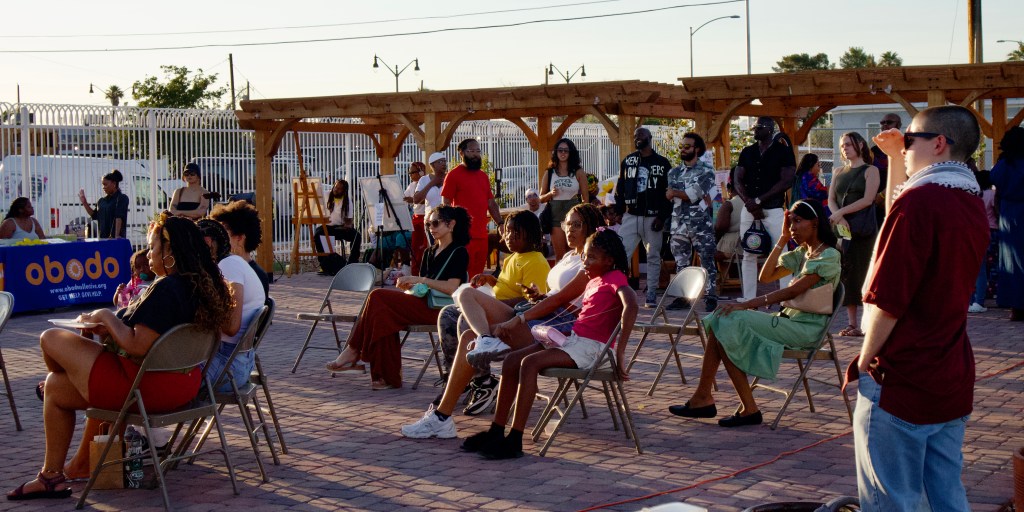
In a city often defined by neon excess and cultural displacement, a different kind of light pulses from Las Vegas’ historic West Side—a light rooted in earth, driven by women, and watered by the will to build what’s been denied. This is the home of the Obodo Collective, a grassroots nonprofit reclaiming not just land, but language, culture, and connection. At the center of this movement stand three women—Tameka Henry, Cheyenne Kyle, and Christina Monique Flores Escobar—who remind us that healing isn’t theoretical. It is physical. It is cultural. And it is deeply political.

Tameka Henry doesn’t wait for systems to change. She builds alternatives. As Executive Director and co-founder of the Obodo Collective, Tameka’s vision is grounded in transforming the structures that keep communities in cycles of poverty and exclusion. Under her leadership, the collective established an urban farm and grocer on C Street—a space she calls a “third place,” not quite home and not quite work, but something vital in between. It is where neighbors gather, learn, organize, and remember what it feels like to be part of something larger than survival.
That space hasn’t been easy to sustain. Like many community-rooted efforts, Obodo has faced the threat of financial collapse. Tameka has worn every hat—grant writer, organizer, farmer, school board member—carrying not just operations but the emotional and spiritual weight of protecting a dream. “We’re not here asking for charity,” she reminds. “This is about sovereignty. This is about what it means to survive and thrive together.” In a city where gentrification often erases rather than remembers, her presence is resistance.
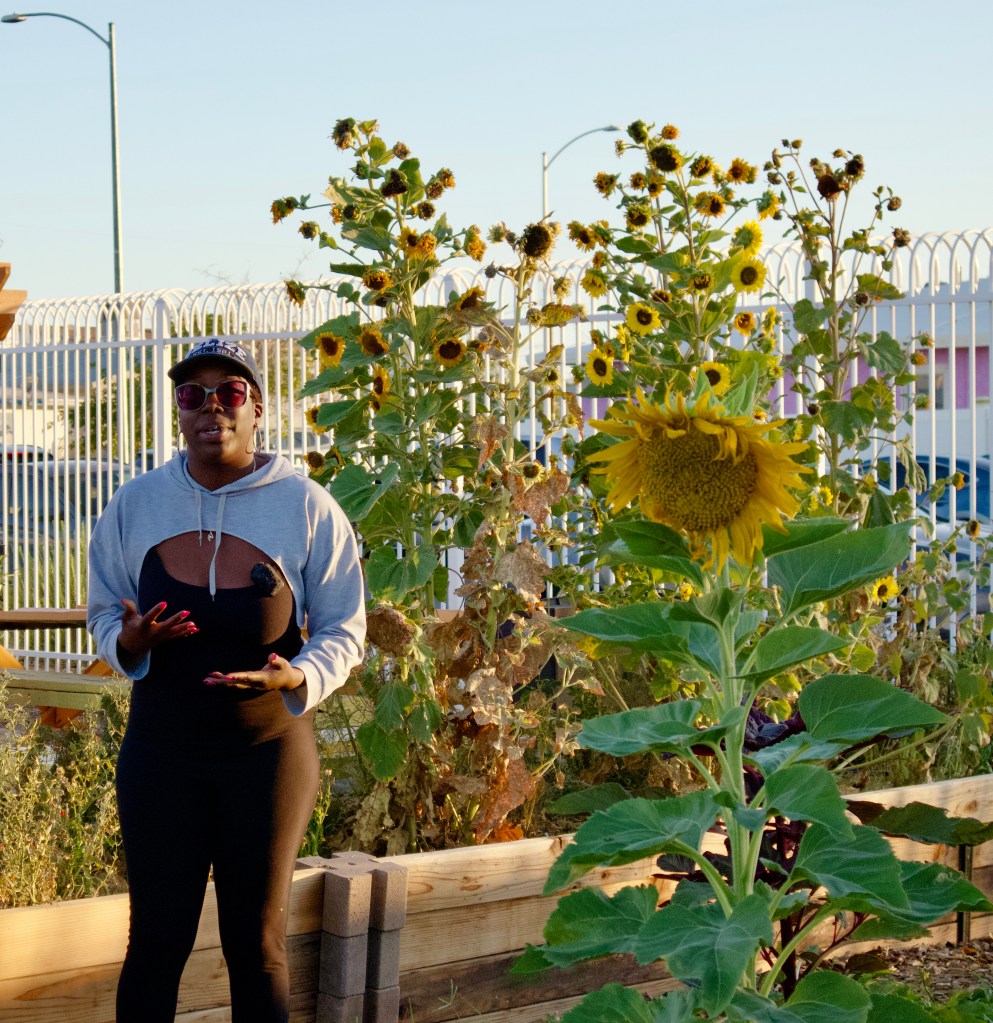
But it’s not Tameka alone. On the land itself, stewarding its rhythms and possibilities, is Cheyenne Kyle. Cheyenne, the Collective’s Food Programs Coordinator, tends the soil with the quiet strength of someone who knows food is sacred. Her work is more than farming—it’s a blueprint for food sovereignty. Through programs like the Green Grocer and Double Up Food Bucks, she ensures that fresh, local produce is not a luxury, but a birthright.
For Cheyenne, the land isn’t just a resource. It’s kin. “We can grow 300 days a year here,” she says, dismantling myths about desert agriculture with a seed in one hand and history in the other. “This land can nourish us if we care for it.” She speaks of soil not as property but as ancestor. Her work reminds us that food justice is climate justice, is cultural justice, is economic justice. It’s all connected.

And that connection doesn’t end with the soil. It extends into the sensory, the expressive, the soulwork of community building. That’s where Christina Monique Flores Escobar—known as Psychedelic Chola—enters. A multidisciplinary artist and cultural organizer, Christina bridges the farm to the larger cultural ecosystem of the city. At the recent Obodo fundraiser, she curated a live painting segment that turned brushstrokes into mutual aid. Local artists donated time and labor to paint on site, creating pieces that were later auctioned to fund the farm. “Art is more than expression,” she said. “It’s accountability. It’s how we show up for each other.”
Christina’s work isn’t performative—it’s participatory. Alongside her was Heru Akhet, whom she credits as the logistical mastermind helping her execute the event’s vision. Together, they curated a gathering that wasn’t just about raising funds—it was about raising frequencies. The event featured poets, vendors, live music, and community storytelling, all converging into a shared refusal to let the West Side be erased.
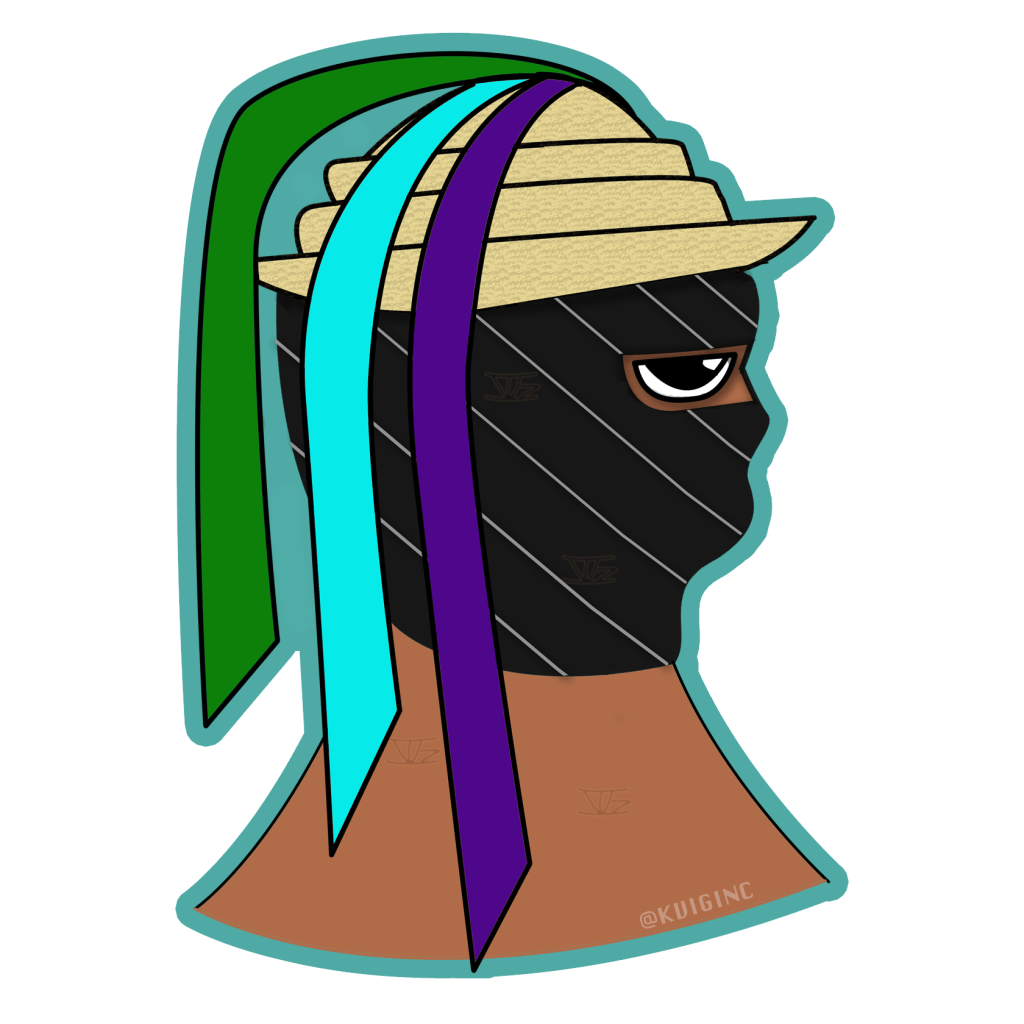
3×3 Vinyl Sticker
$5.00

3×3 Vinyl Sticker
$5.00
This isn’t just a feel-good story about good people doing good things. It’s a declaration of what’s possible when communities are resourced, respected, and rooted. Tameka, Cheyenne, Christina, and Heru are not anomalies. They are what happens when barriers fall and brilliance rises. They are what happens when you plant seeds in soil that remembers.
Obodo means “community” but its meaning runs deeper than translation. It is a call. A practice. A return. In a world built to disconnect, the Obodo Collective offers something radical: the chance to belong—to land, to purpose, and to each other.
Discover more from KVIG Informative
Subscribe to get the latest posts sent to your email.

 KVIG Informative