
In the early hours of February 3, 2026, an officer-involved shooting inside a South Maryland Parkway apartment complex left both 28-year-old Quinton Baker and his young child dead, raising urgent questions about decision-making, training practices, and the handling of high-risk encounters involving mental-health crises.
The incident began when a woman called police reporting that Baker had assaulted her, threatened her life, and taken their child. When officers arrived, Baker retreated into the apartment with the child and remained armed. Police body-camera footage shows officers attempting to gather information from the mother outside as she pleaded for her child’s safety.
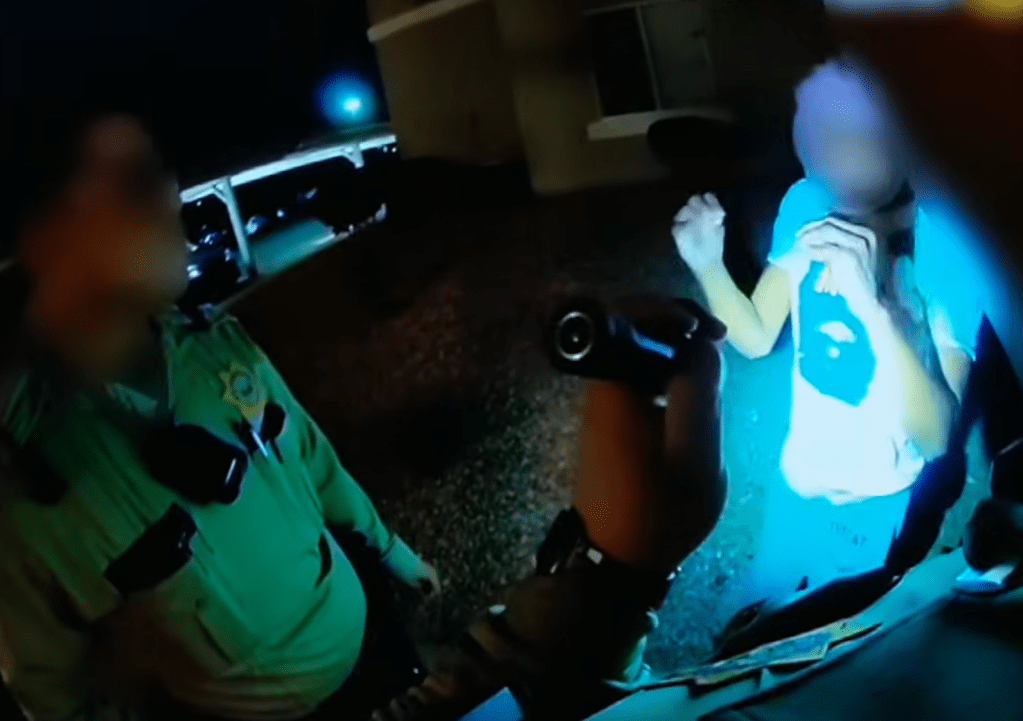
Moments later, Baker emerged from the apartment holding the child in his left arm with a handgun pressed against the child’s chest. Officers issued commands, which Baker ignored. Throughout the exchange, one officer’s body-camera captured something notable: Officer Damon O’Donnell was being given step-by-step commands in a manner resembling real-time coaching or training, raising questions about preparedness and the level of tactical leadership present in a rapidly escalating situation.
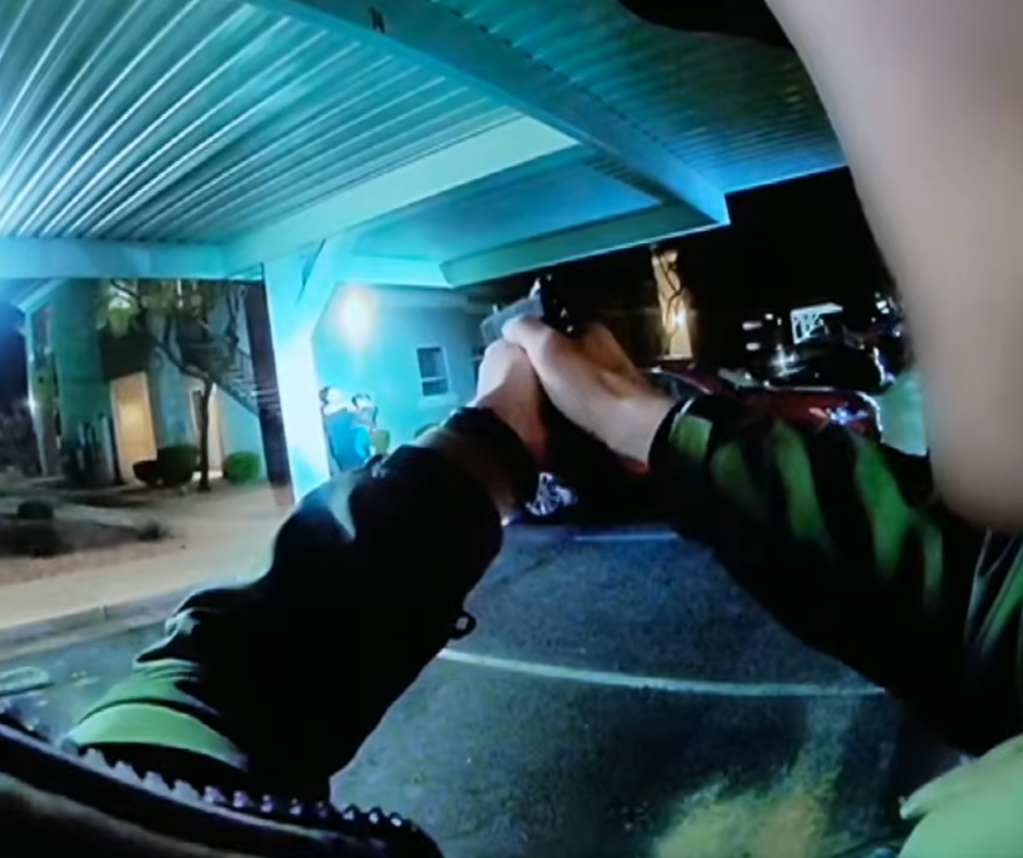
The confrontation lasted seconds. As Baker moved toward the officers, he made statements about killing himself and referenced the mother in ways the department later described as consistent with earlier threats. Officers Jonathan Lowe and Damon O’Donnell fired their weapons. Baker fired as well. Both he and the child were struck.
An officer carried the child more than 300 yards to medics positioned outside the complex. Despite those efforts, the child was pronounced deceased at a nearby hospital. Baker died at the scene.
Autopsy results later confirmed that Baker sustained four gunshot wounds. The child sustained three gunshot wounds—two contact wounds inflicted by Baker and one round to the leg. Five shots were fired in total, and one round remains under forensic review to determine whether it came from an officer’s weapon or from Baker’s firearm. Assistant Sheriff Peterson confirmed that the origin of this round is still pending laboratory analysis.
This uncertainty reflects a broader complexity: a gunshot wound to the head can trigger immediate involuntary neuromuscular reactions, documented across emergency medicine and forensic pathology. When the brain sustains catastrophic trauma, the nervous system can misfire, causing the body to tense, limbs to jerk, or hands to clench.
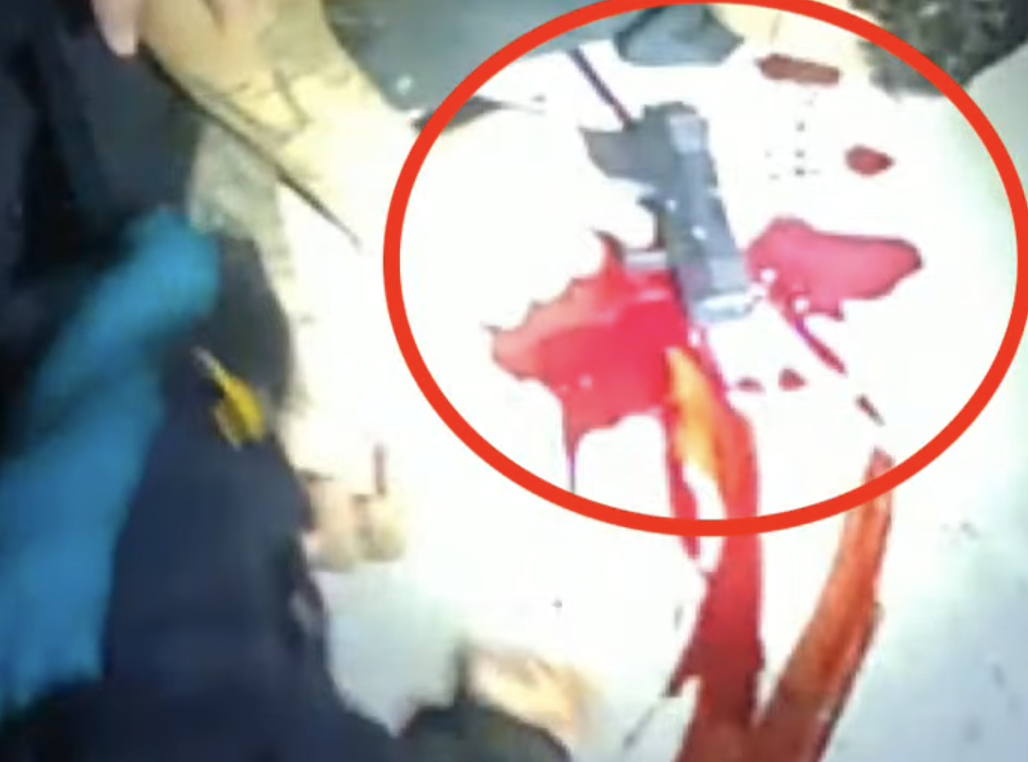
In cases involving firearms, these involuntary contractions can trigger an unintentional discharge. These reactions occur within milliseconds—faster than conscious thought—and can set off a chain of motions that outwardly resemble intentional action.
The department’s handling of the encounter has also drawn scrutiny for its approach to negotiation and crisis intervention. Body-camera footage shows no clear implementation of a layered negotiation strategy despite Baker expressing a mix of threats, desperation, and instability. The unclear intention behind Baker’s final movements—whether he intended to surrender the child or escalate—remains part of the continuing investigation.


Officials maintain that the officers had only milliseconds to react to an immediate lethal threat. But for a community already strained by repeated incidents involving high-risk use of force, the questions extend beyond that moment: whether protocols were followed, whether the officers on scene were adequately supported, and whether earlier intervention systems failed before the crisis ever began.
The department has placed wellness teams with the officers involved. The family is left mourning the loss of a child. And the city confronts another case in which public safety systems meant to prevent tragedy arrived only in the aftermath of irreversible harm.

3×3 Vinyl Sticker
Sliding scale $3.00-$8.00

3×3 Vinyl Sticker
Sliding scale $3.00-$8.00
As this case continues through forensic review and internal evaluation, the unanswered questions—about training, decision-making, weapon discharge, and the final moments of the child’s life—continue to shape public concern. The community now looks to the full record, seeking clarity not only about what happened in those few seconds but about every condition that allowed those seconds to unfold the way they did.
Discover more from KVIG Informative
Subscribe to get the latest posts sent to your email.


 KVIG Informative