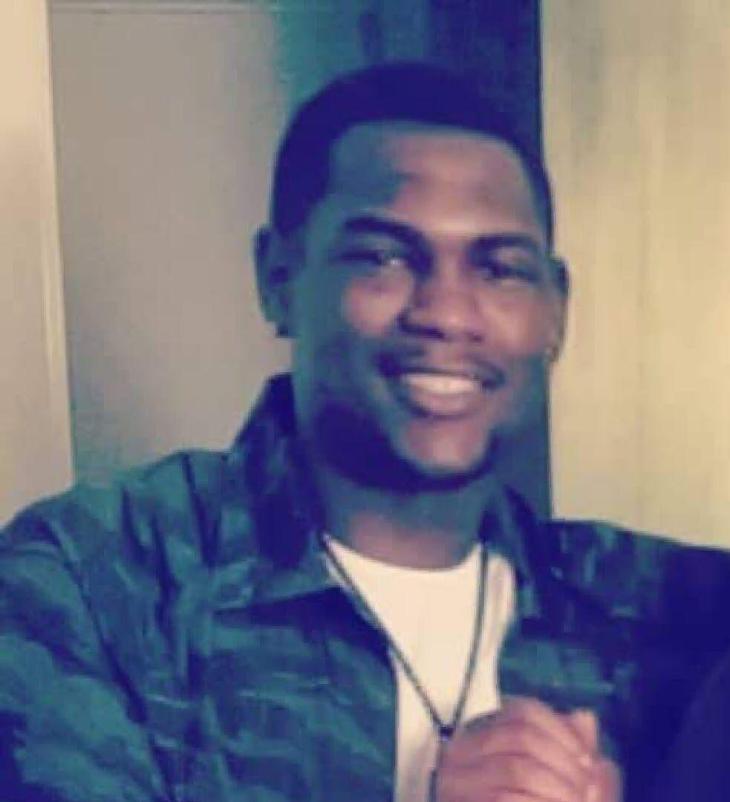
On the morning of Jan. 8, 2020, residents in a North Las Vegas neighborhood near Ann Road and Clayton Street called 911 to report a man passed out in the gutter on the 5600 block of Indian Springs Drive. When officers arrived, they found 25-year-old Sidney De’Trae McKnight lying face down with a gunshot wound to the head. He had been dead for hours.
The Clark County Coroner’s Office ruled McKnight’s death a homicide two days later. North Las Vegas police launched a homicide investigation. Detectives determined he lived in the surrounding neighborhood and that witnesses reported hearing gunshots sometime between midnight and 5 a.m. One month later, police issued a public plea for information. No arrests have been made.
McKnight was a 2012 graduate of Foothill High School and attended the College of Southern Nevada, where he studied mechanical engineering with an interest in sound engineering. According to family and friends, he worked in distribution for Amazon and held side jobs in the food industry to support his household alongside his mother, Freda Roberts. Friends described him as a gentle giant.

His case is part of a broader statistical landscape. According to local reporting from 2024, the Las Vegas Metropolitan Police Department has more than 1,500 cold cases in its files. In January 2022, LVMPD established a dedicated Cold Case Unit staffed by one sergeant, three full-time commissioned homicide detectives, and five part-time investigators tasked with pursuing unresolved homicide cases across the jurisdiction.
A cold case, as defined by LVMPD, is any murder, missing person, or suspicious death no longer actively investigated by the originally assigned detectives. The department divides cold cases into three categories: unsolved cases with no known suspects, unresolved cases in which suspects are known but never successfully prosecuted, and cases where new forensic technology such as DNA genetic genealogy might provide leads.
Across all three departments, the numbers reflect a troubling reality: most homicides are solved, but those that go cold often remain that way for years. LVMPD has reported a 95.62 percent clearance rate for 2024 homicides — likely the highest rate in several years, according to Homicide Lt. Robert Price. As of January 2026, only four homicides from 2025 in LVMPD’s jurisdiction remained unsolved.


But clearance rates measure recent cases. The cold case backlog stretches back decades. LVMPD’s online database of open homicide cases lists unsolved deaths dating back to 1941, organized by decade. The number of cases per year varies, but the pattern is consistent: the older the case, the less likely it will ever be solved.
Demographics tell part of the story. According to data from the Clark County Coroner’s Office, 172 people were killed in homicides in Clark County in 2024. Of those, 66 were Black, 39 were Hispanic, and 48 were white. National research has documented that homicides involving Black and Hispanic victims are less likely to be solved than those involving white victims, particularly in urban areas where resources are stretched and witness cooperation is limited.
The financial cost of maintaining cold case units is substantial. Forensic genetic genealogy — a tool that uses commercial DNA databases to identify suspects through familial matches — requires external lab services that can cost tens of thousands of dollars per case. LVMPD has partnered with companies like Othram and platforms like DNASolves to leverage these technologies, but budgets remain finite.

For families like Sidney McKnight’s, the passage of time does not dull the urgency. His family expressed frustration with the lack of progress. They reported reaching out to North Las Vegas police repeatedly, only to be transferred from one line to another or ignored entirely via email. The department, they said, had no answers.
North Las Vegas police told the local paper in February 2020 that detectives continued to investigate McKnight’s death and were seeking witnesses who might have information about the shooting. The department asked anyone with knowledge to contact its tip line at 702-385-5555. Five years later, no suspect has been publicly identified.
LVMPD, North Las Vegas PD, and Henderson PD all maintain anonymous tip lines through Crime Stoppers of Nevada, which offers cash rewards for information leading to arrests or indictments. The tip line operates 24 hours a day, with Spanish-speaking operators available. Tipsters are assured full anonymity — no names, no identification, no caller ID.
Discover more from KVIG Informative
Subscribe to get the latest posts sent to your email.


 KVIG Informative