In 2022, D.R. Horton — one of the nation’s largest homebuilders — paid $291 million to acquire a 12-employee company operating out of a faux-Mediterranean office park in Carson City. The purchase was not for the staff or the real estate. It was for the water.
Vidler Water Company spent two decades buying up remote farmland and drilling wells across Nevada, Arizona, Idaho, and New Mexico to amass a private water portfolio it then sold piece by piece to developers and municipalities in fast-growing suburbs. According to Grist, the company made a fivefold profit on one transaction after holding water rights for six years. Horton’s purchase of Vidler marked the clearest signal yet of where the West’s housing boom is headed: toward whoever controls the water.
Vidler is not alone. According to public records and investigative reporting by national outlets, the Nevada Independent, and ProPublica, a network of East Coast investment firms has quietly positioned itself across the Colorado River Basin — buying up thousands of acres of irrigated farmland not to farm it, but to secure the water rights attached to it.
Water Asset Management, a New York-based hedge fund, has invested $300 million in farmland across Arizona, California, Colorado, and Nevada since its founding in 2005, according to the Salt Lake Tribune and company disclosures. Its president, Matthew Diserio, has publicly described water in the United States as a “trillion-dollar market opportunity” and said he started the company on the belief that scarce clean water is the defining resource of this century.
In Colorado alone, Water Asset Management owns more than 2,500 acres of irrigated farmland in the Grand Valley, making it one of the largest landowners in the Grand Valley Water Users Association. In Nevada, the firm incorporated a subsidiary called U.S. Water and Land in 2009 and filed an application with the State Engineer to appropriate 300,000 acre-feet of floodwater from the Humboldt River for underground storage and later recovery — a project that would involve capturing water in high-flow years and banking it for future sale.
Greenstone Management Partners, a subsidiary of the financial services conglomerate MassMutual, purchased nearly 500 acres in Cibola, Arizona — a town of 300 people on the Colorado River — and approved a $27 million transfer of that water to Queen Creek, a growing Phoenix suburb 200 miles away. The deal is now tied up in litigation filed by three Arizona counties against the federal Bureau of Reclamation.
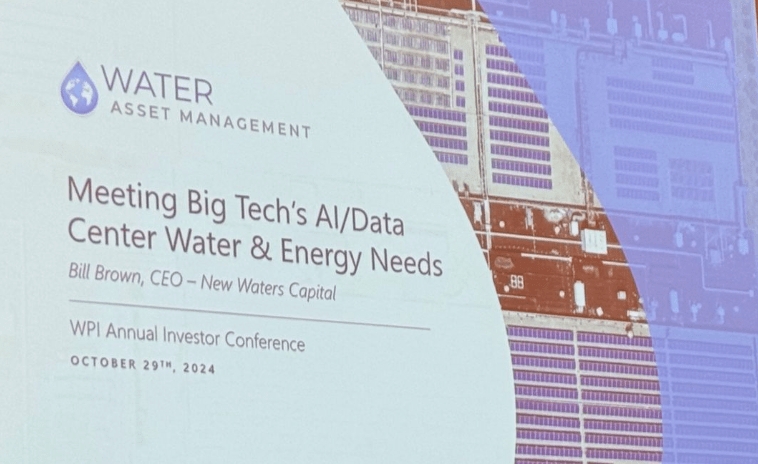
The firms describe themselves as water stewards. Water Asset Management’s website states it “invests in companies and assets that ensure water quality and availability for communities, agriculture and the environment.” It leases much of the farmland it buys back to the original farmers, allowing agricultural production to continue. Attorneys for the firms have told reporters that keeping land in agricultural use satisfies Nevada’s beneficial use requirement and prevents accusations of speculation.
But Nevada law contains an anti-speculation doctrine that prohibits holding water rights without putting them to beneficial use in a timely manner. Under Nevada Revised Statutes, water rights are forfeited if not used for five consecutive years. The doctrine was affirmed in a 2007 Nevada Supreme Court ruling involving Vidler itself, in which the court held that a water broker must demonstrate either direct beneficial use or a contractual relationship with a party who will use the water — not merely an intent to sell it later.
The legal question is whether leasing land back to farmers while holding rights for future sale constitutes beneficial use or constitutes warehousing water for speculation. Colorado River water managers have expressed concern publicly. Andy Mueller, general manager of the Colorado River Water Conservation District, told CBS News in 2023 that he views the firms as “drought profiteers” and added: “They’re trying to suck the very lifeblood out of these communities for their own financial benefit.”
In 2017, Water Asset Management’s chief investment officer, Disque Deane Jr., testified before the Nevada Legislature. He acknowledged that Nevada lacked the infrastructure to move water long distances — unlike California’s aqueducts or Arizona’s canal system. He proposed rotational fallowing programs in which farmers would be compensated to forgo irrigation in certain years when water is needed elsewhere, without necessarily giving up their rights. Deane told legislators that rural and urban Nevada must work together to “eliminate drought’s unique ability to prevent Nevada from reaching its maximum economic potential.”
The Nevada Division of Water Resources did not respond to requests for comment. Water Asset Management declined interview requests from multiple news organizations. The firm uses shell companies with names like WPI Hulet Farm AZ LLC and WPI II-GV6 Farm CO LLC to hold properties, according to CNN. County property searches show no listings under the Water Asset Management name, but records show mailing addresses that match the firm’s New York headquarters.

Goldman Sachs, according to Global Research reporting, approached the City of Reno in 2008 about a “long-term asset leasing” arrangement. The details of that approach were not made public. No deal was finalized.
The firms have hired powerful legal and political representation. James Eklund, the former director of Colorado’s Water Conservation Board and the state’s representative to the Upper Colorado River Commission, now represents Water Asset Management as counsel. Eklund was one of the architects of the Colorado River Drought Contingency Plan. Vidler employed Marc Reisner, the journalist who wrote “Cadillac Desert,” as a political consultant for several years before his death in 2000.
Federal drought funding has created additional financial incentives. Congress allocated $4 billion in drought relief, some of which can be used to pay farmers to fallow land and conserve water. Colorado’s System Conservation Pilot Program paid Grand Valley farmers $200 per acre-foot of water left in the river. Under that benchmark, Water Asset Management’s estimated 6,636 acre-feet of Colorado River water could currently be worth more than $1.3 million in conservation payments alone — separate from any sale of the underlying water rights.
Discover more from KVIG Informative
Subscribe to get the latest posts sent to your email.


 KVIG Informative