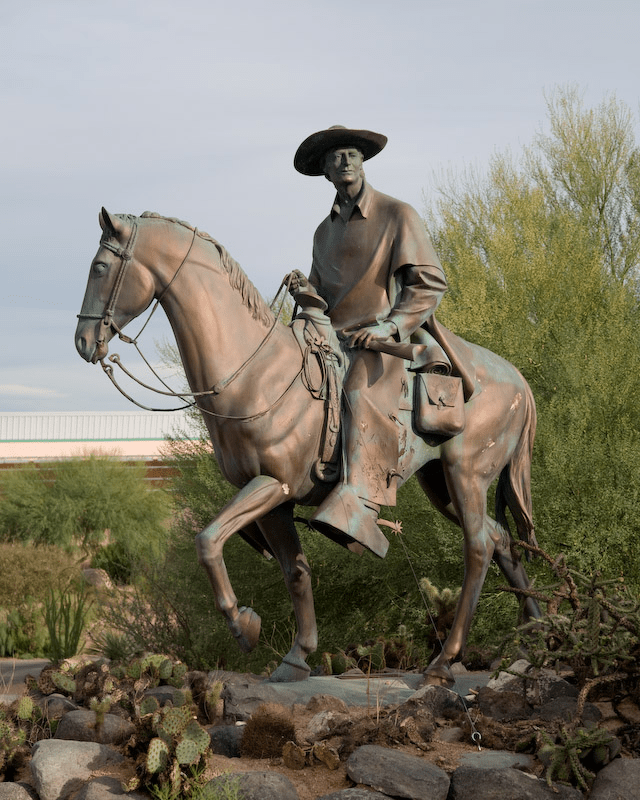
In the winter of 1829, Mexican trader Antonio Armijo led a trading party from New Mexico toward Los Angeles. His route crossed the Mojave Desert, a journey that required knowledge of water sources to survive. When the party stopped 100 miles northeast of what would become metropolitan Las Vegas, a scout named Rafael Rivera volunteered to search for springs.
Rivera found water in a lush valley fed by artesian springs. According to historians at UNLV and PBS, the springs had been used by humans for approximately 15,000 years before Rivera arrived. The Paiute and Ute peoples who lived in the area likely directed him there. Rivera called the place Las Vegas — Spanish for the meadows.
The naming of Las Vegas represents the first documented contact between Spanish-speaking traders and the Indigenous peoples of the valley. It would not be the only Spanish-language influence on Southern Nevada. By the time the city incorporated in 1905, the region carried dozens of place names rooted in the language of the traders and settlers who passed through: Charleston, Bonanza, Eldorado, and the valley itself.
The First Arrivals
According to the 1910 U.S. Census, 56 Hispanics lived in Las Vegas. Most arrived during the early 1900s as railroad workers. The arrival of the San Pedro, Los Angeles and Salt Lake Railroad in 1905 brought Mexican migrants to the valley, according to UNLV history professor Thomas Wright. This coincided with the Mexican Revolution, during which many sought to escape violence and political instability.
Immigration slowed during the Great Depression, when Hispanics were forcibly removed and used as scapegoats for unemployment. During World War II, President Franklin Roosevelt struck an agreement with the Mexican government to address labor shortages. The Bracero Program, introduced in the 1940s, brought migrant workers to Nevada for agricultural labor. The program formally ended in the 1960s, but its legacy shaped the demographics of rural Nevada and the outskirts of Clark County for decades.
By 1950, approximately 200 Hispanics lived in Las Vegas proper and nearly 350 in North Las Vegas, Henderson, and unincorporated Clark County, according to census records. During the 1960s and 1970s, Hispanic immigration increased from 578 to 9,937 people. The largest wave came in the 1980s, when Mexico’s economy collapsed, Wright said.
Segregation and Labor
Like Black residents, Hispanics faced segregation in Las Vegas. According to historical records, both communities were limited to menial labor positions or back-of-the-house work in casinos. Employment restrictions and housing covenants confined them to specific neighborhoods. The Westside, where most Black residents lived, also housed many of the city’s earliest Hispanic families. The east side became home to a growing number of Mexican and Central American immigrants during the 1970s and 1980s.
The casino industry, which employed the largest share of the valley’s workforce during the latter half of the 20th century, relied heavily on Hispanic labor in housekeeping, food service, and construction. According to labor historians, the Culinary Workers Union Local 226 became one of the most powerful multiethnic labor organizations in the country in part because of its ability to organize across Black, Hispanic, and immigrant communities.
In 1984, the Culinary Union struck multiple casinos and won significant wage increases and healthcare benefits. Hispanic workers made up a substantial portion of the striking workforce. By the 1990s, the union’s contracts set the standard for service industry wages across the valley. The union’s political power also influenced local elections and housing policy, particularly in neighborhoods where casino workers lived.
Growth, Crisis, and Recovery
By 2000, Nevada had 394,000 Hispanics, with 302,000 residing in Clark County. Approximately 75 percent were Mexican. Salvadorans numbered at least 7,000, though researchers believe the count was closer to 12,000 due to census confusion over national origin categories.
The 2000s brought rapid growth. Hispanic-owned businesses proliferated along Eastern Avenue, Charleston Boulevard, and Bonanza Road. Mercados, taquerías, panaderías, and money transfer services catered to immigrant communities and became economic anchors in neighborhoods where chain stores had not yet arrived. The informal economy also grew, with workers offering services in construction, landscaping, childcare, and domestic labor outside traditional employment structures.
The 2008 financial crisis hit the valley hard. Foreclosures concentrated in neighborhoods with high Hispanic populations, particularly in North Las Vegas and the east side. Construction work, which employed thousands of Hispanic workers during the housing boom, collapsed. Unemployment in some census tracts exceeded 20 percent. Recovery took years, and many families never regained the equity lost when housing values cratered.
Education became another site of influence and struggle. Clark County School District established bilingual education programs in the 1970s following federal mandates, but funding and implementation varied widely across schools. By the 1990s, schools on the east side and in North Las Vegas enrolled majority Hispanic student populations, many of whom were English language learners. Graduation rates lagged behind the district average. Advocacy groups formed to push for more bilingual teachers, culturally responsive curricula, and equitable resources.
The Present
By 2020, the Census Bureau reported that Nevada was a majority-minority state, meaning no single racial or ethnic group constituted more than 50 percent of the population. In Clark County, Hispanic residents made up nearly one-third of the total. The shift changed political dynamics. Voter registration drives in Hispanic neighborhoods became a focus of statewide campaigns. Spanish-language outreach, once an afterthought, became standard in competitive races.
Spanish-language media, including radio stations, newspapers, and television programming, have operated continuously in Las Vegas since the 1970s. The first Spanish-language newspaper in Nevada, El Mundo, began publishing in Las Vegas in 1980. Catholic churches serving Spanish-speaking congregations became centers of community organizing and mutual aid during the 1980s and 1990s.
The valley Rafael Rivera named in 1829 now carries a population that speaks his language, works the jobs that built the city’s infrastructure, and fills the schools and neighborhoods that expanded across the desert over two centuries. The influence is structural. It is economic. It is cultural. And it began with a scout looking for water in a place where people had lived for 15,000 years before anyone named it the meadows.
Discover more from KVIG Informative
Subscribe to get the latest posts sent to your email.


 KVIG Informative