When you pass the Welcome to Fabulous Las Vegas sign at the southern end of the Strip, you have not entered Las Vegas. You have entered Paradise, an unincorporated township in Clark County that casino operators created in 1950 to block a city annexation attempt and avoid municipal taxes.
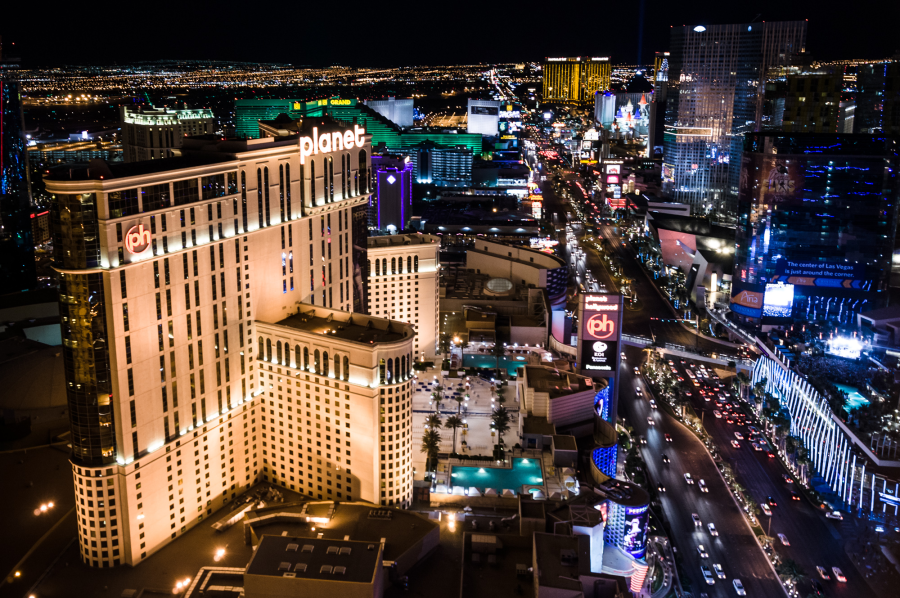
The Las Vegas Strip, Harry Reid International Airport, UNLV, the Las Vegas Convention Center, and most of the valley’s major resort properties sit in unincorporated Clark County. The Strip’s address is Las Vegas Boulevard. The ZIP code is Las Vegas. But the jurisdiction is Paradise. The government is the Clark County Commission. The taxes go to the county, not the city.
How It Was Built
According to UNLV history professor Michael Green and former professor Eugene Moehring, the arrangement was intentional. In 1950, Las Vegas Mayor Ernie Cragin proposed annexing the Strip to capture tax revenue from the resort corridor that had begun developing just outside city limits. Casino owners, led by Flamingo operator Gus Greenbaum, lobbied the Clark County Commission to create an unincorporated township that would permanently block the city’s annexation power.
On December 8, 1950, the commission voted to establish Paradise. The first town board consisted of five people: Greenbaum, Moe Dalitz of the Desert Inn, and executives from the El Rancho, Last Frontier, and Thunderbird — all casino managers. Greenbaum became what historians call the unofficial mayor of Paradise. He was also a mobster who had been installed by Meyer Lansky to run the Flamingo after Bugsy Siegel was murdered in 1947. Eight years after Paradise was created, Greenbaum was killed in another gangland-style murder that was never solved.
Under Nevada law passed at the behest of casino operators, no city could annex unincorporated land without county commission approval. The law was pushed through the state legislature with the help of then-Lt. Gov. Cliff Jones, who also happened to be a co-owner of the Thunderbird casino, according to Green.
Paradise was initially one mile wide and four miles long. Within a month, it expanded to 54 square miles. In 1953, the county split Paradise into two townships, creating Winchester to the north. Spring Valley was added in 1981. Enterprise followed in 1996. Sunrise Manor was created in 1957. Today, six unincorporated towns exist in the Las Vegas Valley: Paradise, Winchester, Spring Valley, Enterprise, Sunrise Manor, and Whitney.
The Tax Difference That Still Exists
The tax differences that motivated Paradise’s creation persist. When Paradise was created, property taxes inside city limits were $5 per $100 of valuation compared to $3.48 per $100 outside the city. Gambling and liquor licenses cost more inside the city. Room taxes differ as well. According to the Nevada Independent, the room tax in unincorporated Clark County is 12 percent. In the city of Las Vegas, it is 13.38 percent.
In fiscal year 2023-2024, hotel room taxes in the Strip corridor generated more than $700 million. That revenue goes to Clark County, not to the city of Las Vegas. The Strip’s casino resorts reported $25.3 billion in total departmental revenue for fiscal year 2024. Gaming made up 35 percent of that total. The rest came from lodging, food and beverage, entertainment, and retail.
The Scale of What Was Created
The population of unincorporated Clark County surpassed 1 million in 2018, nearly twice the population of the city of Las Vegas. Spring Valley alone has 218,697 residents, making it one of the most populated unincorporated communities in the United States. Paradise has approximately 189,499 residents. Sunrise Manor has 198,187.
Three incorporated cities exist in the valley: Las Vegas, North Las Vegas, and Henderson. Everything else is unincorporated and governed directly by Clark County. The six unincorporated towns sit within three state court jurisdictions — Las Vegas Township, North Las Vegas Township, and Henderson Township — which do not align with city or town boundaries. A resident can live in a town and a township simultaneously, but not in a city and a town.
Law enforcement adds another layer. LVMPD is a consolidated force created by agreement between Clark County and the city of Las Vegas. It serves both the city and all unincorporated areas including the Strip. Henderson and North Las Vegas maintain their own police departments. Las Vegas and Clark County also operate separate fire departments, though public schools, health, water, and flood control operate countywide.
Attempts to Change It
The city of Las Vegas tried multiple times to annex the Strip during the 1950s. Casino owners blocked every attempt. Under the law they helped pass, annexation required a vote of the people living in the township and approval from the county commission. Faced with higher taxes, Paradise residents voted to remain unincorporated. The county commission, eager to expand its own tax base, sided with the residents and the casino operators.
Moehring wrote in his 1989 book Resorts City in the Sunbelt that the county commissioners were anxious to block Las Vegas expansion while enlarging their own tax and power bases. Whether bribes were involved remains unproven but widely suspected. The lobbyists included Desert Inn operator Wilbur Clark, who served as frontman for Cleveland mobster Moe Dalitz.
Today, new casino developments still locate in Paradise when possible to avoid city taxes. The jurisdictional complexity also complicates policy coordination. Zoning decisions, planning regulations, public works projects, and economic development initiatives must navigate multiple layers of overlapping authority. What works in Paradise might not work in Las Vegas. What Henderson approves might conflict with county rules. The result is a fragmented governmental landscape where borders matter more than maps suggest.
Paradise began as a mile-wide strip created by casino managers to dodge municipal oversight. It remains that way 75 years later. The difference is scale. Paradise now includes most of the Las Vegas Strip, the airport, UNLV, the convention center, and nearly 200,000 residents. The city that tried to annex it collects none of the tax revenue. The county that created it controls the most valuable commercial corridor in Nevada. And the sign that welcomes visitors to fabulous Las Vegas sits in a township that was invented by mobsters to make sure Las Vegas never got the money.
Discover more from KVIG Informative
Subscribe to get the latest posts sent to your email.


 KVIG Informative