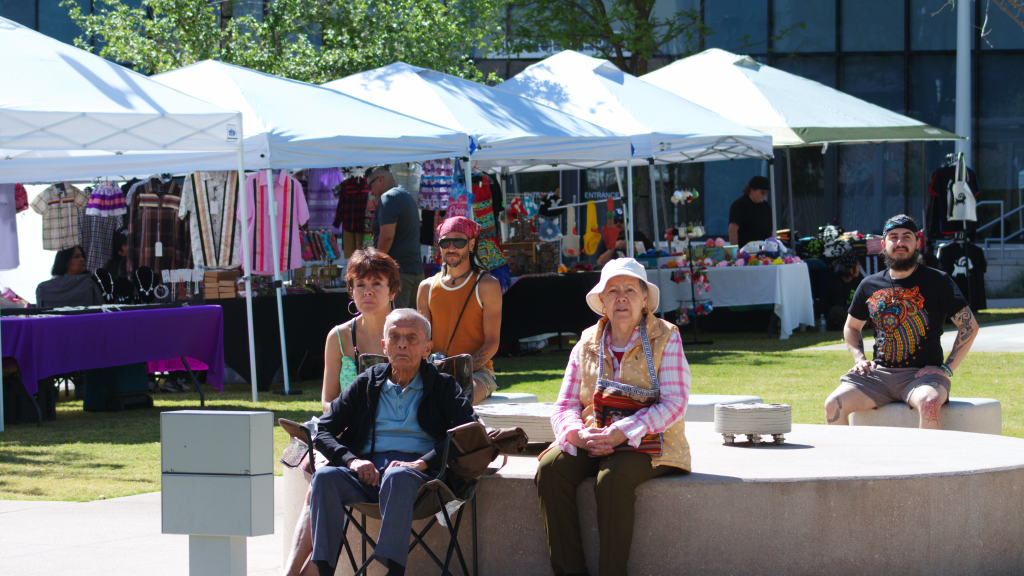
When Goodman Plaza opened Saturday morning, fewer than 40 people had shown up. Vendor tables lined the perimeter. A small stage sat ready. The Indigenous talent showcase organized by NUWU Art and Indigenous AF had drawn artists from across the valley and from reservations out of state, but the crowd remained sparse through the early hours.
By afternoon, foot traffic picked up. Somewhere between 60 and 100 people cycled through over the course of the day. Four performers took turns at the microphone. Five talent showcases ran back to back. The turnout would not register as significant by Las Vegas standards, but organizer Fawn Douglas had spent eight years trying to make this day happen. The numbers mattered less than the fact that it was happening at all.
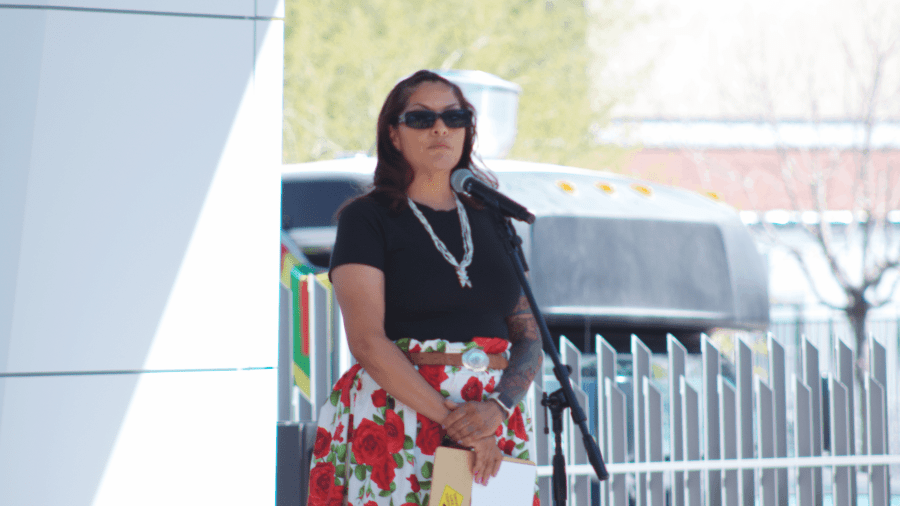
Douglas stood before the scattered audience and told them to film everything. Photograph everything. Witness what was in front of them. Then she said something that carried more weight than the permission to document. She asked people not to let sorrow consume them. The instruction felt specific, deliberate. She wanted the plaza to function as a safe space, open to everyone, free from animosity or grief that might close people off from one another.
The event had originally been planned for 2018. Unforeseen circumstances killed it before it could take root. Douglas and her partner spent the years between then and now working toward a permanent headquarters for Indigenous AF. That building is coming soon. The showcase at Goodman Plaza served as both announcement and proof of concept. If underutilized public spaces downtown could host Indigenous performers and vendors without gatekeeping or corporate sponsorship requirements, more events could follow.
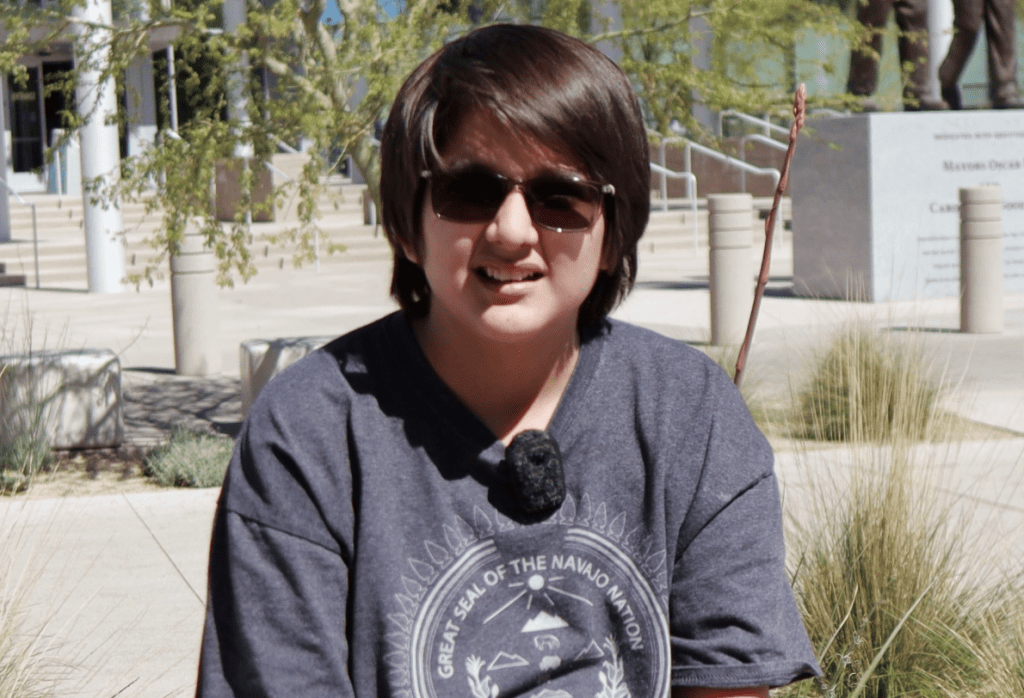
Near the stage, a 15-year-old named Niko Reynoso practiced with a yo-yo. He had learned tricks by watching TikTok videos and asking his mother, Kathleen, to buy him the equipment. What started as casual interest turned into something more serious. This would be his first public performance.
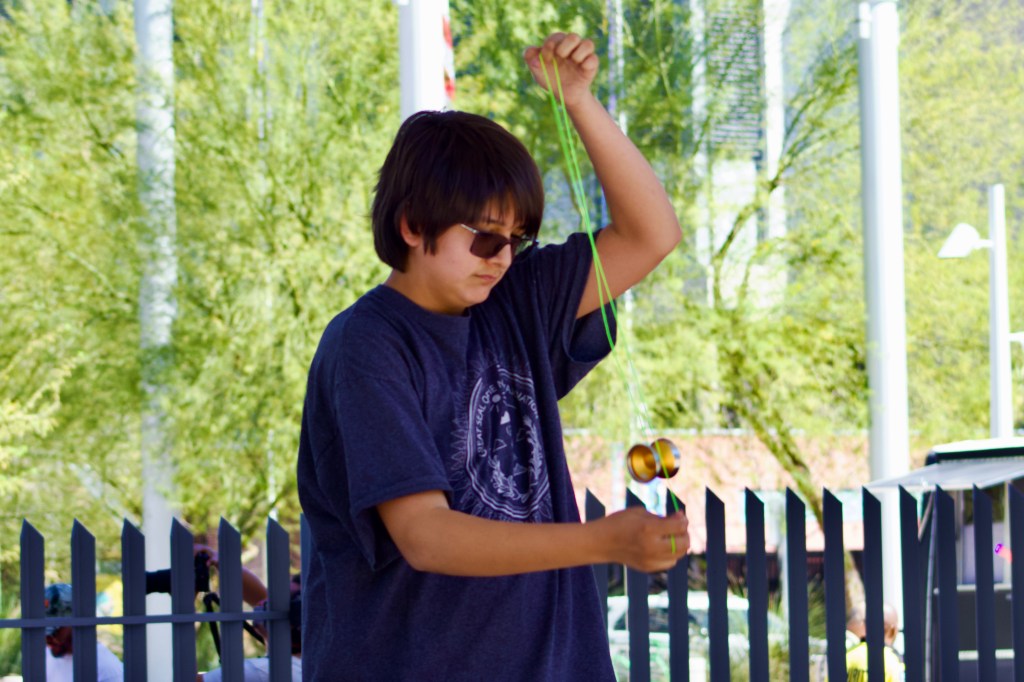
When his turn came, Niko worked through combination tricks he had drilled at home. The Star. The Eiffel Tower. A move called the DNA. Between the named tricks, he strung together combos, adjusting on the fly when the string tension shifted or the yo-yo wobbled off axis. Kathleen watched from a few feet away. She had seen him nervous during practice runs earlier in the week. When it mattered, he steadied himself.
Niko wants to compete. The entry fees for organized yo-yo competitions run high enough that he has to wait, but the goal sits clear in his mind. Goodman Plaza gave him a stage before the competitive circuit could. He used it.
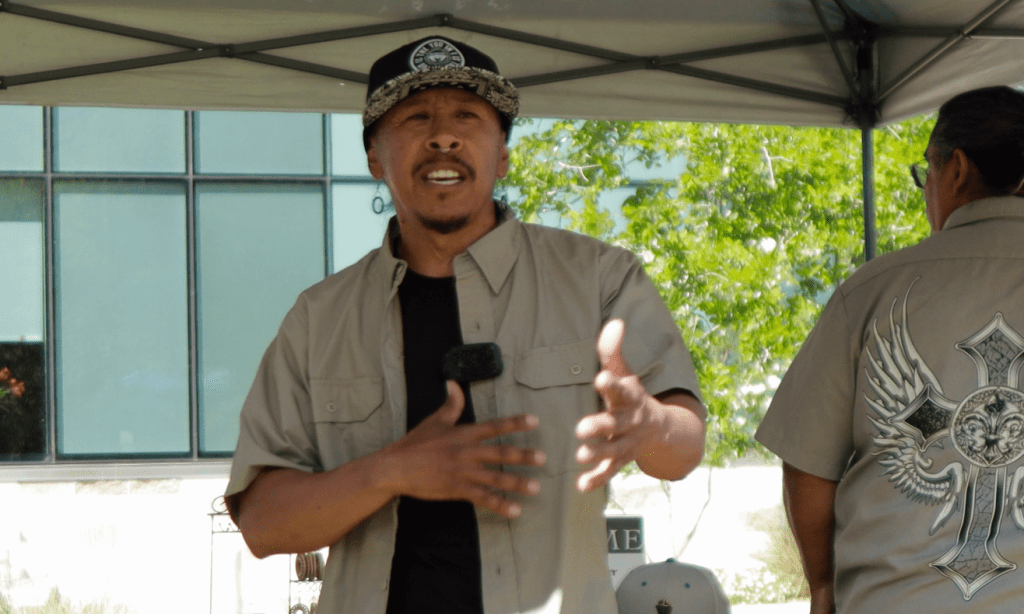
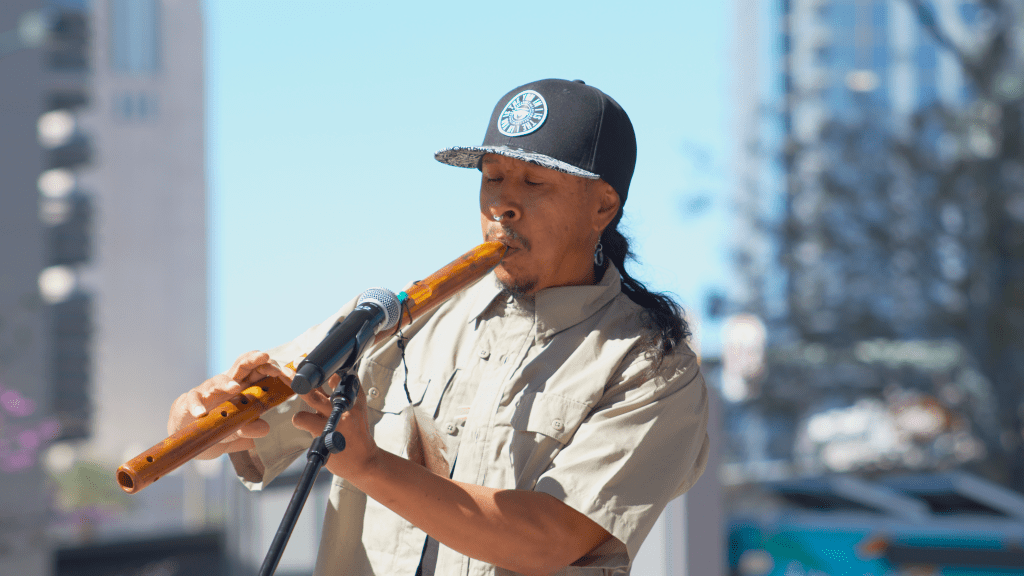
Artson approached the microphone wearing a hat from his own merchandise line. He avoids most name brands. The clothing he wears comes from his own designs. He has known Douglas for years, and when she and her partner invited him to perform, he agreed without hesitation.
His set mixed solo material from earlier in his career with new tracks recorded for an album dropping April 21. The project, titled The I and U, features his wife, She-Roze. Together they perform as the U and I. Between songs, Artson talked about why gatherings like this one matter. The city has to allow Indigenous people space to be visible, he said. To represent who they are without explanation or apology. Indigenous communities carry laughter, love, family, and culture worth sharing. Events like the showcase at Goodman Plaza create room for that exchange.
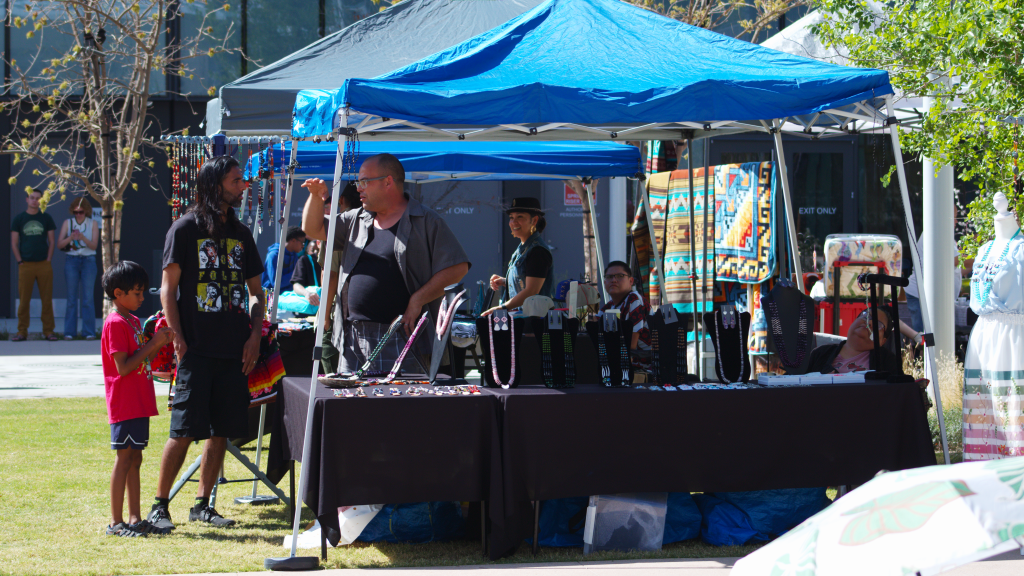
At one of the vendor tables, Joedell Callado stood behind a display of beaded jewelry. His mother, Christita Callado, had made nearly everything on the table by hand. Beaded earrings. Power regalia. Heart-shaped hoops. The business, Callado Creations, operates as a side hustle. Joedell and his mother are local to Las Vegas now, but they come from Cameron, Arizona, a small town an hour north of Flagstaff near the east entrance to the Grand Canyon’s south rim. They are Navajo and Fort Apache.
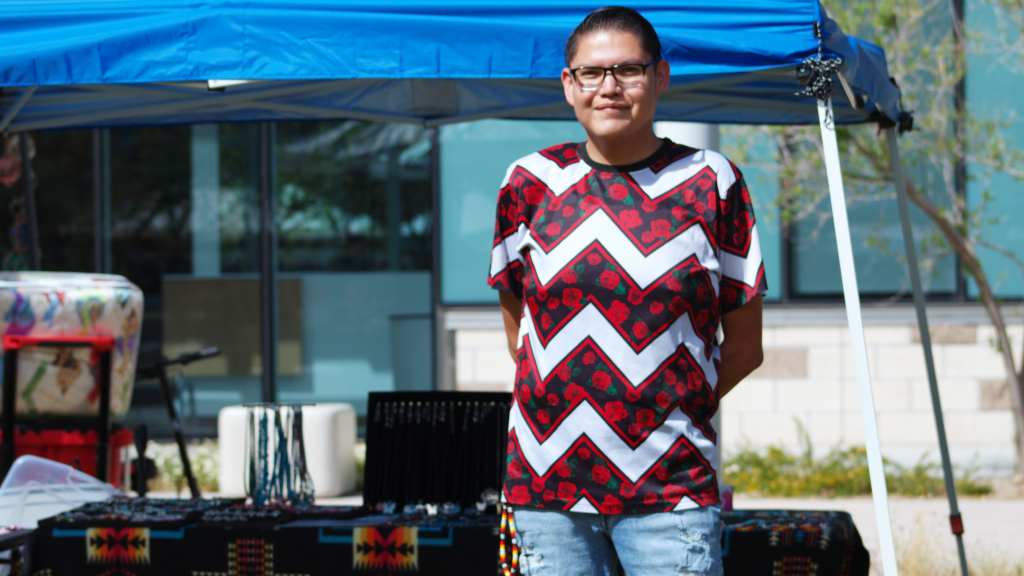
The jewelry work runs in the family. Joedell’s great-great-grandfather was a silversmith named Nal Nishev, which translates from Navajo as worker man. His grandmother worked with genuine turquoise, coral, and jet. Her father and grandfather were also silversmiths. Joedell grew up watching Navajo vendors sell along the roadside near the canyon. He spent summers learning the trade, understanding early that not everyone on the reservation could find traditional employment. Some had disabilities. Some faced barriers that kept them out of the labor market. Jewelry became a survival strategy. Money for food. Money for basic household necessities.
Christita Callado now uses materials other than precious stones to keep prices affordable, but the lineage holds. Joedell explained that life on the reservation remains harder for people in rural areas. Gas costs more. Groceries cost more at the small stores that serve remote communities. People drive to border towns like Flagstaff, Gallup, Page, or Farmington to stock up in bulk. Not everyone has access to running water or electricity. Food storage works differently. Some families rely on non-perishables. Some butcher sheep. The liberties that exist in cities do not translate to reservation life.
Callado Creations travels to powwows and conferences when opportunities arise. They vend in California, Montana, Idaho. The strategy is to diversify, to keep the money circulating within Indigenous communities rather than funneling it elsewhere. Goodman Plaza was not a powwow. It was not a major conference. It was smaller, newer, less established. But it was a place to sell, a place to connect, a place to be seen.
By the time the last performer finished and the vendors began packing up, the crowd had thinned again. Fawn Douglas had brought the showcase back after eight years of waiting. Niko Reynoso had completed his first yo-yo performance in public. Artson had reminded people what it means to walk the good way. Joedell Callado had sold jewelry his mother made and talked about survival on land that does not make survival easy.
The Indigenous AF headquarters is still coming. The foundation has been laid. Douglas asked people to set sorrow aside, and for one afternoon in downtown Las Vegas, they did.
Discover more from KVIG Informative
Subscribe to get the latest posts sent to your email.

 KVIG Informative