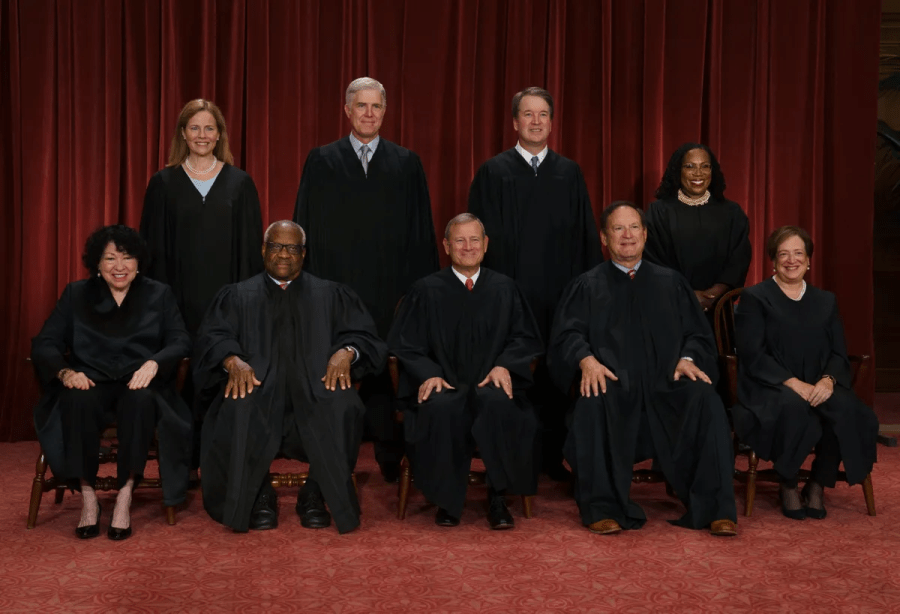
Oral arguments began at 10:04 a.m. in Case No. 25-365, Donald J. Trump, President of the United States, et al. v. Barbara, et al. The case tests whether the Trump administration can use executive order to deny citizenship to children born in the United States to parents who are undocumented immigrants or temporary visa holders. At stake is the interpretation of the Fourteenth Amendment’s Citizenship Clause, ratified in 1868 after the Civil War.
Solicitor General D. John Sauer opened for the government. He argued the Citizenship Clause was adopted just after the Civil War to grant citizenship to the newly freed slaves and their children, whose allegiance to the United States had been established by generations of domicile here. It did not grant citizenship to the children of temporary visitors or “illegal aliens”, who have no such allegiance, according to Sauer’s interpretation.
Sauer told the Court that when Congress used the term not subject to any foreign power in the Civil Rights Act of 1866, it rejected the British conception of allegiance. Senator Lyman Trumbull, a key framer of the Fourteenth Amendment, explained that subject to the jurisdiction thereof in the clause means not owing allegiance to anybody else, Sauer said. The clause does not extend citizenship to the children of temporary visa holders or “illegal aliens” because those visitors lack direct and immediate allegiance to the United States, unlike the newly freed slaves.
For aliens, lawful domicile is the status that creates the requisite allegiance, and the text of the clause presupposes domicile, Sauer argued. He said commentators in the decades following the clause’s adoption recognized that the children of temporary visitors are not citizens and “illegal aliens” lack the legal capacity to establish domicile in the United States.
Sauer argued that unrestricted birthright citizenship contradicts the practice of the overwhelming majority of modern nations. It demeans the priceless and profound gift of American citizenship, he said. It operates as a powerful pull factor for “illegal immigration” and rewards “illegal aliens” who not only violate the immigration laws but also jump in front of those who follow the rules.
He said the policy has spawned a sprawling industry of birth tourism as uncounted thousands of foreigners from potentially hostile nations have flocked to give birth in the United States in recent decades, creating a whole generation of American citizens abroad with no meaningful ties to the United States.
Justice Clarence Thomas asked Sauer to address how the Citizenship Clause responds specifically to Dred Scott v. Sandford, the 1857 Supreme Court decision that denied citizenship to Black Americans. Dred Scott was a case about state citizenship, Thomas noted. It was a diversity case. The Citizenship Clause refers not just to national citizenship but also to state citizenship, he said. Are we to have two different definitions for those, Thomas asked.
Sauer responded that Dred Scott imposed one of the worst injustices in the history of the Court and led to the outbreak of the Civil War. This Court in all of its early cases interpreting the Fourteenth Amendment said the one pervading purpose, the main object of the Citizenship Clause, is to overrule Dred Scott and establish the citizenship of the freed slaves, Sauer said.
If you look at the debates in the Congressional Record and discussion surrounding the adoption of the Citizenship Clause, what you see is a very clear understanding that the newly freed slaves and their children have a relationship of domicile, Sauer told the Court. They do not have a relationship to any foreign power. He cited comments in the debates about people who had been in the United States for five generations and clearly had no relationships to any foreign African potentate, indicating they had a relationship of allegiance to the United States.
Cecillia Wang, arguing for the respondents, opened with a direct statement. Ask any American what our citizenship rule is and they’ll tell you, everyone born here is a citizen alike, she said. That rule was enshrined in the Fourteenth Amendment to put it out of the reach of any government official to destroy.
When the government tried to strip Mr. Wong Kim Ark’s citizenship on largely the same grounds they raise today, this Court said no, Wang told the justices. Thirty years after ratification, this Court held that the Fourteenth Amendment embodies the English common law rule. Virtually everyone born on U.S. soil is subject to its jurisdiction and is a citizen.
The case Wang referenced, United States v. Wong Kim Ark, was decided in 1898. The Supreme Court ruled 6-2 that a child born in San Francisco to Chinese immigrant parents who were ineligible for citizenship themselves was nonetheless a U.S. citizen by birth under the Fourteenth Amendment. The decision has stood as precedent for 126 years.
During Sauer’s argument, Justice Neil Gorsuch questioned how much the government wanted to rely on Wong Kim Ark, prompting laughter in the courtroom. The exchange suggested skepticism about whether the Trump administration’s position could be reconciled with existing precedent.
Justice Ketanji Brown Jackson pressed Sauer on the practical implementation of the executive order. She asked whether there would be any opportunity for a person to prove or say that they actually intended to stay in the United States. Sauer responded that their opportunity to dispute if they think they were wrongly denied would come after the fact, after their baby has been denied citizenship. Jackson clarified: after their baby has been denied citizenship, then we can go through the process. Sauer said yes.
Sauer explained that a computer program currently automatically generates a Social Security number for newborns. Under the executive order, the Social Security Administration would implement a system that checks immigration status before issuing the number. The system would deny citizenship documentation to children born to parents without lawful domicile, according to the administration’s interpretation.
The Fourteenth Amendment states: All persons born or naturalized in the United States, and subject to the jurisdiction thereof, are citizens of the United States and of the State wherein they reside. The dispute centers on the meaning of subject to the jurisdiction thereof. The Trump administration argues it means owing complete allegiance, which temporary visitors and undocumented immigrants cannot provide. Opponents argue it means subject to U.S. laws, which anyone physically present in the country is.
The case name lists Barbara, et al. as respondents. These are plaintiffs who challenged the executive order before it could take effect. The order would have denied citizenship to children born in the United States if neither parent was a U.S. citizen or lawful permanent resident at the time of birth. Lower courts blocked implementation pending resolution of constitutional challenges.
A ruling is expected by late June 2026. If the Court upholds the executive order, millions of children born in the United States could be denied citizenship going forward. If the Court strikes it down, birthright citizenship as understood since 1898 remains intact. The decision will determine whether the Citizenship Clause can be reinterpreted by executive action or whether it means what it has meant for more than a century.
Discover more from KVIG Informative
Subscribe to get the latest posts sent to your email.

 KVIG Informative