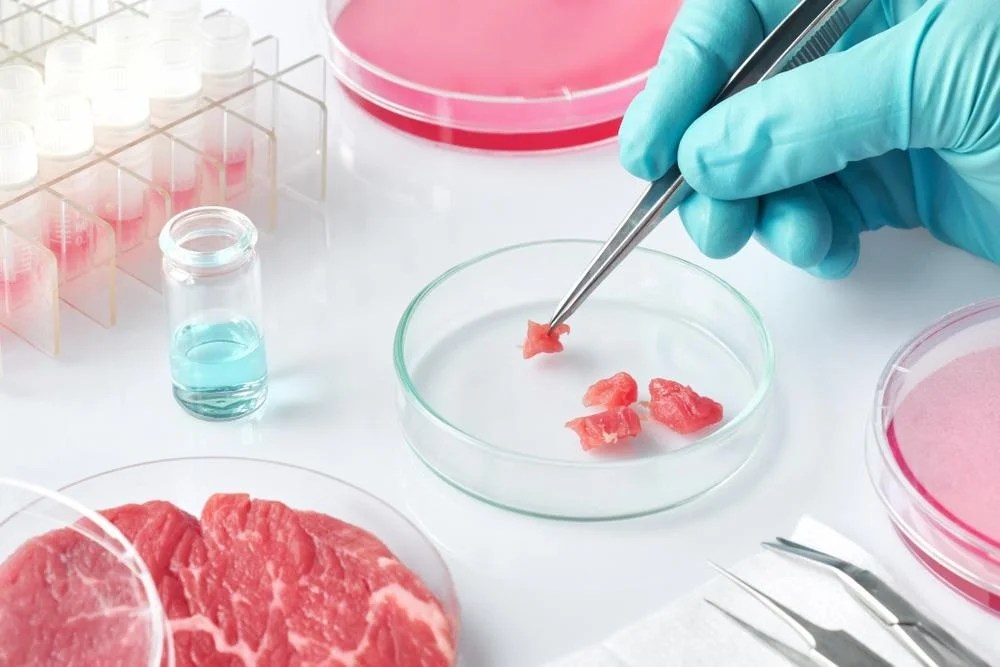
In a groundbreaking development, lab-grown poultry, produced from animal cells rather than conventional farming, has received federal approval for commercial sale. This innovative approach, championed by companies like Good Meat, marks a significant departure from traditional animal agriculture practices.
At the heart of this transformation is the meticulous process undertaken in bioprocessing labs like the one in Alameda, California. Here, microscopic stem cells, extracted harmlessly from real chickens, are cultivated in massive bioreactors. This bioengineering process mirrors the natural growth of animals, emphasizing sustainability and cruelty-free production.

The appeal of lab-grown meat extends beyond ethical considerations. With global food production responsible for a third of manmade greenhouse gas emissions, and meat production a primary contributor, the need for alternative, environmentally friendly solutions becomes paramount. Lab-grown meat advocates, like Josh Tetrick, CEO of Eat Just, argue that this revolutionary approach could significantly reduce the industry’s environmental footprint.
However, not everyone is unequivocally supportive. Some experts, like Ned Spang from the University of California, Davis, caution that the environmental benefits might not be as significant as hoped. The production process involves feeding the cells with glucose and amino acids, requiring substantial resources to create the necessary nutrients.

Tap Image To Purchase
3×3 Vinyl Sticker
$5.00

Tap Image To Purchase
3×3 Vinyl Sticker
$5.00
Despite the debates, companies like Good Meat are pushing ahead. They believe that improvements in technology will address current limitations, making lab-grown meat a more sustainable and scalable option for the future. As we stand at the cusp of this culinary revolution, the introduction of lab-grown meat prompts a crucial conversation about the ethics, sustainability, and future of our food sources.
In restaurants like China Chilcano in Washington, D.C., lab-grown chicken has made its debut, offering a familiar taste and texture. The challenge now lies in expanding its presence in more establishments and eventually making it available in grocery stores. With ongoing efforts to enhance scalability and reduce production costs, lab-grown meat is poised to become a mainstream alternative, offering a promising solution to the environmental and ethical dilemmas posed by conventional meat production.
Discover more from KVIG Informative
Subscribe to get the latest posts sent to your email.


 KVIG Informative