On February 26, 2026, the United States Senate unanimously passed the Sloan Canyon Conservation and Lateral Pipeline Act. The bill grants the Southern Nevada Water Authority rights to tunnel 40 miles beneath the Sloan Canyon National Conservation Area to construct a pipeline capable of carrying 375 million gallons of water per day to Henderson and the southern Las Vegas Valley.
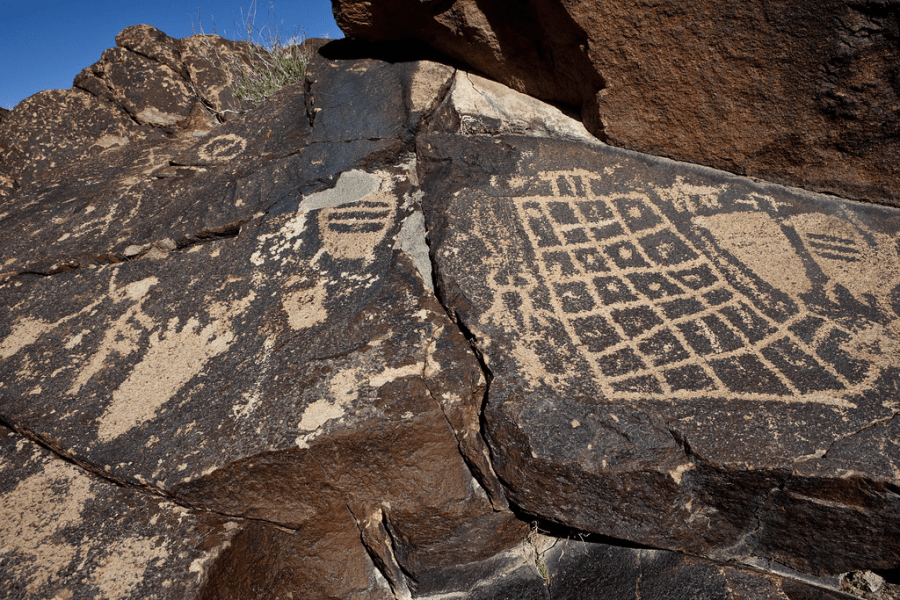
The conservation area contains the Sloan Petroglyph Site, home to more than 300 rock art panels with 1,700 petroglyphs created by Indigenous peoples thousands of years ago, according to the Bureau of Land Management. The site is attributed primarily to the Southern Paiute and Las Vegas Paiute tribes.
The bill, introduced by Sen. Catherine Cortez Masto and Rep. Dina Titus, passed the House in December 2025 and now awaits President Trump’s signature. The legislation also expands the conservation area by 9,290 acres, increasing its size by nearly 20 percent to 57,728 acres.
Who Pays
The project will cost between $2 billion and $2.5 billion, funded entirely through infrastructure and commodity charges paid by Southern Nevada Water Authority ratepayers. That means residents pay through their water bills. Developers pay regional connection fees, which they pass to homebuyers through inflated home prices.
SNWA selected the route beneath Sloan Canyon to avoid constructing the pipeline through Henderson’s St. Rose Parkway and busiest urban streets, which would have caused up to seven years of traffic and business disruptions and cost an additional $200 million, according to Sen. Cortez Masto’s office. Community opposition from Henderson residents and businesses was cited as a major driver of the decision.
The alternative route required an Act of Congress because federal law prohibits development in national conservation areas without congressional authorization. It also required a Bureau of Land Management environmental review. According to the bill text, rights-of-way may not pass through designated wilderness areas, and construction may not permanently and adversely affect surface resources within the conservation area.
Why This Pipeline Exists
The pipeline creates redundancy for a region that currently relies on a single 27-mile pipeline completed in the 1990s. That pipeline, called the South Valley Lateral, supplies water to 40 percent of Southern Nevada, serving approximately 1 million residents and hundreds of businesses. If the existing pipeline fails, nearly half the valley loses water.
The Tribal Question
The Las Vegas Paiute Tribe has worked with SNWA on past water infrastructure projects. In January 2025, tribal Chairman Benny Tso told local press that the tribe would work with Clark County, the city of Las Vegas, NV Energy, and the Southern Nevada Water Authority to seek passage of Sen. Cortez Masto’s Southern Nevada Economic Development and Conservation Act, provided the tribe was included as it had been in previous bills. No formal tribal objections to the Horizon Lateral pipeline have been made public.
The BLM right-of-way process and environmental review, legally required under the National Historic Preservation Act, will determine whether tribal consultation requirements were met. A memorandum of understanding between BLM and SNWA must be completed to finalize the route alignment and impose additional conditions to protect natural and cultural resources, according to the legislation.
However, a documented pattern exists. In 2006, the Department of Interior — including the Bureau of Indian Affairs — entered a closed-door agreement with SNWA during a prior water project, dropping all federal protests in exchange for a monitoring and mitigation plan. That agreement was made without formal tribal consultation, establishing a documented pattern of bypassing tribal input, according to records from that period. The Horizon Lateral follows a similar framework: route determined, legislation passed, tribal review to follow.
The Donor Network
Gov. Joe Lombardo received $80,000 in campaign donations from Caesars Entertainment through eight affiliated companies, according to campaign finance records. Caesars operates properties in Henderson and the south valley that rely on the water supply the pipeline will reinforce. The company donated to both major gubernatorial candidates in 2022, as did MGM Resorts, Boyd Gaming, Station Casinos, and the Fertitta family.
According to Nevada Independent reporting, real estate developers and general business interests ranked as the top two donor categories for Lombardo’s campaign, contributing $1.7 million and $2.7 million respectively through bundled corporate donations. Nevada law allows corporations to contribute directly to candidates using multiple affiliated entities, each at or below the $10,000 legal limit.
Clark County Commissioners serve as the board of directors of the Las Vegas Valley Water District, the agency that co-planned the Horizon Lateral pipeline with SNWA. According to campaign finance records, Las Vegas Sands properties donated $30,000 to Clark County commissioners, MGM Resorts donated $20,000, and Wynn Resorts donated $10,000. Commissioner Ross Miller faced allegations in 2024 of accepting donations over legal limits and accepting $12,500 in anonymous donations with no proof the money was properly handled, according to local press reporting.
SNWA’s Track Record
SNWA’s prior water projects have drawn legal challenges. The agency pushed a $15 billion pipeline project to draw 58 billion gallons annually from Eastern Nevada in perpetuity. Courts struck it down for violating the Clean Water Act. SNWA also spent $79 million in ratepayer money purchasing seven ranches in Eastern Nevada to hold water rights, then entered the ranching business grazing up to 11,000 sheep and cattle on nearly a million acres.
The Horizon Lateral pipeline is designed to begin construction in early 2027. Pumping stations, pipelines, pressure regulating valves, and a reservoir west of Nawghaw Poa Road south of Democracy Drive are scheduled for the first phase. The tunnel itself will pass beneath the Sloan Petroglyph Site without disturbing the surface.
Discover more from KVIG Informative
Subscribe to get the latest posts sent to your email.