The Las Vegas Arts District—a longtime haven for local artists, community organizers, and cultural expression—is at the center of a new wave of gentrification, this time layered with a futuristic twist: smart city surveillance technologies. As new developments reshape the neighborhood’s landscape, local residents are raising concerns about the quiet integration of robotic surveillance, autonomous vehicles, and the increasing presence of private developers with political backing.
- El Showboat Abrió en Boulder Highway por $2 Millones el 3 de Sept. de 1954. La Empresa que lo Compró por $1,500 Millones en 1998 Se Rebautizó Caesars Entertainment en 2010.
- The Showboat Opened on Boulder Highway for $2 Million on Sept. 3, 1954. The Company That Bought It for $1.5 Billion in 1998 Renamed Itself Caesars Entertainment in 2010.
- El Dr. Martin Luther King Jr. Visitó Las Vegas el 26 y 27 de Abril de 1964 para el Banquete del Fondo de la Libertad de la NAACP. Nunca Regresó.
- The Nature Conservancy Compró Ash Meadows a un Plan de Subdivisión de 25,000 Lotes en 1984. Una Minera Intentó Perforar la Misma Agua Subterránea en 2023.
- Dr. Martin Luther King Jr. Visited Las Vegas on April 26 and 27, 1964, for the NAACP’s Freedom Fund Banquet. He Never Came Back.
At the heart of the controversy is Weina Zhang, founder of Midtown Las Vegas and CEO of Z Life. Zhang, a developer known for Midtown Las Vegas, quietly introduced a USX robot patrol vehicle during a public event in the Arts District. While Zhang claimed it was a harmless demo meant for hotels, the robot’s operation on public streets during a community-centered gathering told another story. The robot, resembling the Knightscope K5 used in airports and malls worldwide, functioned as a 24/7 autonomous security guard. This event coincided with growing fears that developers are introducing smart surveillance tools without clear public consent or regulation.

Community questions were straightforward:
- “Is this project affiliated with the Las Vegas Metropolitan Police Department?”
- “Who has access to the data these robots gather?”
- “Will this data be sold or shared—either domestically or internationally?”
- “Can residents be assured of their privacy in public spaces?”

Instead of clarifying these concerns, Zhang responded with a string of personal and evasive remarks, which raised even more red flags. When asked about transparency and data ethics, she replied:

- “Where are you from and where do you live?”
- “Show me your ID.”
- “I need to meet you in face!”
- “Unfortunately, you didn’t get invited for my break ground party along with the Mayor.”
- “Have you been to CES? I’m the only one live here.”

3×3 Vinyl Sticker
Sliding scale $3.00-$8.00

3×3 Vinyl Sticker
Sliding scale $3.00-$8.00
These responses, documented via LinkedIn public commentary, reflect a dismissive and confrontational tone that is increasingly familiar in cities where gentrification meets surveillance capitalism. The focus shifted from addressing legitimate public concern to demanding personal information from the journalist—an inversion of accountability that suggests a dangerous precedent in public-private power dynamics.
Zhang later claimed that the robot vehicle was simply part of a one-day product demo, meant to be used “inside a hotel property, never on a public street.” Yet its presence during a public-facing event, without public notice, coupled with her references to political allies like the mayor and Olivia Diaz, makes this explanation insufficient for many concerned residents.

The incident not only highlights a growing lack of transparency from developers operating in Las Vegas but also signals a broader trend: the quiet normalization of surveillance in gentrifying neighborhoods under the guise of innovation.

3×3 Vinyl Sticker
Sliding scale $3.00-$8.00
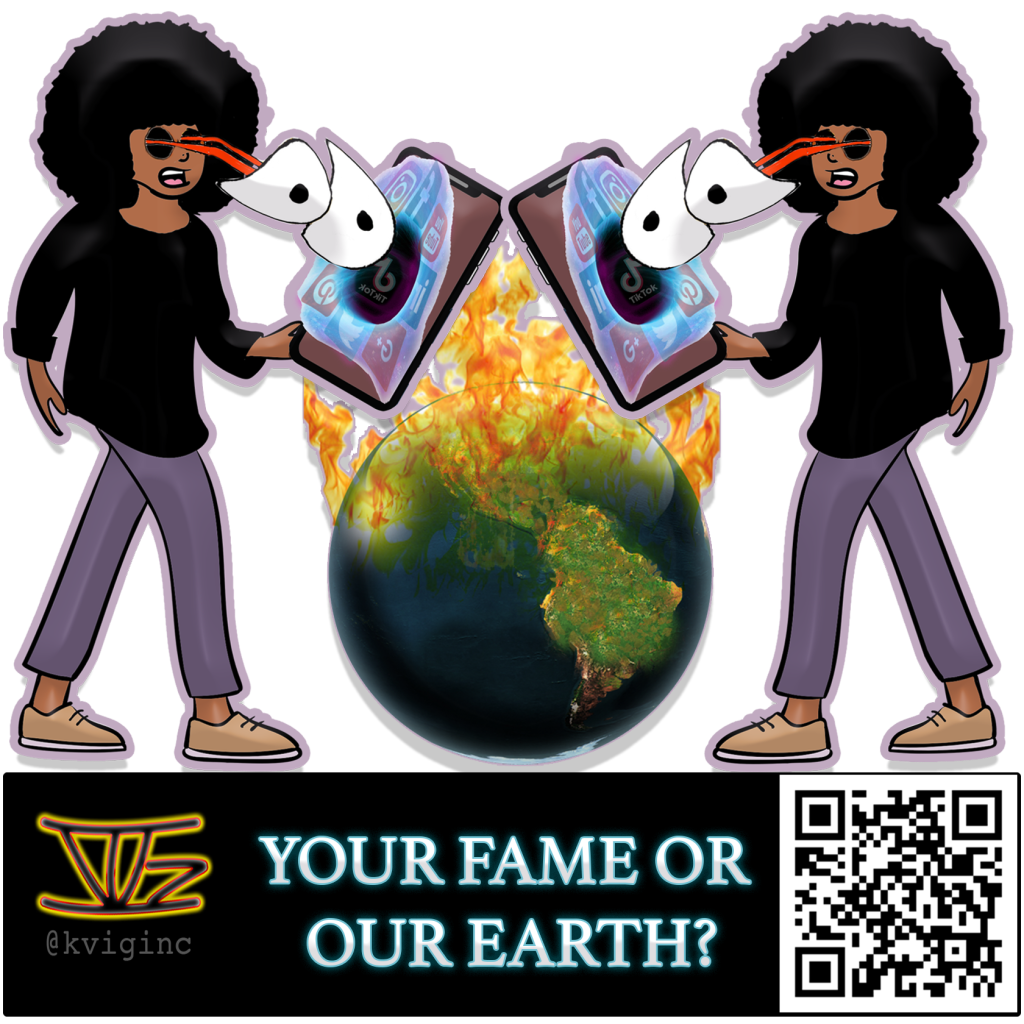
3×3 Vinyl Sticker
Sliding scale $3.00-$8.00
What’s at stake is more than privacy—it’s the right of communities to shape their own future without being digitally policed, out-funded, or displaced. As robot patrols replace community organizers and data-driven zoning replaces grassroots planning, locals are left asking: Is Las Vegas building a future for its people—or for those who can afford to monitor them?
Discover more from KVIG Informative
Subscribe to get the latest posts sent to your email.