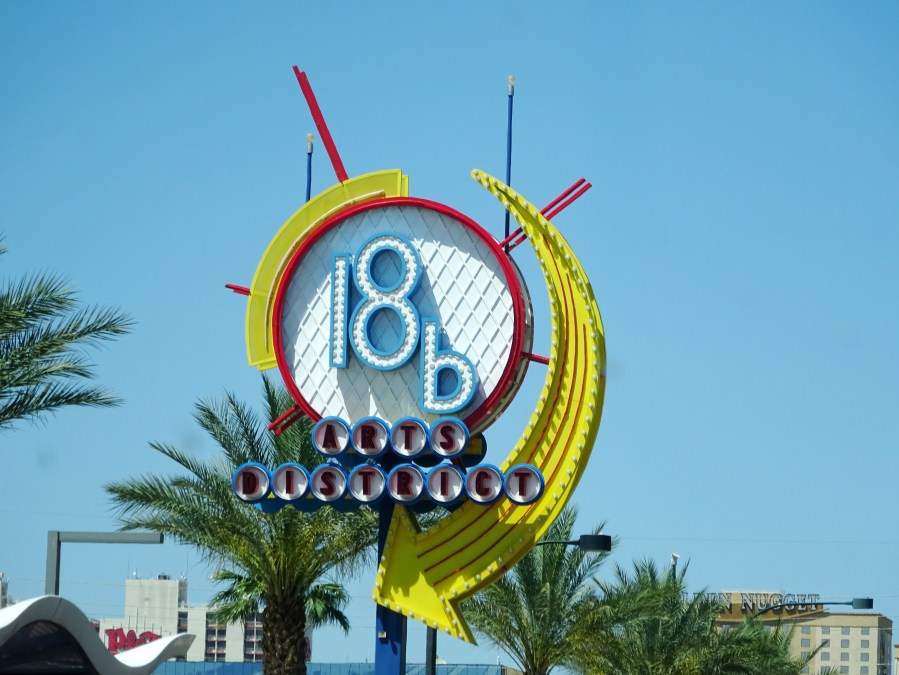
In March 2026, 1025 Main Street LLC filed a lawsuit in Clark County District Court against Taverna Costera, the restaurant and live music venue at 1031 South Main Street, which owner Jeff Hwang has operated in the Arts District for five years. The stated cause was excessive noise. The landlord’s attorney said the suit came after good-faith efforts to resolve the matter failed. Hwang says it is retaliation.
“We’re a live music venue. It’s what we do,” Hwang told local press. He said he believes the lawsuit was filed in response to his public opposition to paid parking lots downtown, the construction of a courtyard fence, and the arrival of a new neighbor, the Southern Nevada Art Museum, whose representatives began lodging noise complaints in December.
The lawsuit asks a judge to declare that the landlord has the right to modify the courtyard and that live performances constituting a disturbance are a material breach of Hwang’s lease. What the suit does not make immediately legible to the public is who, exactly, is doing the suing.
The Address Question
1025 Main Street LLC owns the building at 1027 South Main Street, the Arts District Plaza development, where Taverna Costera is a tenant. That entity shares a registered mailing address with Las Vegas Arts District Development LLC, a company publicly identified as an authorized signatory by Jonathan Kermani, a Los Angeles-based developer. Both entities list the same address: 1620 South Los Angeles Street, Suite C.
According to Google Street View, that address appears to be a vacated building in Los Angeles. KVIG was unable to independently verify current occupancy. It is the listed contact address for multiple LLCs holding Vegas properties.
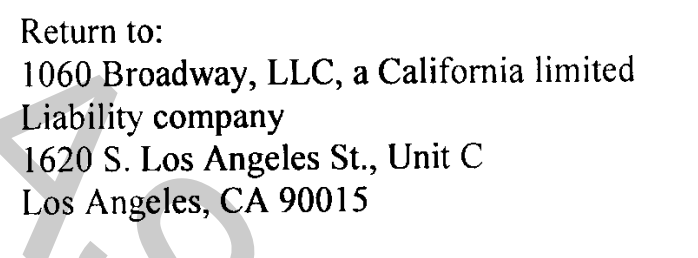
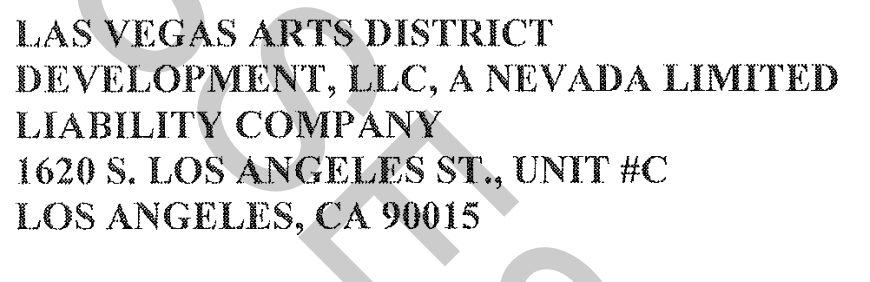

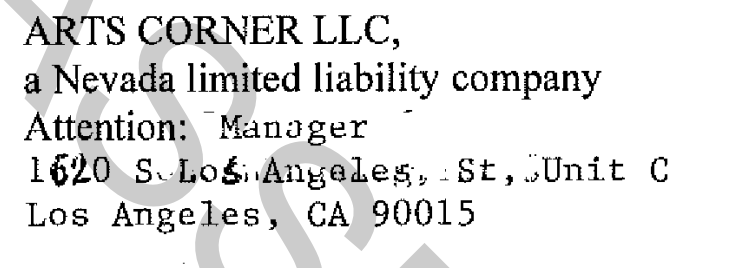
Las Vegas Arts District Development LLC is the entity that purchased Art Square in March 2015 for $3.2 million, according to county records reported by local press. The same entity purchased the Arts Factory in 2016 and the Mission Linen building in 2017.
The authorized signature on file for 1025 Main Street LLC matches the authorized signature listed for Flamingo Broadway LLC, according to the source report reviewed by KVIG. The name on those authorization documents is Jonathan Kermani.
The Builder on the Commission
The building at 1027 South Main Street that houses Taverna Costera was constructed by Trinity Haven Development LLC, a Las Vegas-based commercial builder. Trinity Haven Development is not the landlord and does not hold an ownership interest in the property.
Trinity Haven Development’s managing member is Trinity Haven Schlottman. According to his LinkedIn profile and records aggregated by professional databases, Schlottman has held two simultaneous positions since 2011: managing member of Trinity Haven Development LLC, a private commercial builder that operates extensively in the Arts District, and commissioner on the Las Vegas Planning Commission, the body that reviews and approves development applications within city limits.
Nevada law does not automatically bar a contractor from serving on a planning commission, but it does require commissioners to recuse themselves from votes in which they have a financial interest. KVIG could not determine from public records whether Schlottman recused himself from any votes related to projects in which Trinity Haven Development had a financial stake.
The Network of LLCs
The properties immediately surrounding Taverna Costera are held under a range of LLC names, several of which share mailing addresses or authorized signatures with entities connected to Kermani’s network. Among the ownerships recorded near the 1025 South Main Street corridor are 1060 Broadway LLC, Arts Corner LLC, Flamingo Broadway LLC, and Storybook Retail LLC, alongside Molasky Ventures, Matrix LLC, and several others.
Flamingo Broadway LLC shares the 1620 South Los Angeles Street address with 1025 Main Street LLC and Las Vegas Arts District Development LLC, according to the source documentation reviewed by KVIG. Whether all of these entities share common beneficial ownership cannot be confirmed through publicly available Nevada Secretary of State filings alone, which typically list registered agents but not ultimate beneficial owners.
Nevada does not require LLCs to disclose beneficial ownership in public filings. That structure is legal. It is also the structure through which accountability becomes difficult to locate. When a dispute arises between a tenant and a landlord, the tenant faces a lawsuit. The name on the lawsuit is an LLC. The address for that LLC is a building in Los Angeles that may no longer be occupied.
What the Community Sees
The Las Vegas Arts District has existed as an informal creative corridor for decades, long before the arrival of the Downtown Project funded by the late Zappos CEO Tony Hsieh, and long before Kermani’s purchases began accumulating in 2015. First Friday, the monthly street event that draws tens of thousands of visitors, grew out of the community itself, not from outside investment.
The paid parking decision that Hwang and others pushed back against in January was made by the city in coordination with landlords. At a January 7 Las Vegas City Council meeting, 10 speakers opposed the meter rate increases, saying the changes burdened employees and small businesses that could not absorb additional costs. The city’s own spokesman later acknowledged officials had failed to engage the community before implementing the changes.
Hwang’s public opposition to those changes is the context he says the landlord is now using against him. He is a named individual operating a business under a lease. His landlord is an LLC whose mailing address does not correspond to a visible operating office.
The pattern is not unique to the Arts District. It reflects how real estate accumulation operates across many urban corridors: properties changing hands through entities whose ownership is legally obscured, community members encountering legal processes designed for parties with resources and experience they do not have, and public accountability arriving after the fact if it arrives at all.
Discover more from KVIG Informative
Subscribe to get the latest posts sent to your email.