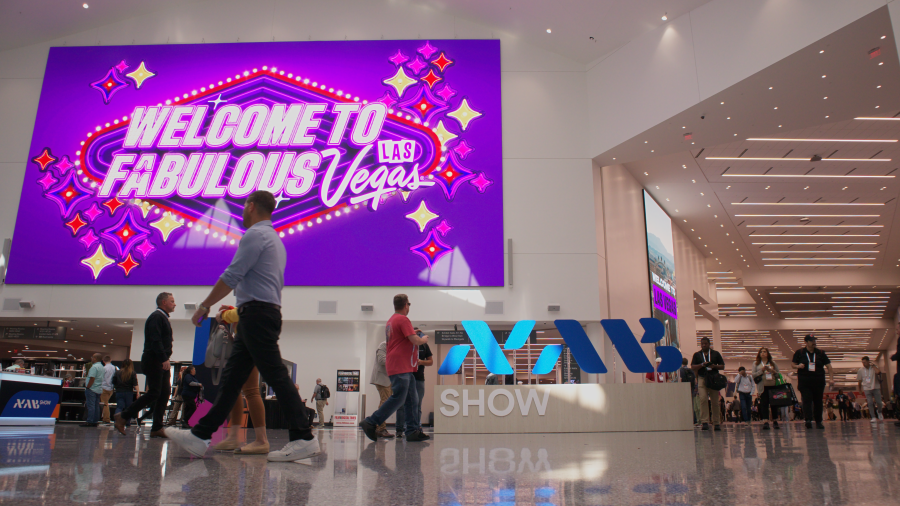
The National Association of Broadcasters Show returned to the Las Vegas Convention Center this week, and after two full days on the floor, two things stood out above everything else. The first was how visible the creator economy has become. The second was how reluctant some of the industry’s largest companies are to talk about what that economy actually costs to enter.
The show has always drawn the biggest names in broadcast and production technology. This year, the independent creator was impossible to ignore as a market force. Brands adjusted their booth presentations, their product messaging, and their conversation points to acknowledge that the people buying their equipment are no longer exclusively working inside major studios or network operations centers. Many are working alone, or in small teams, with limited capital and professional ambitions that run just as high.
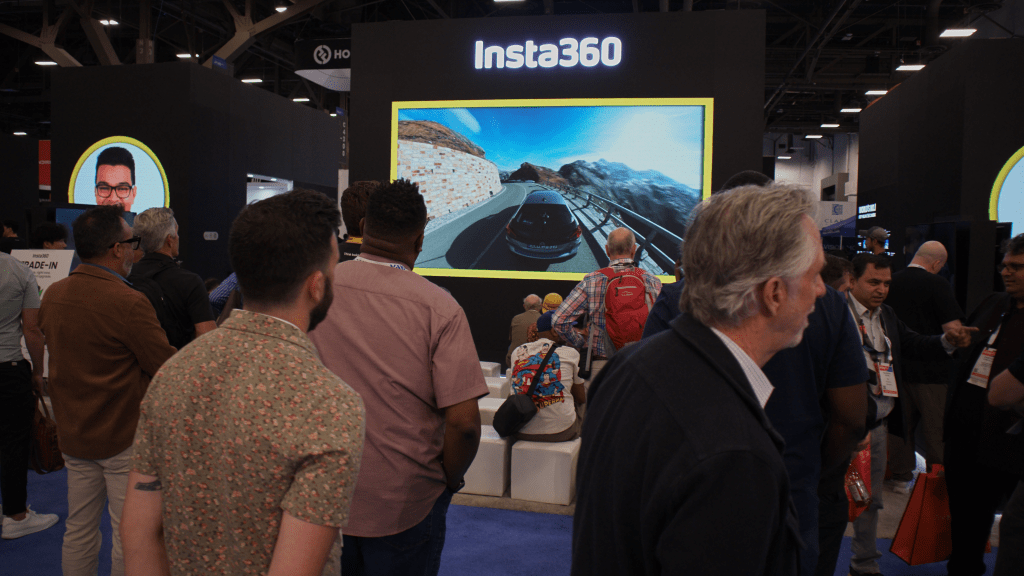
Some companies leaned into that reality. Others, when asked directly about affordability and price accessibility for independent creators, declined to engage. The reasoning offered, where reasoning was offered at all, was that the subject would be bad for their image. Bad for branding. That calculation is understandable from a corporate communications standpoint. It is also a telling one. A show that has positioned the independent creator economy as a central theme of its future cannot fully make that case if the organizations with the largest footprints on its floor treat the economics of entry as something not worth discussing.
What was worth discussing, loudly and in detail, came from the booths that did not shy away from the question.
Blackmagic Design: A Studio in Your Pocket
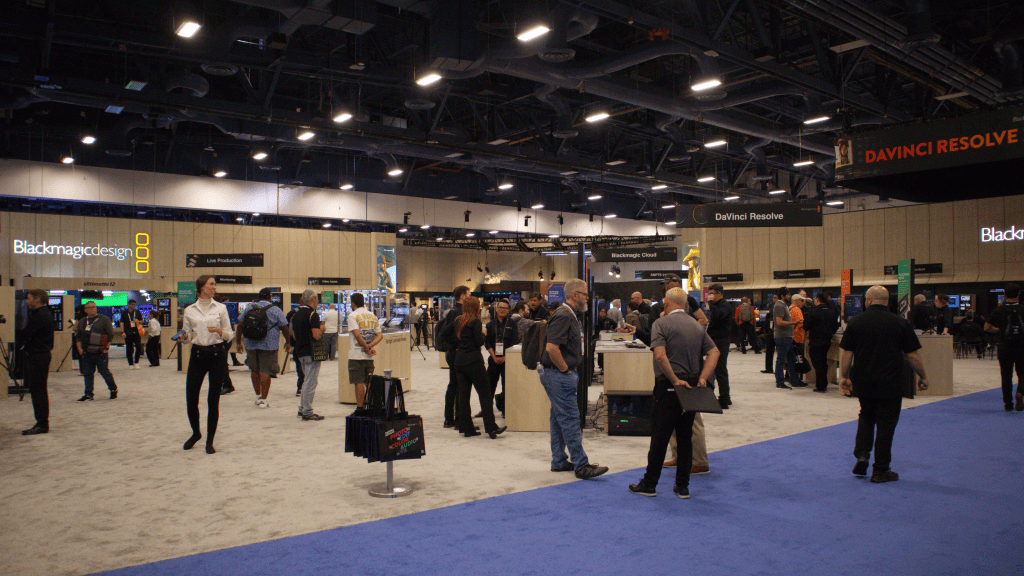
Blackmagic Design came to NAB 2026 with a suite of announcements, and the one that spoke most directly to the independent creator was not their flagship cinema camera. It was a dock.
The Blackmagic Camera ProDock is a hardware device that connects an iPhone to a professional production ecosystem. When paired with an ATEM Mini live production switcher and running the Blackmagic Camera app, the iPhone becomes a fully controllable studio camera. Video, tally signals, and camera control all travel over a single HDMI cable. From ATEM Software Control, an operator can adjust white balance, ISO, shutter speed, focus, and zoom remotely. A built-in DaVinci primary color corrector is included, allowing camera matching during live production without additional software.
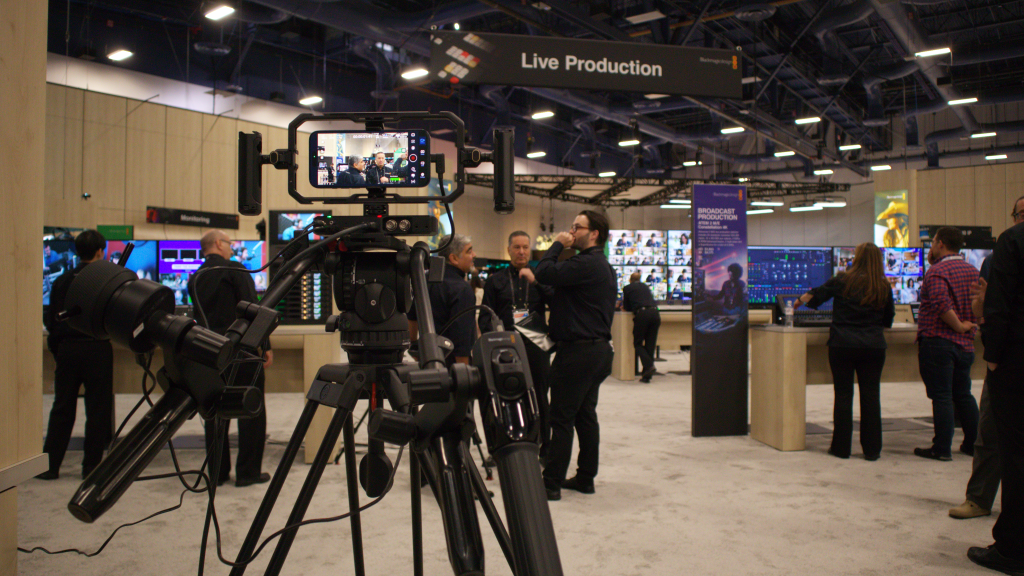
The ProDock also supports the optional Blackmagic Focus and Zoom Demands, broadcast-style lens controls that connect via USB-C and can be daisy-chained. Users can frame and adjust the lens without removing their hands from the tripod handles. The buttons are customizable. The entire system is designed to let a phone function on a live production set the way a dedicated broadcast camera would.
The price sits below $400. That number matters. It means a working journalist, a community broadcaster, or an independent filmmaker can plug a device most people already own into a professional production workflow for less than the cost of a mid-range mirrorless body alone. The mobile data connection on the phone handles compression and streaming, which means the setup works in a studio or on location, without a separate encoder or satellite uplink.
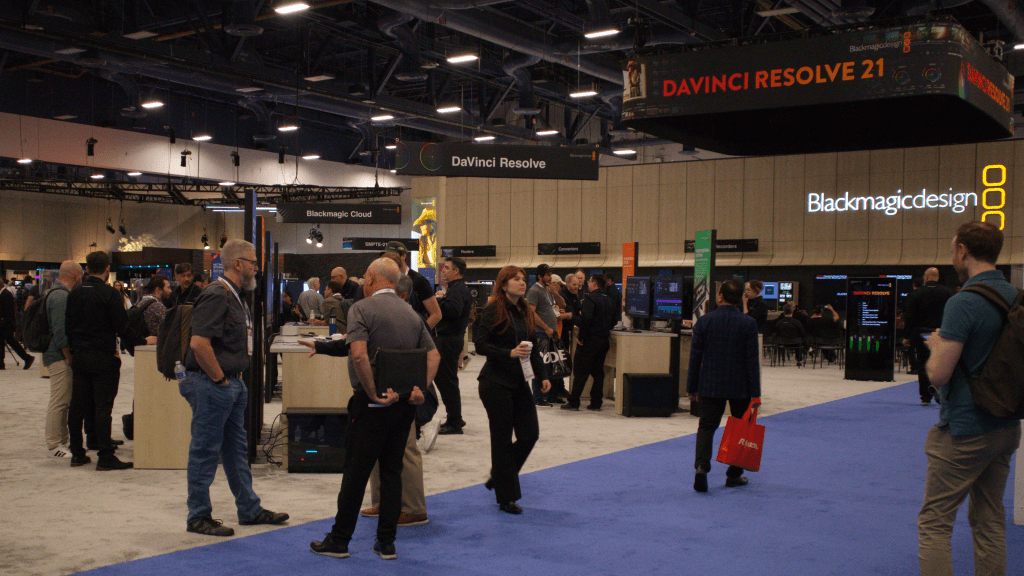
Blackmagic also used NAB 2026 to demonstrate DaVinci Resolve 21, the latest version of their professional editing and color grading platform. The software is available as a one-time purchase in its Studio version, not a subscription. DaVinci Resolve 21 introduces a new Photo page that brings Hollywood-grade color tools to still photography, expanding the platform’s reach beyond video post-production.
The math Blackmagic is offering the independent creator is straightforward. A ProDock under $4 00, a Blackmagic studio camera that starts around $1,500, and DaVinci Resolve Studio as a single purchase puts a complete professional workflow within reach for under $2,500, and portions of it for under $1,000. That is not an entry-level toy stack. That is a professional production toolkit.
Ulanzi and Joby: One Roof, Two Markets
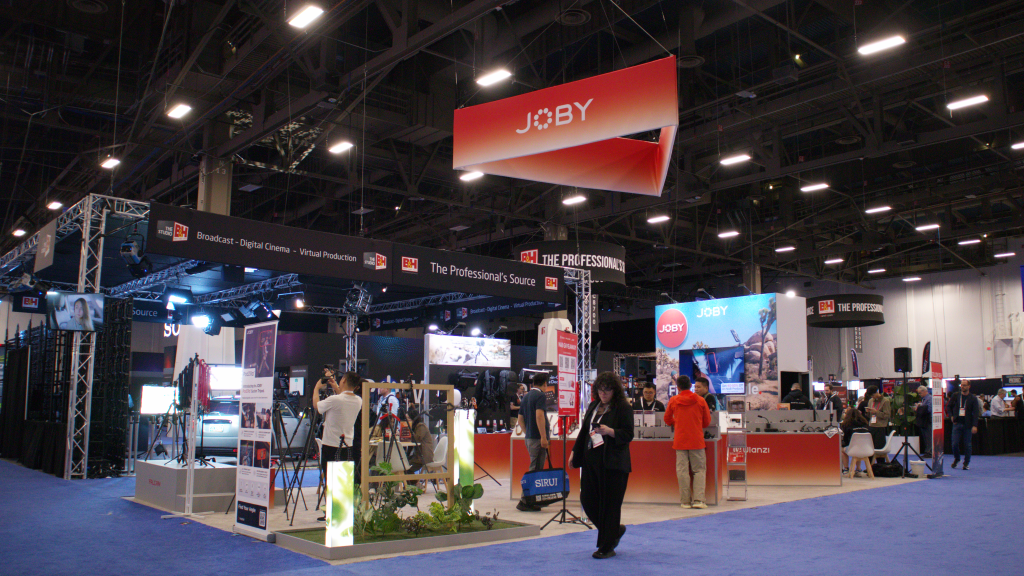
Ulanzi was another name that stood out for its directness on affordability. The company, which most independent creators know through its camera accessories, phone mounts, and rigging solutions, arrived at NAB 2026 carrying news that many in attendance were not yet aware of. In September 2025, Weiji Technology, the parent company of Ulanzi, completed the acquisition of Joby, the San Francisco-founded brand behind the GorillaPod flexible tripod line, from the London-based Videndum group.
The acquisition joins two distinct product philosophies under one company. Ulanzi has built its reputation on accessible, affordable gear for creators working at the entry and mid-level of the market. Joby carries decades of brand recognition, offline retail relationships across the United States and Europe, and a product line that skews toward the more professional end of portable support and audio equipment. Together, the two brands are being positioned to address different tiers of the same creator market without competing against each other.
Representatives from Ulanzi’s public relations team were direct about the structure. Ulanzi will continue to serve the creator economy at accessible price points. Joby will operate as the professional-facing arm of the combined entity. The goal, as described on the floor, is for independent media, whether film or press, to find a product from the combined company at whatever stage of their work they are at.
Both brands have earned that credibility through use. Their products hold up in the field. That is not a small thing at a show where marketing often runs well ahead of the hardware.
Xtra: A New Name in Action Cameras
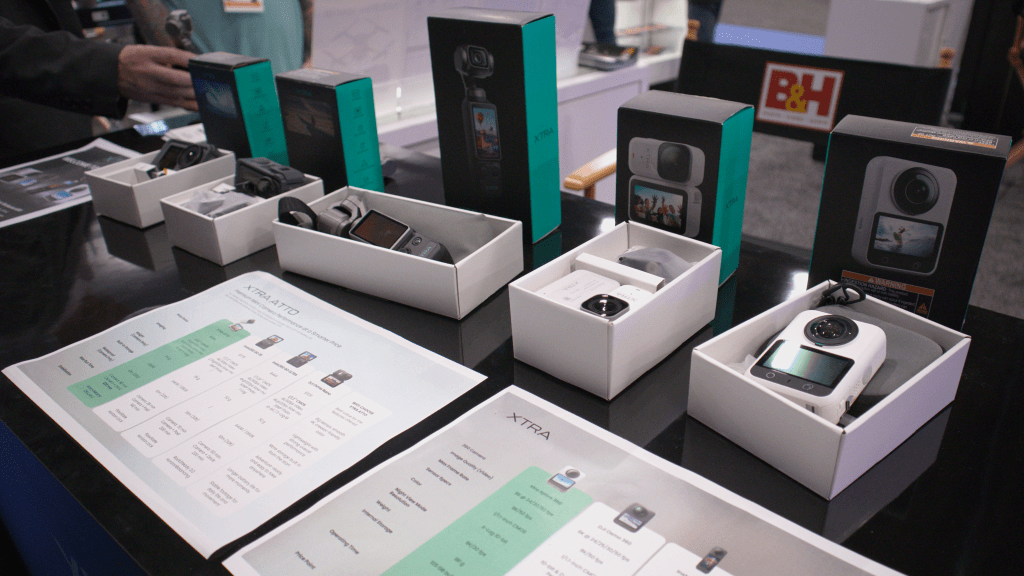
A less familiar name on the floor was Xtra, a U.S.-registered brand under parent company Veritas Tech LLC. Xtra had a presence at NAB 2026 and representatives at their booth were direct about what the company is trying to do: bring professional-grade imaging tools to the action camera and pocket stabilizer market at price points the independent creator can absorb without a major capital outlay.
The Xtra lineup includes the Edge, Edge Pro, Atto, Muse, and Sphra360, covering action cameras, a wearable micro camera, a pocket gimbal camera, and 360-degree capture. The Edge and Edge Pro are traditional action cameras with 1/1.3-inch sensors and 4K video capability. The Atto, which launched in January 2026, weighs 54 grams, shoots 4K at 60 frames per second, and is waterproof to 33 feet without a case. It features gesture-based recording controls and a modular power dock that extends battery life to 220 minutes. The Muse is a pocket gimbal camera competing in the same space as more established names in that category. The Sphra360 rounds out the lineup for creators working in immersive formats.
Across the product line, price points range from under $350 for entry-level options to under $800 for the more capable configurations, according to information provided by booth representatives. Those ranges put the full Xtra ecosystem within reach of a working independent creator building out a kit incrementally rather than all at once.
Xtra is a new entrant in a category with entrenched competition. Their booth representatives spoke openly about the brand’s focus on the independent creator market and their interest in working with independent media, both film and press. Whether the product line holds up to sustained field use at that price point is a question reviews and time will answer. What the NAB floor could confirm is that the company showed up, spoke plainly about who they are building for, and priced their products accordingly.
What the Floor Said

The NAB Show floor does not lie about where an industry is heading. It shows who is spending money on booth space, what products companies choose to feature most prominently, and what conversations representatives are willing to have with the people walking through. This year, the creator economy occupied more floor space, more product presentations, and more honest conversation than it has in prior years.
The companies willing to talk about affordability were the ones that had solved for it. That is not a coincidence. Blackmagic Design has been building toward accessible professional tools for years. Ulanzi built its entire brand identity around that premise. The acquisition of Joby extends that logic into a more established market position.
The companies that declined to engage with the affordability question were not necessarily building bad products. They were building products for a customer they are still, in some part, reluctant to fully claim. The independent creator, the solo journalist, the community broadcaster working on a phone and a small production budget, is the future of the media economy whether the industry’s largest players say so publicly or not.
The floor made that case without anyone’s help.
Discover more from KVIG Informative
Subscribe to get the latest posts sent to your email.