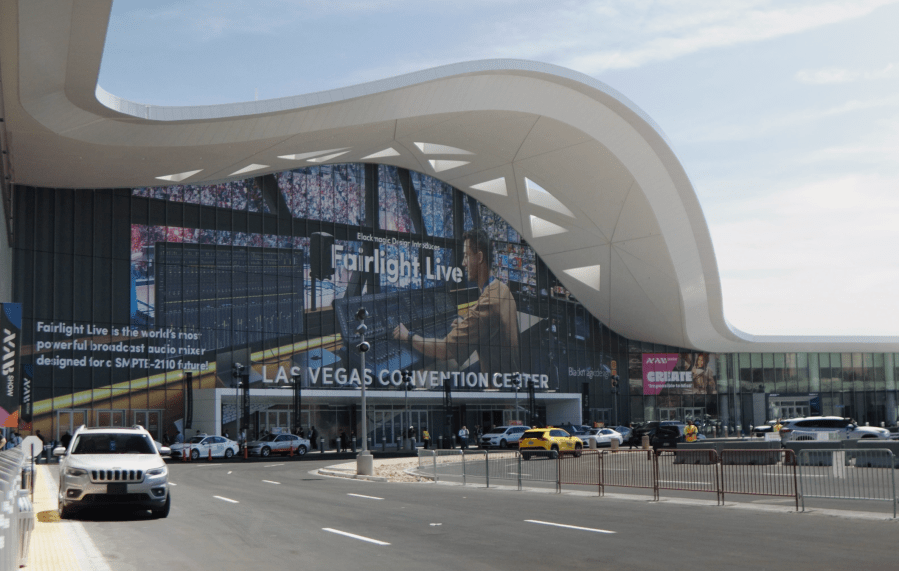
The Las Vegas Convention Center’s renovation is finished and the room tax is paying for it. The same architect, the same contractors, the same man who approved the project in government before running it in the private sector built this too. The result looks exactly like what came before it, because that was always the plan.
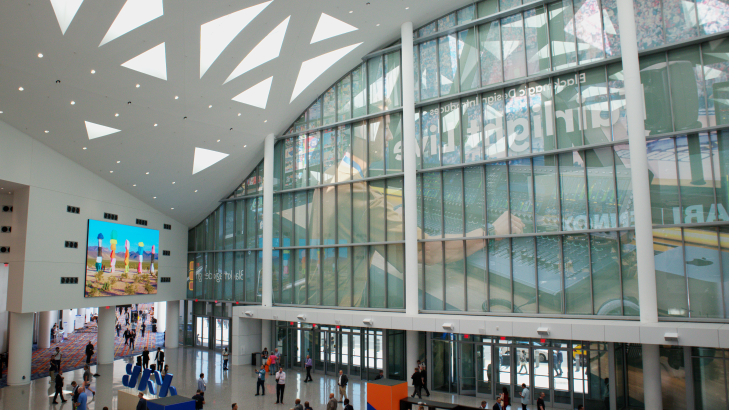
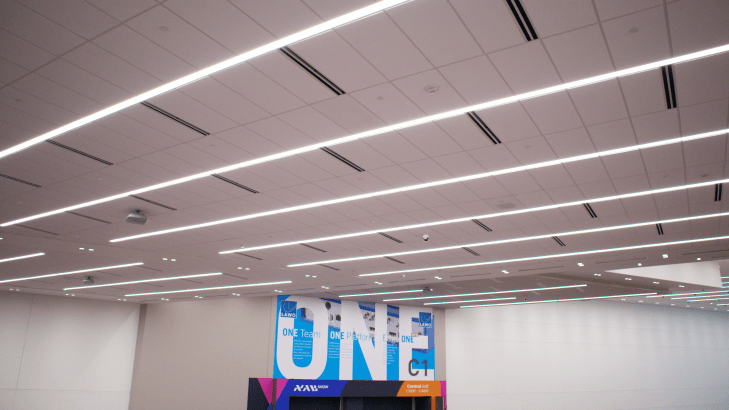
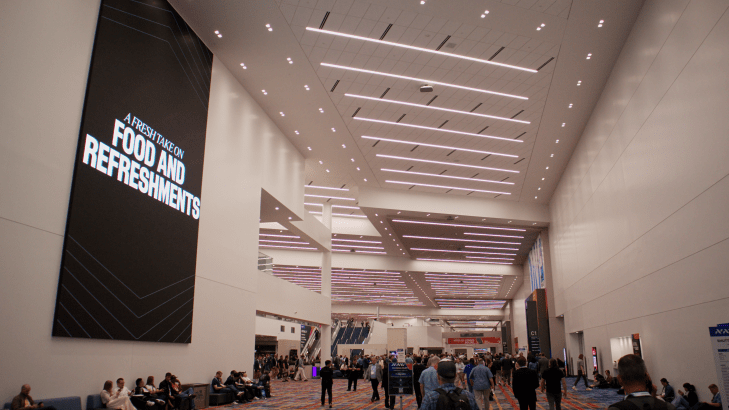
Walking into the Las Vegas Convention Center during NAB Show 2026 this month, the transformation was immediate and unmistakable. The legacy halls, the North, Central, and South, which had for decades looked like a different building from the sleek West Hall that opened in 2021, now carry the same ribbon roof, the same glass walls flooding corridors with natural light, the same digital signage, the same architectural vocabulary. The campus finally feels like one facility.
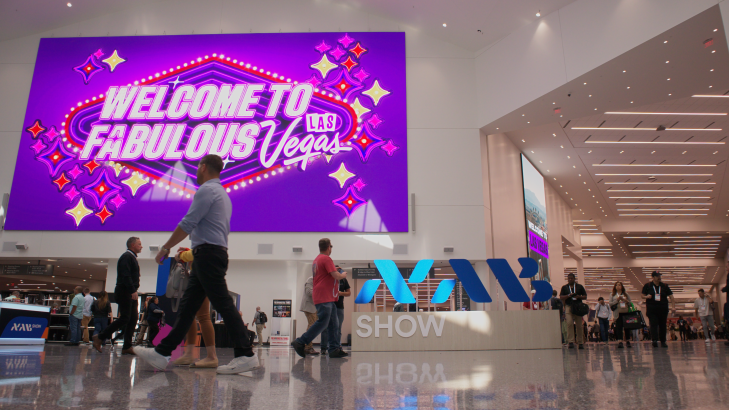
That coherence cost $600 million in public money. The project was completed in January 2026, just in time for CES, and the same small circle of contractors, architects, and officials who built the West Hall built this renovation too. Understanding who profited, how the money was structured, and who made the decisions, requires tracing a set of relationships that began in a governor’s office more than a decade ago.
The Blueprint: Copy West Hall
The renovation’s stated purpose was always explicit. The LVCVA launched the project in May 2023 specifically to extend the contemporary design, architecture, and customer experience of the West Hall across the older portions of the campus. It was not a creative exercise. It was a replication directive.
The West Hall, a 1.4 million-square-foot expansion completed in 2021 at a cost of approximately $1 billion, established the design standard. The signature ribbon roof, the glass curtain walls, the Grand Lobby scale, the digital infrastructure, all of it was benchmarked from that building. The renovation of the legacy campus, officially Phase 3 of the Las Vegas Convention Center District Plan, was designed to bring the North, Central, and South Halls into visual and technological alignment with what the West Hall had already set.
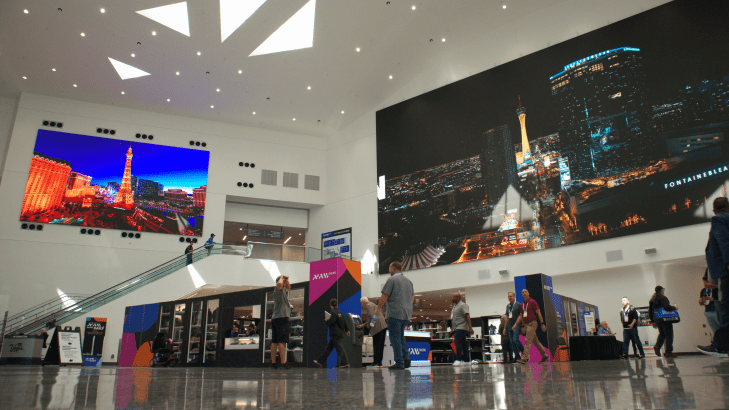
The result, visible to any attendee at NAB Show this April, is exactly that. The campus reads as one continuous building. The Central Hall Grand Lobby now anchors a 46-by-78-foot digital display wall. The North Hall concourse has new glass walls and Strip views. The South Hall has a new outdoor plaza and entrance. An interior climate-controlled walkway connects halls that previously required navigating outdoors. The building works.
The Money: Room Tax, Bonds, and a Land Sale
The $600 million renovation was funded through three public sources. The first is the LVCVA’s general fund, which is itself primarily composed of room tax revenue collected from hotel guests across Clark County. The second is bonds supported by the LVCVA’s general revenues and a dedicated 0.5 percent hotel room tax increase authorized by Senate Bill 1, passed during a special session of the Nevada Legislature in 2016. The third is proceeds from the sale of a 10-acre parcel of the former Riviera Hotel site, which the LVCVA had purchased in 2015 for $182.5 million and sold to a Chilean investment entity, CB Investment SpA, in 2021 for approximately $340 million.

3×3 Vinyl Sticker
Sliding scale $3.00-$8.00

3×3 Vinyl Sticker
Sliding scale $3.00-$8.00
The room tax structure is worth pausing on. Clark County hotel guests pay between 10 and 13 percent in room taxes depending on the property. The 0.5 percent increase authorized by SB1 in 2016 was specifically dedicated to retiring the bonds issued for the West Hall expansion and the convention center renovation. That same legislative session also authorized a separate 0.88 percent room tax increase to fund $750 million in public subsidy for what became Allegiant Stadium. Visitors to Las Vegas are paying, through their nightly room rate, for both the convention center and the NFL stadium, through increases locked in by a single special legislative session almost a decade ago.
The construction contract value escalated during the project. The LVCVA board initially approved $435 million for the construction contract with the Hunt-Penta joint venture in March 2022. By August 2024, LVCVA CEO Steve Hill had been delegated authority to execute construction services at $492.2 million, an increase of $30 million from an earlier authorized amount. The total project budget remained at $600 million, with the difference absorbed through a contingency fund that was folded back into the contractor’s contract.

3×3 Vinyl Sticker
Sliding scale $3.00-$8.00

3×3 Vinyl Sticker
Sliding scale $3.00-$8.00
The Contractors: Hunt-Penta, Again
The construction contract went to a joint venture between AECOM Hunt, an Indianapolis-based construction management firm and a wholly owned subsidiary of the global infrastructure conglomerate AECOM, and the Penta Building Group, a Las Vegas-based commercial contractor. The joint venture is called Hunt-Penta V.
This was not their first LVCC contract. Hunt-Penta had previously been considered for the West Hall expansion but lost that bid to a Turner Martin-Harris joint venture. When the renovation contract was put out for competitive bid in 2022, Hunt-Penta came back and won. The competing bid came from Martin-Harris Construction, the same Las Vegas firm that had built the West Hall. The Hunt-Penta bid barely topped Martin-Harris, according to local press reporting on the bid evaluation.
AECOM Hunt is a multinational operation. Its parent company, AECOM, reported annual revenues of approximately $16 billion in fiscal year 2024. The Penta Building Group is a privately held Las Vegas company with offices in Nevada, Arizona, and Southern California. Penta has been named among Engineering News-Record’s top 400 national general contracting firms annually and holds the 2023 National Contractors Association Safest Contractor of the Year designation. Through its charitable arm, the Penta Cares Foundation, the company has donated more than $9 million to Nevada nonprofits since 2000.
The construction work employed more than 600 tradespeople at peak, according to LVCVA announcements. Hunt-Penta also ran a small and diverse business inclusion program called BIDS, partnering with the M.Y.S. Firm on DEI program design for subcontractor and supplier outreach. Whether that inclusion program produced meaningful contracts for local small businesses is not documented in public-facing LVCVA reporting.

3×3 Vinyl Sticker
Sliding scale $3.00-$8.00

3×3 Vinyl Sticker
Sliding scale $3.00-$8.00
The Architect: Klai Juba Wald, Again
The architect of record for the $600 million renovation is Klai Juba Wald Architecture and Interiors, a Las Vegas firm founded in 1995 that specializes in gaming, entertainment, and hospitality design. The firm’s contract for architectural services on the renovation was approved by the LVCVA board in 2019 at $32 million.
Klai Juba Wald was also the architect on the West Hall expansion and on earlier phases of the convention center district work. They are, in effect, the house architect for the LVCC across multiple consecutive multi-hundred-million-dollar projects. The firm’s portfolio at the convention center alone spans the better part of a decade and more than $1.6 billion in combined construction value.
In November 2024, the City of Las Vegas, the City of Henderson, and Clark County each issued official proclamations declaring a Klai Juba Wald Architecture and Interiors Day in recognition of the firm’s 30th anniversary, signed by Mayor Shelley Berkeley, Mayor Michelle Romero, and a county commissioner. A firm that holds the primary architectural contract for the region’s largest public infrastructure project receiving simultaneous recognition from three local government bodies on its anniversary is not a scandal. It is, however, a picture of how embedded institutional relationships function in Southern Nevada.
The Owner’s Representative: Miller and Ham
Overseeing construction on behalf of the LVCVA was Miller and Ham Project Development, which served as the owner’s representative on the project. The firm traces its lineage to Terry Miller of Cordell Corp., who had served in the same owner’s representative role on the West Hall expansion and even earlier LVCC work. Miller has been the LVCVA’s continuity figure across the convention center’s construction history for years. The firm’s presence on every major LVCC project represents another layer of the same recurring vendor network.
The Revolving Door: Steve Hill
The most significant structural connection in the entire $1.6 billion LVCC build-out runs through one person: Steve Hill, the current president and CEO of the LVCVA.
Hill founded Silver State Materials, a concrete and aggregates supplier, in Las Vegas in 1987 and supplied concrete for resort projects on the Strip for more than two decades. CalPortland purchased the company in 2008. In 2011, Governor Brian Sandoval appointed Hill as the first director of the Nevada Governor’s Office of Economic Development, where he helped attract Tesla, Apple, Amazon, Google, and other major companies to the state.
Sandoval then appointed Hill as chairman of the Southern Nevada Tourism Infrastructure Committee, the body charged with reviewing and recommending major economic development projects to the governor and legislature for approval. In that capacity, Hill’s committee reviewed and recommended approval for both the Las Vegas Convention Center District expansion and renovation project and the Raiders Stadium. He was also appointed chair of the Las Vegas Stadium Authority.

In 2018, Hill left the governor’s administration and was hired by the LVCVA, first as chief operating officer and then, by September 2018, as president and CEO. He has led the organization through the completion of the $1 billion West Hall and the entire $600 million renovation, the two largest infrastructure projects in LVCVA history. Both projects were set in motion while he chaired the government committee that recommended them. He then moved to run the public agency that executed them.
Hill also served as chairman of the Las Vegas Chamber of Commerce Board of Trustees, chairman of government affairs for both the Associated Builders and Contractors and the Associated General Contractors, commissioner on the Nevada Commission on Economic Development, and chairman of the Governor’s Construction Liability Insurance Task Force, among other positions. His career path, from concrete supplier, to state economic development director, to public committee chair approving the projects, to CEO of the agency building them, is a complete circuit of Southern Nevada’s construction and tourism power structure.
The LVCVA is a quasi-governmental authority funded by visitor room taxes and governed by a 14-member board drawn from elected officials and private industry nominees of the Nevada Resort Association and Vegas Chamber. Hill was not appointed to LVCVA by a public election. He was hired by that board. The board includes representatives of the resort industry whose properties generate the room tax revenue that funds the convention center operations and bond debt service.
Prior LVCVA Accountability Concerns
The LVCVA’s history includes at least one documented episode of fiscal mismanagement. The Nevada Policy Research Institute found that the authority had entered a 10-year no-bid contract with R&R Partners, its longtime advertising firm, in which R&R overcharged the LVCVA. The LVCVA discovered the over-billing but management declined to seek repayment. The contract, worth approximately $87 million including a $40 million advertising component, allowed R&R to approve its own expenses, and the LVCVA could not identify R&R’s costs. That history predates Hill’s tenure and involves different management, but it establishes a pattern of limited scrutiny on major vendor relationships at the authority.
What NAB Showed
Walking the floor of NAB Show 2026 at the renovated LVCC, the physical result of this decade-long project is genuinely impressive. The building is cohesive, functional, and technologically current. Attendees at one of the largest broadcast and media technology trade shows in the world moved through a facility that no longer felt like two buildings stitched together.
The public paid for that experience through hotel room taxes they mostly did not vote on, authorized in a 2016 special legislative session that also funded a private NFL stadium. The contracts to build it went to the same architect and an overlapping contractor network as the previous billion-dollar phase. The man who approved the project in government is the same man who ran it to completion from the public agency’s corner office.
None of these relationships are illegal. All of them are documented in public records. In Southern Nevada, where the tourism industry, the construction industry, and the governmental bodies that serve them overlap in the same small circle of long-tenured relationships, that is simply how major public infrastructure gets built. The convention center works. The question of who benefited from building it, and how those relationships were formed and maintained, is one the public room tax pays for the right to ask.
Discover more from KVIG Informative
Subscribe to get the latest posts sent to your email.


 KVIG Informative