In 2013, the Supreme Court disabled the Voting Rights Act’s preclearance requirement and promised Section 2 would remain as a backstop. On April 29, 2026, a 6-3 majority finished the demolition. Louisiana v. Callais rewrites the rules for challenging racially discriminatory maps, adds burdens Congress never wrote into the law, and arrives four days before Louisiana begins early voting for its May primary.
In 1965, Congress passed the Voting Rights Act after a century of states systematically stripping Black Americans of the franchise through literacy tests, poll taxes, violence, and redrawn maps. The law had two main enforcement mechanisms. Section 5 required states with histories of discrimination to get federal approval before changing any voting law. Section 2 allowed lawsuits challenging voting rules and district maps that produced racially discriminatory results, even without proof that lawmakers intended to discriminate.
In 2013, Shelby County v. Holder gutted Section 5 by invalidating the formula used to determine which states needed federal preclearance. Chief Justice John Roberts, writing for the majority, assured the country that Section 2 remained available as a tool for challenging discrimination. Thirteen years later, Roberts joined the majority that stripped most of Section 2’s practical force.
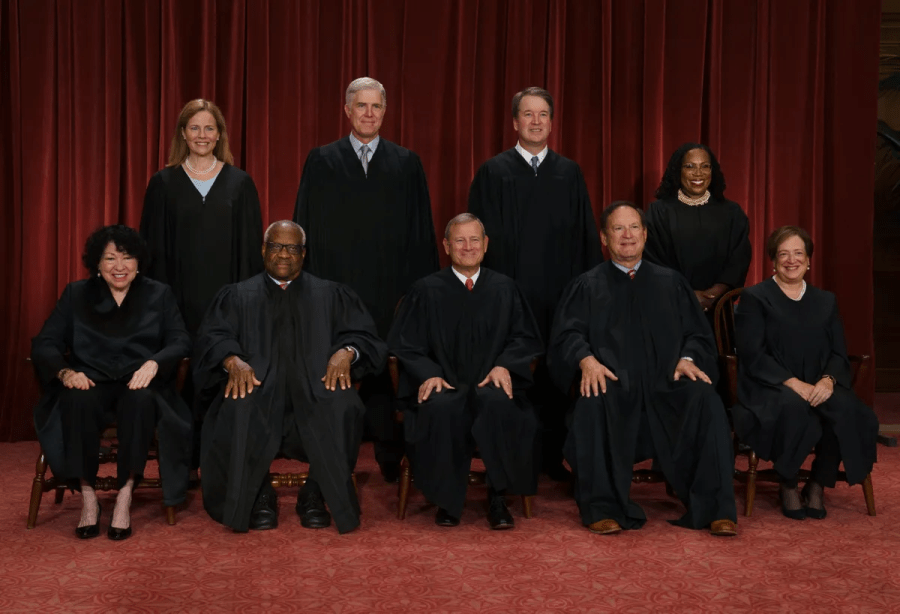
On April 29, 2026, the Supreme Court issued its 6-3 decision in Louisiana v. Callais, 608 U.S. ___ (2026). Justice Samuel Alito wrote for the majority, joined by Roberts, Thomas, Gorsuch, Kavanaugh, and Barrett. Justice Elena Kagan wrote the dissent, joined by Sotomayor and Jackson. Early voting in Louisiana begins Saturday, May 2. The primary is May 16.
How the Case Was Built
After the 2020 census, Louisiana redrew its six congressional districts. Black residents made up roughly one third of the state’s population. The new map gave Black voters a meaningful opportunity to elect their preferred candidates in one of six districts. Federal District Judge Shelly Dick ruled in June 2022 that the map likely violated Section 2 of the VRA and ordered the legislature to draw a second majority-Black district. The state sought a stay. The Fifth Circuit denied it. The Supreme Court granted one, holding the case pending its decision in a similar Alabama dispute.
In June 2023, the Court ruled in Allen v. Milligan that Alabama’s map, which similarly reduced majority-Black districts, violated the VRA. Roberts and Kavanaugh joined the three liberal justices in that decision. The Court lifted its stay in the Louisiana case, and the Fifth Circuit ordered a new map drawn by January 2024.
The Louisiana legislature passed SB8 in a January 2024 special session, creating a second majority-Black district, the newly configured 6th Congressional District. A group of self-described non-African American voters, represented by conservative attorneys with documented records of anti-VRA litigation, immediately filed suit. They argued that drawing the second majority-Black district was itself an unconstitutional racial gerrymander under the Fourteenth and Fifteenth Amendments. A three-judge district court panel agreed and blocked the map.
The Supreme Court took the case, heard arguments in spring 2025, then ordered a second round of briefing and reargument in October 2025, this time specifically asking whether complying with Section 2 of the VRA could itself be unconstitutional. That order signaled what the majority would eventually hold.
What the Court Decided
Alito’s majority opinion holds that SB8 was an unconstitutional racial gerrymander because Section 2, properly understood, did not require Louisiana to draw a second majority-Black district in the first place. If the VRA did not require it, there was no compelling interest to justify the intentional use of race in drawing the map. Without a compelling interest, the map fails strict scrutiny under the Equal Protection Clause.
The ruling imposes new requirements on plaintiffs bringing Section 2 vote-dilution claims at every stage of the legal framework established in Thornburg v. Gingles, a 1986 Supreme Court decision that had governed redistricting challenges for four decades. To satisfy the first Gingles precondition, plaintiffs must now provide illustrative maps that achieve all of the state’s legitimate political goals, including incumbency protection, without using race as a criterion. To satisfy the second and third preconditions, plaintiffs must provide statistical analysis that controls for party affiliation, separating the effect of race from the effect of partisan preference. On the totality of circumstances, plaintiffs must focus on present-day conditions and show an objective likelihood of intentional discrimination, rather than relying on historical evidence or evidence of societal disparities.
The majority also held, for the first time, that while compliance with Section 2 can in theory constitute a compelling interest justifying race-conscious redistricting, it only does so when Section 2 is properly construed as addressing evidence of intentional discrimination. That construction narrows the statute dramatically. Congress wrote Section 2 in 1982 specifically to cover discriminatory results, not just discriminatory intent, in direct response to a Supreme Court ruling that had imposed an intent requirement. The majority’s reinterpretation effectively restores the intent requirement Congress legislated away.
Alito wrote that the ruling does not strike down Section 2. The practical effect, as voting rights attorneys described it to reporters, is that Section 2 redistricting claims are now nearly impossible to win. Lawmakers do not announce discriminatory intent. Legislative privilege routinely blocks plaintiffs from obtaining discovery about the actual motivations behind map-drawing. The majority’s framework requires plaintiffs to prove something that is deliberately concealed and legally protected from disclosure.
The Dissent
Kagan’s dissent, joined by Sotomayor and Jackson, characterized the ruling as the latest chapter in the majority’s completed demolition of the Voting Rights Act. She wrote that the majority had effectively turned an effects-based statute back into an intent test, precisely what Congress acted to prevent in 1982. She argued the ruling allows states to systematically dilute minority voting power by exploiting the correlation between race and partisan identity, classifying racial discrimination as mere partisan preference and thereby escaping any legal remedy.
Kagan noted that Roberts and Kavanaugh had joined the liberals in Allen v. Milligan just three years earlier to uphold the same Section 2 framework the majority now dismantles. Neither Roberts nor Kavanaugh wrote separately in Callais to explain the shift. The majority opinion does not address the tension with Allen v. Milligan directly.
The Immediate Political Arithmetic
The timing is not incidental. Republican-controlled states began a wave of mid-decade redistricting in 2025, before the ruling was issued, with Texas leading the effort at President Trump’s explicit urging. Florida is currently in a special legislative session to redraw its congressional map. Missouri, North Carolina, and Ohio had already redrawn theirs. The ruling removes a principal legal obstacle to completing that project.
An analysis by Fair Fight Action and Black Voters Matter estimates the ruling could eventually help Republicans flip as many as 19 majority-minority House seats currently held by Democrats. An NPR analysis found the gerrymandering the decision enables could result in white candidates winning 15 seats currently represented by Black members of Congress, a level of racial displacement in congressional representation not seen since the end of Reconstruction. Analysts note that Democratic-controlled states can redraw their own maps in response, but have fewer available seat targets and face greater internal political resistance.
Voting rights attorney Kyle Kondik, managing editor of Sabato’s Crystal Ball, told reporters the redistricting battle is now likely to stretch into 2027 and 2028, with states moving as their primary calendars allow. Louisiana itself faces a compressed situation. Early voting begins May 2. The primary is May 16. Governor Jeff Landry said he has not decided whether to attempt a new map before November. Rep. Cleo Fields, whose 6th District was invalidated by the ruling, told Punchbowl News: “The final court has spoken. Louisiana now must make its decision.”
What It Means Beyond the South
The ruling’s effects extend to any jurisdiction with racially polarized voting and existing majority-minority districts, which includes Nevada. Clark County’s congressional map includes District 1, the urban Las Vegas district that has returned a predominantly Latino and Black electorate to Congress since it was drawn following decades of population growth. Nevada’s districts have not faced active Section 2 litigation, but the legal framework for challenging any future map that dilutes minority voting power in the state now operates under substantially narrower standards.
At the local and state legislative level, the ruling affects city councils, school boards, and water district boards across the country. Rep. Terry Landry Jr., a Louisiana state legislator and former state policy director for the Southern Poverty Law Center, told that organization before the ruling: “This will affect state legislatures. This will affect city councils. It will affect school boards. You will see a huge impact on minority representation at every level of government.”
The Voting Rights Act of 1965 was signed sixty-one years ago. Section 5 was disabled in 2013. Section 2, as it had been applied and understood since 1982, is now disabled as well. The Court did not strike the statute from the books. What remains is a law that says states cannot intentionally discriminate in their maps, carrying a burden of proof that intentional discrimination, by its nature, is designed to avoid.
Discover more from KVIG Informative
Subscribe to get the latest posts sent to your email.