A unanimous Supreme Court ruled April 29 that a New Jersey anti-abortion nonprofit can challenge a state subpoena for its donor list in federal court without waiting for state enforcement. The decision lands squarely in the abortion debate, but the legal principle it establishes reaches far beyond it, and the coalition that won the case includes some of the most powerful dark money infrastructure in the country.
In December 2022, New Jersey Attorney General Matthew Platkin assembled a Reproductive Rights Strike Force. As one of his first official acts, Platkin coordinated with Planned Parenthood to draft a consumer alert warning New Jerseyans that crisis pregnancy centers do not provide abortions and may offer false or misleading information about reproductive care. The alert directed the public to file complaints with the state Division of Consumer Affairs if they believed they had been deceived.
No complaints came in about First Choice Women’s Resource Centers. None. The attorney general’s office received zero public complaints about the organization before issuing a sweeping investigatory subpoena against it in November 2023.
That subpoena demanded up to ten years of documents, including the names, phone numbers, home addresses, and places of employment of every donor who gave to First Choice by any means other than one specific donation webpage. It warned, twice, that failure to comply could result in contempt of court and other penalties.
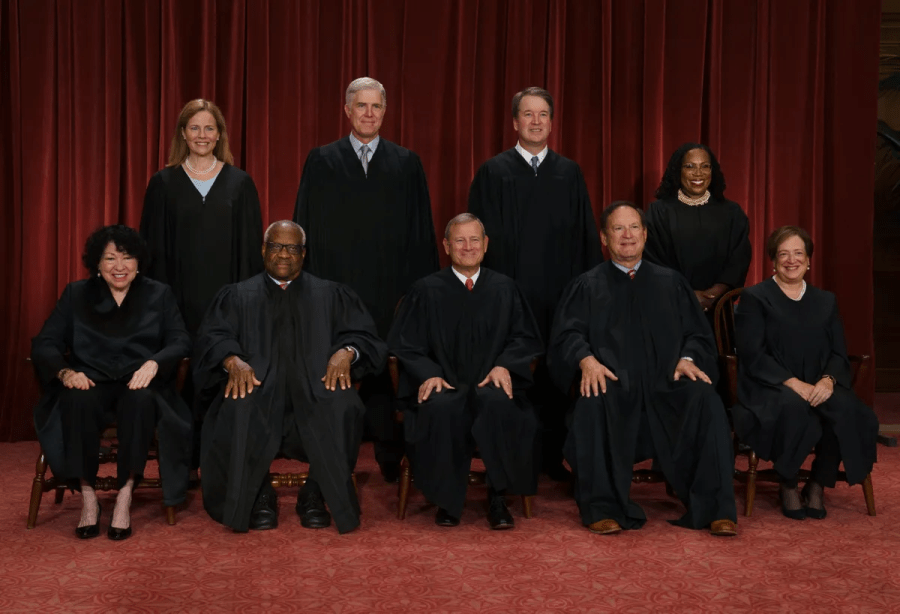
On April 29, 2026, a unanimous Supreme Court held that First Choice could challenge that subpoena in federal court immediately, without waiting for state courts to enforce it. The injury, Justice Neil Gorsuch wrote for all nine justices, begins the moment the demand is made.
What First Choice Is
First Choice Women’s Resource Centers is a religious nonprofit founded in 1985. It operates five locations in New Jersey. The organization believes life begins at conception and does not provide abortions or refer clients to abortion providers. It offers counseling, pregnancy tests, ultrasounds, and resources to women facing unplanned pregnancies, with the stated goal of steering women toward carrying pregnancies to term.
Organizations like First Choice are commonly called crisis pregnancy centers. Abortion rights advocates have documented that many such centers do not clearly disclose their anti-abortion orientation in their advertising, and that some provide medically contested information including claims about abortion pill reversal, a practice not supported by mainstream medical consensus. First Choice was represented in this case by the Alliance Defending Freedom, a Scottsdale, Arizona-based conservative Christian legal organization that has litigated major cases on abortion, LGBTQ rights, and religious liberty before the Supreme Court.
Platkin’s investigation centered on a theory that First Choice’s donation materials, including a webpage featuring photos of parents holding infants, could mislead donors into believing the organization provides or refers for abortions. He said his office intended to contact a sample of donors to ask whether they had been misled. First Choice said its donors give specifically because of the organization’s anti-abortion mission, and that exposing their identities to a hostile attorney general would cause irreparable harm.
What the Court Decided
The legal question before the Court was narrow: can First Choice challenge the subpoena in federal court now, before any state court has ordered it to comply? The district court said no. The Third Circuit agreed. The Supreme Court reversed unanimously.
Gorsuch’s opinion holds that the subpoena itself, issued and outstanding, constitutes a present injury to First Choice’s First Amendment right of association. It does not matter that the subpoena had not yet been enforced by a court. It does not matter that the attorney general offered to keep the information confidential, or that he later proposed narrowing the scope of his demands. The injury is not the potential public release of donor information. The injury is the demand itself, which inevitably causes donors to hesitate and organizations to self-censor.
The Court traced that principle back to 1958, when it ruled in NAACP v. Alabama that the state attorney general could not compel the NAACP to turn over its membership rolls. Alabama’s stated legal purpose was irrelevant. Forced disclosure of association with advocacy groups suppresses the very activity the First Amendment is designed to protect, particularly for minorities whose views are disfavored by those in power. The Court has applied that logic in case after case since, most recently in Americans for Prosperity Foundation v. Bonta in 2021, which blocked California from requiring nonprofits to file donor lists with the state attorney general.
The opinion rejects each of the attorney general’s three defenses. His argument that the subpoena imposed no injury because it was not yet self-executing failed because the threat of court enforcement and contempt sanctions is itself coercive. His argument that the subpoena left one donation channel untouched failed because the First Amendment does not permit the government to channel protected association into state-approved forms. His argument that a future protective order would eliminate the harm failed because even disclosure only to government officials chills association, and the Court’s own precedents establish this explicitly.
Gorsuch closed by noting that the Court has confronted demands like this since the 1950s, and that the attorney general had offered nothing new. The case goes back to the lower courts for the lawsuit to proceed on its merits.
The Coalition Behind the Win
The amicus brief coalition on First Choice’s side is where the case becomes structurally significant beyond its immediate facts. Thirty-nine amicus briefs were filed in support of First Choice. Three were filed in support of New Jersey.
The supporting coalition included the U.S. government under the Trump administration, 19 states, the U.S. Chamber of Commerce, the Americans for Prosperity Foundation, the American Legislative Exchange Council, and a range of religious organizations. It also included the American Civil Liberties Union and the ACLU of New Jersey, which filed jointly with the Foundation for Individual Rights and Expression. The ACLU stated that while it supports different policy outcomes than First Choice on abortion, investigatory subpoenas seeking donor information threaten all advocacy organizations regardless of ideology.
That coalition matters because the legal principle the Court established is not limited to anti-abortion nonprofits. It applies to any organization that can argue a state investigatory subpoena for donor information chills its First Amendment associational rights. The ACLU’s support of that principle is consistent with its prior position in the 2021 Americans for Prosperity case, where it joined a brief protecting Koch-network donor lists from California disclosure requirements.
The Americans for Prosperity Foundation, which filed an amicus brief arguing the case should be controlled by its own 2021 Supreme Court victory, described the ruling as affirming that the threat to donor privacy from government disclosure demands is a constitutional injury that can be redressed in federal court immediately. That framing is significant. AFP is one of the primary vehicles through which anonymous donors fund conservative political infrastructure nationally. The legal architecture protecting that anonymity just got reinforced by a unanimous Supreme Court decision originating in an abortion-adjacent dispute.
The Larger Pattern
The ruling lands in a specific political environment. Following the Supreme Court’s 2022 decision overturning Roe v. Wade, Democratic attorneys general in multiple states launched investigations into crisis pregnancy centers, focusing on claims of deceptive marketing and the promotion of abortion pill reversal. New Jersey was among the most aggressive. Republican-controlled states, meanwhile, have moved to steer public funds toward such centers and restrict access to abortion clinics.
That political polarization produced the lawsuit. But the legal outcome is not limited to that conflict. Under the rule the Court established today, any nonprofit organization that receives a state investigatory subpoena for donor information can immediately seek federal court review by arguing the demand chills its First Amendment rights. The burden then falls on the state to justify the demand under heightened constitutional scrutiny, showing the disclosure requirement is narrowly tailored to a sufficiently important government interest.
That standard has not been easy to meet. California failed to meet it in the 2021 Americans for Prosperity case. New Jersey will now have to meet it in federal court in the First Choice case. Whether the attorney general’s consumer fraud theory survives that scrutiny is the question the litigation will now turn on.
What is already settled is the procedural shield. Donor lists for advocacy nonprofits, whether they fund anti-abortion counseling centers, conservative policy organizations, or any other cause, now carry a federal court door that opens immediately when a state official comes knocking. The case that opened it began with a subpoena that produced zero public complaints and ended with nine justices in agreement.
Discover more from KVIG Informative
Subscribe to get the latest posts sent to your email.